

In today's crowded marketplace, a passive presence is not enough. Brands that win are the ones that create memorable, interactive experiences designed to capture attention and build lasting loyalty. This is the core of brand activation: transforming your company from a static logo into a dynamic, engaging participant in your audience's world.
This guide moves beyond generic advice to provide a strategic blueprint for high-impact brand activation ideas tailored specifically for events. We will explore ten powerful concepts, from sprawling trade shows at the Kansas City Convention Center to exclusive corporate parties in the Crossroads Arts District. Forget vague theories; we are focused on execution.
You will find a detailed breakdown for each idea, covering the what, why, and how. We provide practical implementation notes on essential AV and equipment needs, realistic budget considerations, and the key performance indicators (KPIs) you need to measure success and prove your return on investment.
Whether you are planning a festival, a product launch, or a corporate gala, these strategies will help you transform attendees into genuine brand advocates. As Kansas City's premier event production partner, Showboss KC has seen firsthand how a well-executed activation can turn a simple gathering into a powerful brand-building moment. Let’s dive into the ideas that will make your brand the main event.
1. Pop-Up Experiential Stores
A pop-up experiential store is a powerful, temporary retail space engineered to create an immersive and memorable brand interaction. Unlike traditional retail, the primary goal isn't just sales; it's about generating buzz, forging direct consumer relationships, and offering a tangible experience that can’t be replicated online. These short-term installations are ideal for launching a new product, testing a new market, or re-energizing a brand’s image in a high-traffic, unexpected location.
By combining the tactile nature of a physical store with the shareable excitement of an event, pop-ups become potent marketing tools. For example, brands like Nike have used pop-ups to create exclusive sneaker drops, while beauty companies like Sephora use them to offer interactive try-on stations and tutorials. This approach transforms a simple shopping trip into a shareable adventure. For a deeper dive into the strategy behind these events, you can learn more about the fundamentals of brand activation here.
Implementation & Key Metrics
- AV/Equipment: High-quality sound system for ambient music, vibrant LED video walls for dynamic branding, interactive touch screens for product exploration, and professional lighting to create an inviting atmosphere and highlight products.
- Budget: Small-scale pop-ups can start around $10,000-$20,000, while more elaborate, multi-day experiences in prime locations can exceed $100,000.
- Layout Tips: Design a clear path for foot traffic that guides attendees through different "zones" or experiences. Ensure there is a highly photogenic, "Instagrammable" focal point to encourage social sharing. Use modular displays for flexibility.
- KPIs: Track foot traffic, social media mentions and reach (using a unique hashtag), lead/email captures via QR codes, and sales data.
- Kansas City Example: A local KC apparel brand could launch a pop-up shop in the Power & Light District during a major concert weekend. By incorporating a live DJ, a custom photo booth featuring the Kansas City skyline, and exclusive, limited-edition merchandise, they create a must-visit destination that drives both sales and significant social media buzz.
2. Influencer Collaborations and Partnerships
An influencer collaboration is a strategic partnership that leverages the credibility and reach of content creators to promote a brand to their engaged followers. This brand activation idea moves beyond traditional advertising by tapping into an influencer's authentic voice and connection with their audience. Instead of a direct sales pitch, the brand is integrated naturally into the creator's content, fostering trust and generating genuine interest.
These partnerships are highly effective for reaching niche demographics, building brand awareness, and driving conversions. Brands like Daniel Wellington built their entire empire on micro-influencer strategies, while beauty giants such as Glossier and Kylie Cosmetics use creator collaborations to fuel product launches. The key is to find influencers whose audience and values align perfectly with the brand, turning a sponsored post into a trusted recommendation from a friend.
Implementation & Key Metrics
- AV/Equipment: Not always required, but for live events or co-hosted activations, this could include professional ring lights, microphones for interviews or live streams, and a branded backdrop or photo wall for high-quality content creation.
- Budget: Costs vary dramatically. Micro-influencers (10k-100k followers) might charge a few hundred to a few thousand dollars per post, while macro-influencers can command fees well into the six figures.
- Layout Tips: If integrating influencers into an event, create a dedicated "Creator Lounge" with charging stations and optimal lighting. Design specific photo opportunities that align with the influencer’s aesthetic and your brand's campaign goals.
- KPIs: Track engagement rate (likes, comments, shares), reach and impressions, website traffic from unique affiliate links, conversion rates using custom discount codes, and overall brand sentiment.
- Kansas City Example: A new upscale restaurant in the Crossroads Arts District could partner with several KC-based food and lifestyle micro-influencers for an exclusive pre-opening tasting event. By giving them creative freedom to document the experience, the restaurant can generate authentic, localized buzz and user-generated content, filling their reservation books before they even officially open to the public.
3. Guerrilla Marketing Campaigns
Guerrilla marketing is a brand activation strategy that uses unconventional, high-impact tactics to generate buzz in unexpected public places. The approach prioritizes creativity, surprise, and ingenuity over a large budget, aiming to create a memorable and shareable moment that feels organic and authentic. These campaigns thrive by disrupting people’s daily routines, making them stop, think, and talk about the brand.
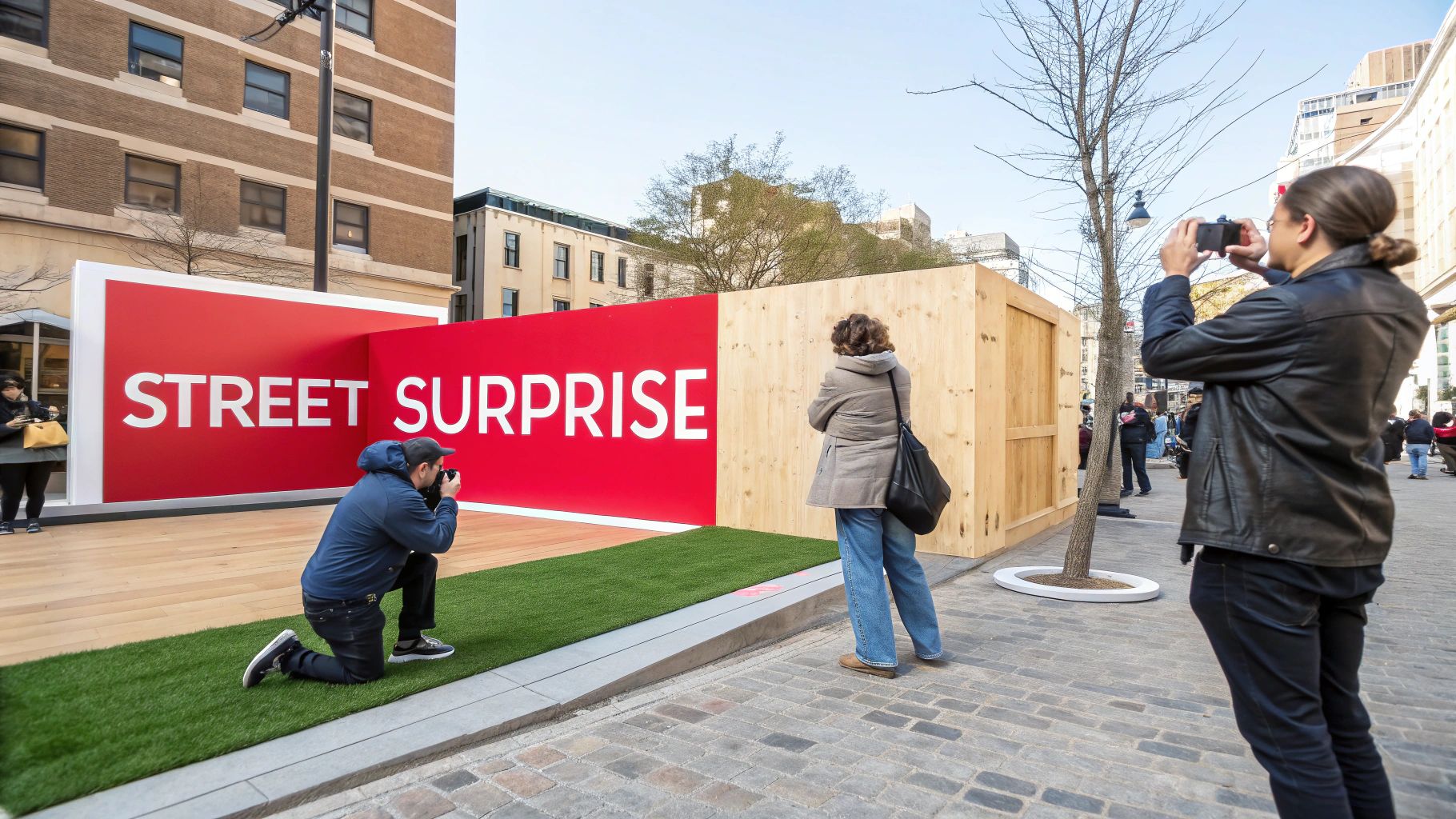
Unlike traditional advertising, guerrilla marketing often blurs the line between marketing and art, creating moments that go viral through word-of-mouth and social media. Think of Old Spice's unexpected street takeovers or Red Bull's adrenaline-pumping public stunts. The goal is to create an experience so unique that people feel compelled to capture and share it, transforming consumers into brand ambassadors. This makes it one of the most cost-effective brand activation ideas for generating massive reach.
Implementation & Key Metrics
- AV/Equipment: High-quality portable speakers for ambient sound or surprise audio cues, battery-powered projectors for projecting logos or messages onto buildings, and professional camera equipment (including drones) to document the event for social media amplification.
- Budget: Highly variable. A simple street art stencil campaign might cost under $2,000, while a larger, more coordinated stunt or flash mob could range from $15,000 to $50,000+, largely dependent on staffing, location permits, and documentation costs.
- Layout Tips: Success depends on location and timing. Target high-foot-traffic areas relevant to your demographic during peak hours. Ensure the activation is easily visible and understandable within seconds. Always have a team ready to document reactions and engage with the public.
- KPIs: Social media engagement (shares, comments, user-generated content using a campaign hashtag), media mentions and PR value, website traffic spikes during and after the campaign, and qualitative feedback from public sentiment.
- Kansas City Example: A local coffee roaster could install a temporary "Giant Coffee Cup" art piece in a busy spot like the River Market or Crossroads Arts District, emitting the scent of fresh coffee and steam. Passersby could scan a QR code on the cup to get a voucher for a free coffee at a nearby location, directly linking the surprise activation to foot traffic and sales.
4. Interactive Digital Experiences and Gamification
Interactive digital experiences and gamification use technology to pull audiences into a branded world, transforming passive viewers into active participants. This strategy integrates game-like mechanics such as points, leaderboards, and rewards into apps, websites, or live event installations to boost engagement, encourage repeat interaction, and collect valuable user data. It’s a powerful method for building brand loyalty in a way that feels like entertainment rather than marketing.
By turning brand interactions into a fun challenge, companies can create a more profound and memorable connection with their audience. For instance, the Starbucks Rewards app uses gamified achievements to drive sales, while collaborations like Pokémon GO's sponsored locations turn physical spaces into interactive playgrounds. This approach is highly effective for capturing attention in a digitally saturated world and making brand engagement an enjoyable habit.
Implementation & Key Metrics
- AV/Equipment: Large-format touch screens or LED video walls for on-site games, tablets (iPads) for individual participation, robust Wi-Fi infrastructure to handle user traffic, and QR code scanners or NFC readers for seamless digital-to-physical interaction.
- Budget: Simple branded AR filters or web-based quizzes can start in the $5,000-$15,000 range. Custom app development or large-scale interactive installations often range from $30,000 to $150,000+, depending on complexity.
- Layout Tips: Create dedicated "Digital Interaction Zones" at your event with clear instructions. Use large screens to display a live leaderboard, sparking competition and drawing a crowd. Ensure charging stations are available for attendees using their own devices.
- KPIs: Track user sign-ups, app downloads, average time spent on the platform, lead capture rate, social shares generated from the experience, and reward redemption rates.
- Kansas City Example: A local tech company exhibiting at a KC trade show could create an augmented reality scavenger hunt within the convention center. Attendees use their phones to scan QR codes at different booths, unlocking AR animations and collecting digital badges. The first 50 to complete the hunt win branded merchandise, driving traffic throughout the venue and generating qualified leads.
5. Sponsorship of Events and Festivals
Sponsoring an event or festival is a classic brand activation strategy that involves aligning your brand with an established gathering to gain massive exposure and credibility. This goes far beyond just placing a logo on a banner; it’s about becoming part of the attendee experience itself. By partnering with a music festival, sporting event, or large-scale conference, a brand can tap into a pre-built, passionate audience, associating its own values with the energy and excitement of the event.
Effective sponsorship creates an authentic connection by adding value rather than just advertising. For example, Red Bull doesn't just sponsor extreme sports; it creates and defines them, making the brand synonymous with high-energy performance. Similarly, tech giants sponsor conferences not just for visibility but to position themselves as industry leaders and innovators. This approach allows brands to interact directly with their target demographic in a context where consumers are open and receptive to new experiences.
Implementation & Key Metrics
- AV/Equipment: Large-format LED video walls for broadcasting branded content, custom-fabricated activation booths with interactive elements, professional audio systems for announcements or stage presence, and strategic lighting to make the sponsored area a focal point.
- Budget: Entry-level local event sponsorships might start at $5,000-$15,000. Sponsoring a larger regional festival or conference can range from $25,000 to $75,000+, while major national events can run into the hundreds of thousands.
- Layout Tips: Negotiate for a high-traffic location for your branded activation zone. Design an open and inviting space that encourages attendees to linger, perhaps with comfortable seating, charging stations, or a unique photo opportunity. Ensure clear and prominent branding that is visible from a distance.
- KPIs: Track brand mentions and sentiment on social media, lead captures through on-site sign-ups or contests, website traffic from event-specific QR codes, and post-event surveys measuring brand recall and perception.
- Kansas City Example: A local bank could sponsor the Boulevardia festival by creating a "Financial Wellness Oasis." This branded tent could offer shaded seating, free water, and interactive screens with fun budgeting games. By providing a valuable service, they create positive brand association and can capture leads in a low-pressure environment, a tactic often seen in creative nonprofit fundraiser event ideas as well.
6. User-Generated Content (UGC) Campaigns
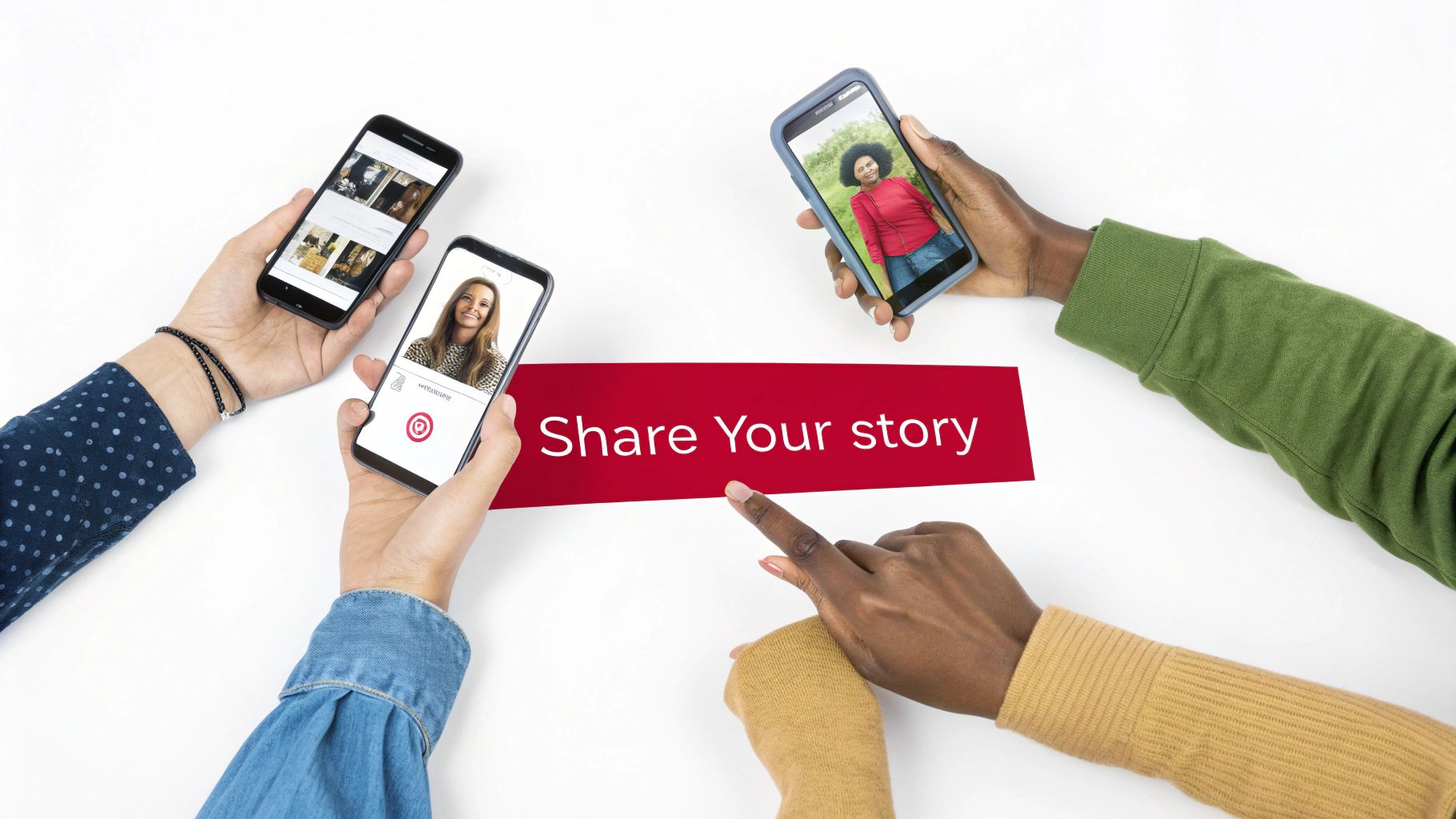
A User-Generated Content (UGC) campaign is a strategic brand activation idea that shifts the role of content creator from the brand to the consumer. It motivates customers to produce and share their own content, such as photos, videos, or reviews, that features a brand’s product or service. This approach leverages the power of authenticity and social proof, turning loyal customers into an army of organic marketers who build community and trust on the brand's behalf.
This method transforms passive audiences into active participants, fostering a deeper connection and sense of ownership. Campaigns like Coca-Cola's #ShareACoke, where people sought out bottles with their names, or GoPro's video awards, which highlight incredible customer adventures, demonstrate how UGC can generate massive engagement and a treasure trove of marketing assets at a fraction of the cost of traditional advertising.
Implementation & Key Metrics
- AV/Equipment: At a live event, this involves setting up a dedicated "creation station" with a social media wall or live feed display to showcase submissions in real-time. Use ring lights, high-quality backdrops, and QR codes that link directly to the campaign submission page or social media platform.
- Budget: A primarily digital UGC campaign can be very cost-effective, running from $2,000 to $10,000 to cover prize incentives, platform management, and promotional posts. Integrating it into a physical event activation would add to the overall event budget.
- Layout Tips: Design a highly visible and interactive photo or video booth that screams "share me." Use clear signage with the campaign hashtag and simple instructions. Ensure the area has great lighting and props that align with your brand identity to inspire creative content.
- KPIs: Track the number of submissions, hashtag usage and reach, engagement rate (likes, comments, shares) on UGC posts, and website traffic from campaign links. Monitor brand sentiment and measure the volume of new followers acquired during the campaign.
- Kansas City Example: A local Kansas City BBQ sauce brand could launch a "Show Us Your Spread" summer campaign. They would encourage fans to post photos of their backyard cookouts using the sauce with the hashtag #KCBossSauce. A large digital screen at their booth during the American Royal World Series of Barbecue could display a live feed of Instagram posts using the hashtag, with the best photo each hour winning a prize pack of sauces and gear.
7. Brand Partnerships and Co-Marketing
Brand partnerships and co-marketing involve a strategic collaboration between two or more complementary brands to create a unified marketing campaign, event, or product. This approach is highly effective because it pools resources, creativity, and audiences, generating a level of impact that is often greater than what either brand could achieve on its own. It's an excellent way to introduce your brand to a new, relevant customer segment while reinforcing your brand identity through association.
The core principle is mutual benefit; each brand leverages the other's strengths, from distribution channels to audience trust. Successful examples range from the Nike and Apple partnership creating the Apple Watch Nike+ to the Spotify and Hulu bundled subscription. These brand activation ideas work by creating an offer or experience that is uniquely compelling because of the joint effort, providing enhanced value to the consumer and amplified reach for the participating brands.
Implementation & Key Metrics
- AV/Equipment: At a co-branded event, you'll need cohesive digital branding across all platforms. This includes synchronized content on LED video walls, interactive kiosks showcasing the joint offer, and a shared sound system for announcements and music. Professional lighting can be used to blend the brands' color palettes seamlessly.
- Budget: Costs are often shared, making this a flexible option. A small co-branded digital campaign or local event might cost each partner $5,000-$15,000, while a larger product launch or multi-city tour could require a combined investment well over $150,000.
- Layout Tips: Design the event space to give equal prominence to both brands. Create a central activation zone where the collaboration comes to life, such as a product demo station or an interactive game. Ensure logos and branding are integrated, not just placed side-by-side, to show a true partnership.
- KPIs: Key metrics include referral traffic between brand websites, lead generation from shared channels, social media engagement with a co-branded hashtag, customer acquisition cost (CAC) for new segments, and direct sales or sign-ups for the joint offering.
- Kansas City Example: A local coffee roaster like The Roasterie could partner with a beloved KC institution like Christopher Elbow Chocolates for a "Kansas City Winter Warm-Up" event. They could co-host a tasting experience at a venue in the Crossroads Arts District, featuring expertly paired coffee and chocolates. With integrated branding, a shared photo booth, and a take-home gift bag with products from both companies, they cross-promote to their loyal local followings and create a memorable, premium experience.
8. Immersive Retail and Showroom Experiences
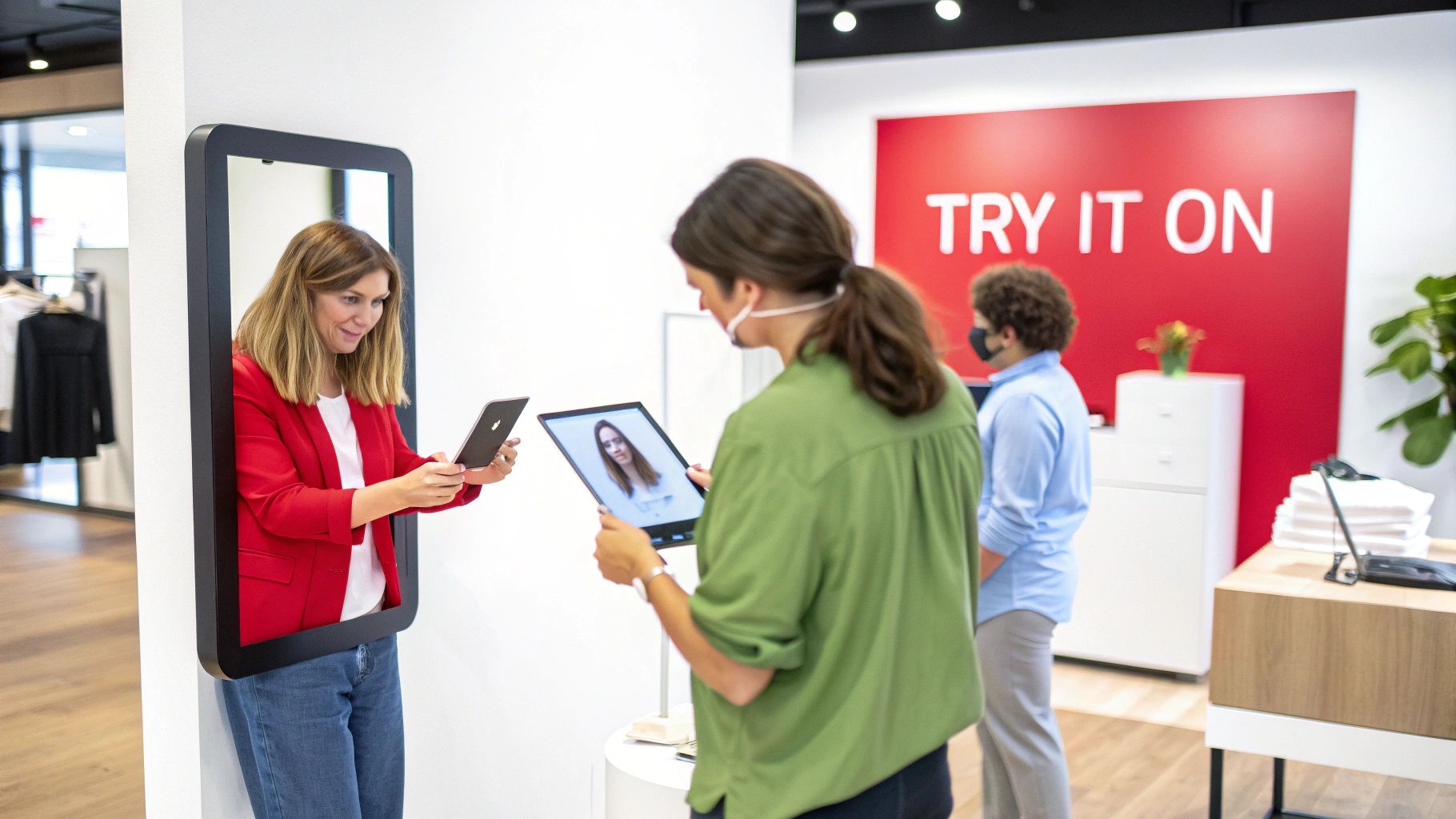
An immersive retail or showroom experience transforms a traditional store from a point of sale into a destination for discovery, education, and entertainment. Rather than focusing solely on transactions, this strategy prioritizes building a deeper emotional connection by allowing customers to interact with products in a hands-on, technologically enhanced environment. The goal is to create a memorable brand journey that informs and delights, making the purchase a natural outcome of a positive experience.
These spaces are engineered to let customers see, feel, and understand a product's value proposition firsthand. For instance, Dyson Demo Stores allow visitors to test vacuums on different surfaces, while Samsung Experience Stores let users explore the full capabilities of interconnected devices. This approach elevates the brand beyond its products, positioning it as an innovative leader and a resource for consumers. It's one of the most effective brand activation ideas for creating long-term loyalty.
Implementation & Key Metrics
- AV/Equipment: Interactive kiosks with product specs, augmented reality (AR) try-on stations using tablets or smart mirrors, large-format LED screens for storytelling, high-fidelity soundscapes to set a mood, and IoT-enabled product displays for real-time demonstrations.
- Budget: Costs vary widely based on technology and scale, from $50,000 for a single interactive installation to over $500,000 for a fully integrated flagship showroom experience.
- Layout Tips: Design non-linear pathways that encourage exploration and discovery. Create dedicated zones for different product categories or experiences. Train staff to act as educators and brand ambassadors, not just salespeople. For more ways to engage your audience, you can find inspiration from these corporate event entertainment ideas.
- KPIs: Measure dwell time in different zones, interaction rates with digital displays, lead generation (email sign-ups for workshops), customer feedback scores, and the sales uplift attributed to in-store experiences.
- Kansas City Example: A local smart home technology installer could open a showroom in the Crossroads Arts District. The space could feature a fully functional model apartment where visitors can use voice commands and tablets to control lighting, sound systems, and security, demonstrating the technology's real-world benefits in a tangible and impressive way.
9. Community Building and Loyalty Programs
Community building and loyalty programs are strategic brand activation ideas designed to foster long-term customer relationships and increase lifetime value. Instead of focusing on a single interaction, these programs create an ongoing dialogue by rewarding repeat business and encouraging brand advocacy. Modern loyalty programs move beyond simple punch cards, incorporating tiered rewards, exclusive experiences, and gamified elements to make participation feel valuable and engaging.
This approach transforms customers from one-time buyers into dedicated brand ambassadors. For example, Sephora's VIB program offers tiered benefits like early access to products and exclusive events, while Starbucks Rewards uses gamification to encourage frequent purchases. These programs are highly effective for brands aiming to build a sustainable, devoted customer base and gather valuable data on consumer behavior.
Implementation & Key Metrics
- AV/Equipment: For exclusive member events, you'll need a professional sound system for announcements and music, elegant lighting to create a premium atmosphere, and LED video walls to display member-exclusive content, leaderboards, or special announcements. Digital kiosks or tablets can be used for on-site sign-ups.
- Budget: Initial setup for a digital loyalty platform can range from $5,000 to $25,000+, depending on the complexity and integration with existing systems. The budget for exclusive member events will vary based on scale.
- Layout Tips: At member-only events, create a clear VIP check-in area. Designate specific zones for different activities, such as a product preview station, a networking lounge, and a photo opportunity with branded backdrops to highlight exclusivity.
- KPIs: Track member enrollment rate, customer retention rate, redemption rate of rewards, average purchase frequency of members versus non-members, and customer lifetime value (CLV).
- Kansas City Example: A local Kansas City coffee shop chain could launch a "KC Coffee Club" loyalty app. Members could earn points for purchases, unlock achievements based on visiting different locations (e.g., the "Crossroads Connoisseur" badge), and gain access to an exclusive annual tasting event at their roasting facility, complete with live music and a first look at seasonal blends.
10. Content Marketing and Storytelling
Content marketing and storytelling move beyond direct advertising to build brand authority and trust by providing valuable, relevant, and engaging information. This strategy involves creating assets like blogs, videos, podcasts, and webinars that educate or entertain, positioning your brand as a go-to resource. Instead of just selling a product, you’re solving customer problems and building a loyal community around shared interests and values.
This approach is one of the most effective long-term brand activation ideas because it creates a continuous dialogue with your audience. For example, Red Bull Media House produces high-octane sports content that embodies its "gives you wings" slogan, while HubSpot's educational blog and certification programs have made them a definitive authority in the marketing space. The goal is to make your brand an indispensable part of your customer's world, not just a one-time purchase.
Implementation & Key Metrics
- AV/Equipment: Professional cameras and microphones for high-quality video/podcast production, studio lighting kits, robust editing software, and a reliable webinar platform. For live content activations, consider a small stage setup with a PA system and a branded backdrop or LED screen.
- Budget: Can range from under $5,000 for a basic blog or podcast series (leveraging in-house talent) to well over $50,000+ for high-production video series, professionally hosted webinars, or live-streamed content events.
- Layout Tips: For a live content event (like a webinar or podcast recording), create a branded, well-lit set. Ensure the audience area is comfortable and has clear sightlines. Use QR codes on-site to direct attendees to subscribe to your digital content channels.
- KPIs: Track website traffic from content, time on page, bounce rate, social shares, video view duration, lead generation (e.g., eBook downloads), and conversion rates from content-driven calls-to-action.
- Kansas City Example: A local KC financial advisory firm could host a quarterly "KC Money Moves" webinar series, featuring interviews with successful local entrepreneurs. By providing actionable financial tips tailored to the KC market and promoting it heavily on local business channels, they build trust and generate highly qualified leads, establishing themselves as the premier local financial experts.
10-Point Brand Activation Comparison
| Strategy | Implementation complexity | Resource requirements | Expected outcomes | Ideal use cases | Key advantages |
|---|---|---|---|---|---|
| Pop-Up Experiential Stores | High (site setup, logistics, permits) | Moderate–High (venue, build, staff, promotion) | Short-term buzz, local sales, social media lift, customer feedback | Product launches, market tests, seasonal campaigns in high-traffic areas | Creates FOMO, memorable face-to-face engagement, direct consumer data |
| Influencer Collaborations and Partnerships | Medium (vetting, contracts, coordination) | Low–Medium (fees, content production, tracking) | Targeted reach, authentic endorsements, engagement uplift | Social-first launches, niche audience targeting, product seeding | Builds credibility, high engagement, scalable across creators |
| Guerrilla Marketing Campaigns | Medium–High (creative risk, permits, legal) | Low (creative talent, materials, possible permits) | High earned media potential and viral buzz; outcomes unpredictable | Awareness spikes, brand personality showcases, low-budget campaigns | High impact per dollar, memorable and highly shareable |
| Interactive Digital Experiences & Gamification | High (development, UX, testing) | High (engineering, design, analytics, maintenance) | Increased engagement, first‑party data, improved retention | Loyalty programs, apps, campaigns targeting tech‑savvy audiences | Highly measurable, scalable, drives repeat interaction |
| Sponsorship of Events & Festivals | Medium (negotiation, on-site activation) | High (sponsorship fees, staffing, activation logistics) | Broad exposure, brand association, PR coverage | Mass awareness, prestige alignment, B2B networking | Extensive reach, strong association with event credibility |
| User-Generated Content (UGC) Campaigns | Low–Medium (campaign setup, moderation, rights) | Low (incentives, community management, moderation tools) | Volume of authentic content, social proof, higher engagement | Community building, awareness campaigns, content sourcing | Authentic advocacy, low-cost scalable content, improved social reach |
| Brand Partnerships & Co‑Marketing | High (negotiations, aligned strategy, legal) | Medium (shared budgets, joint creative, distribution) | Access to new audiences, shared credibility, incremental sales | Market expansion, co-branded products, bundled offers | Resource pooling, expanded reach, mutual brand validation |
| Immersive Retail & Showroom Experiences | High (store design, tech integration, staff training) | High (real estate, hardware, trained personnel, upkeep) | Deeper engagement, higher dwell time and AOV, loyalty | Flagship stores, high-consideration or premium products | Differentiated in-person experience, hands-on testing, data capture |
| Community Building & Loyalty Programs | Medium (program design, platform integration) | Medium (rewards costs, CRM, community management) | Higher customer lifetime value, predictable repeat purchases | Subscription services, repeat-purchase businesses, premium brands | Boosts retention and CLV, builds advocates and repeat revenue |
| Content Marketing & Storytelling | Medium (strategy, consistent production, SEO) | Medium (writers, video production, distribution, SEO) | Long-term organic traffic, authority, lead generation (slow ROI) | Thought leadership, inbound lead gen, SEO-driven growth | Cost-effective long-term growth, builds trust and brand authority |
Bringing Your Brand to Life with the Right Partner
We've explored a dynamic range of powerful brand activation ideas, from the tactical surprise of a guerrilla marketing stunt to the immersive world of a pop-up experiential store. Each strategy offers a unique pathway to forge a deeper, more meaningful connection with your audience, transforming passive consumers into active brand advocates. The common thread weaving through all these concepts is the move away from one-way advertising and toward two-way, participatory experiences.
The most successful activations don't just happen; they are the result of a deliberate fusion of bold creativity and meticulous execution. An influencer collaboration requires authentic partnership management, while an interactive digital game needs flawless tech. A user-generated content campaign hinges on a compelling, low-friction prompt, and a community loyalty program demands consistent, long-term value. The key takeaway is that the "what" (the idea) is only as powerful as the "how" (the execution).
From Concept to Unforgettable Experience
Choosing the right approach means holding it up against your core brand identity and your specific event goals. Are you aiming to generate mass awareness at a Kansas City street festival, or are you looking to deepen loyalty with key corporate clients at an exclusive gala? The answer dictates whether you lean into the broad appeal of event sponsorship or the targeted intimacy of an immersive showroom.
Remember, the goal is not just to be seen but to be felt. You want attendees to walk away with a tangible memory, a positive emotional imprint that they associate directly with your brand. This is where the sensory details, powered by professional event production, become paramount.
Key Insight: The true measure of a brand activation's success is its ability to create a "memory anchor"—a distinct, positive experience that an attendee mentally links back to your brand long after the event has concluded. Flawless technical execution is the anchor's chain.
Activating Your Strategy with the Right Tools
Executing these ambitious brand activation ideas requires more than just a great concept; it requires a partner who can provide the technical and logistical backbone to bring your vision to life without a hitch. Consider the essential elements that underpin the most impactful experiences:
- Visual Immersion: A stunning LED video wall can transform a trade show booth into a dynamic digital canvas or turn a stage into a captivating storytelling platform.
- Atmospheric Impact: Professional lighting design does more than illuminate a space; it crafts a mood, directs attention, and reinforces your brand's aesthetic.
- Auditory Clarity: Crystal-clear audio ensures your message is heard, whether it's a keynote speaker, a live DJ set, or the subtle soundscape of an immersive environment.
- Engagement & Fun: Interactive elements like modern, sleek photo booths or social media walls provide a built-in mechanism for user-generated content and joyful engagement.
Ultimately, your brand activation is an investment in building relationships at scale. By choosing a strategy that authentically reflects your brand and partnering with an execution team that understands the technical nuances, you create more than a marketing event. You create a landmark moment that builds lasting brand equity and turns attendees into your most passionate supporters.
Ready to transform your next great idea into an unforgettable reality? The team at Showboss KC specializes in providing the premier audio, video, lighting, and staging solutions that power Kansas City's most successful brand activations. Let us handle the technical execution so you can focus on connecting with your audience. Visit Showboss KC to see our work and start planning your event today.