

Before you even start Googling "corporate event DJs," you need to get crystal clear on what you're actually trying to accomplish. A high-energy holiday bash needs a completely different soundtrack than a sophisticated networking mixer. Nailing down your event's purpose and the vibe you want to create is the single most important first step to finding the right pro.
What’s the Vibe? Defining Your Event Goals
Let’s be honest, the wrong music can torpedo an event’s atmosphere in minutes. It can make a celebration feel stiff or a professional gathering feel… well, unprofessional. The goal isn't just to hire someone to press play; it's to find an entertainment partner who gets what you're doing and elevates it. This means moving past "we need a DJ" and digging into the nitty-gritty of your event's mission.
Think about it: what's the primary objective here? Are you celebrating a record-breaking quarter? Trying to foster some genuine connection between departments? Or maybe you're out to seriously impress potential clients at a product launch? Each of those goals has its own unique sonic fingerprint.

Match the Music to the Mission
Let's look at a few real-world scenarios and how the DJ's job completely changes with each one:
- Annual Holiday Party: The mission is pure celebration. You need a DJ who can drop upbeat, recognizable hits that get everyone from the new intern to the CEO on the dance floor. Think crowd-pleasers from multiple decades.
- Networking Cocktail Hour: Here, the main event is conversation. The music has to set a mood without getting in the way. A great DJ will lean into sophisticated lounge, chill-hop, or instrumental tracks that create an elegant, buzzy backdrop.
- Product Launch Event: You need energy—modern, exciting, and totally on-brand. The playlist should feel like the product itself. This is where a DJ might spin electronic, indie pop, or high-energy tracks that build a sense of anticipation.
- Awards Gala: The DJ becomes part of the show's production. They're managing walk-up music for award winners, hitting sound cues for big announcements, and seamlessly shifting from dinner music to a full-blown dance party after the ceremony.
Know Your Crowd
Who’s actually coming to this thing? A room full of 20-something sales reps will have a very different idea of a great playlist than a group of senior partners nearing retirement. A truly professional corporate DJ knows how to read a room and cater to a diverse audience, but you have to give them a head start.
Are your guests local, national, or international? What's the general age range? Giving your DJ these demographic clues is crucial. It helps them build a set that feels inclusive and gets everyone tapping their feet.
A DJ who only spins the latest Top 40 hits might totally alienate the older crowd at a company anniversary. On the flip side, a classic rock-only playlist could feel stale and out of touch at a tech startup’s mixer. It's all about balance and versatility.
When you define your goals, audience, and desired energy first, you're essentially creating a roadmap for your DJ. This simple brief becomes your guide for finding someone who doesn't just show up, but actively contributes to making your event a massive success.
For a little more inspiration, checking out different corporate event entertainment ideas can help you picture the whole experience. Doing this foundational work ensures your DJ can perfectly sync their performance with your vision.
How to Find a DJ Who Matches Your Company's Vibe
Okay, you've got your event goals locked in. Now for the fun part: finding the right professional to bring the energy. But let’s be clear—finding a great corporate event DJ isn’t just about scrolling through playlists. It’s about finding a performer who gets your company culture and understands the unique rhythm of a corporate function.
Time to do a little digging beyond their homepage.
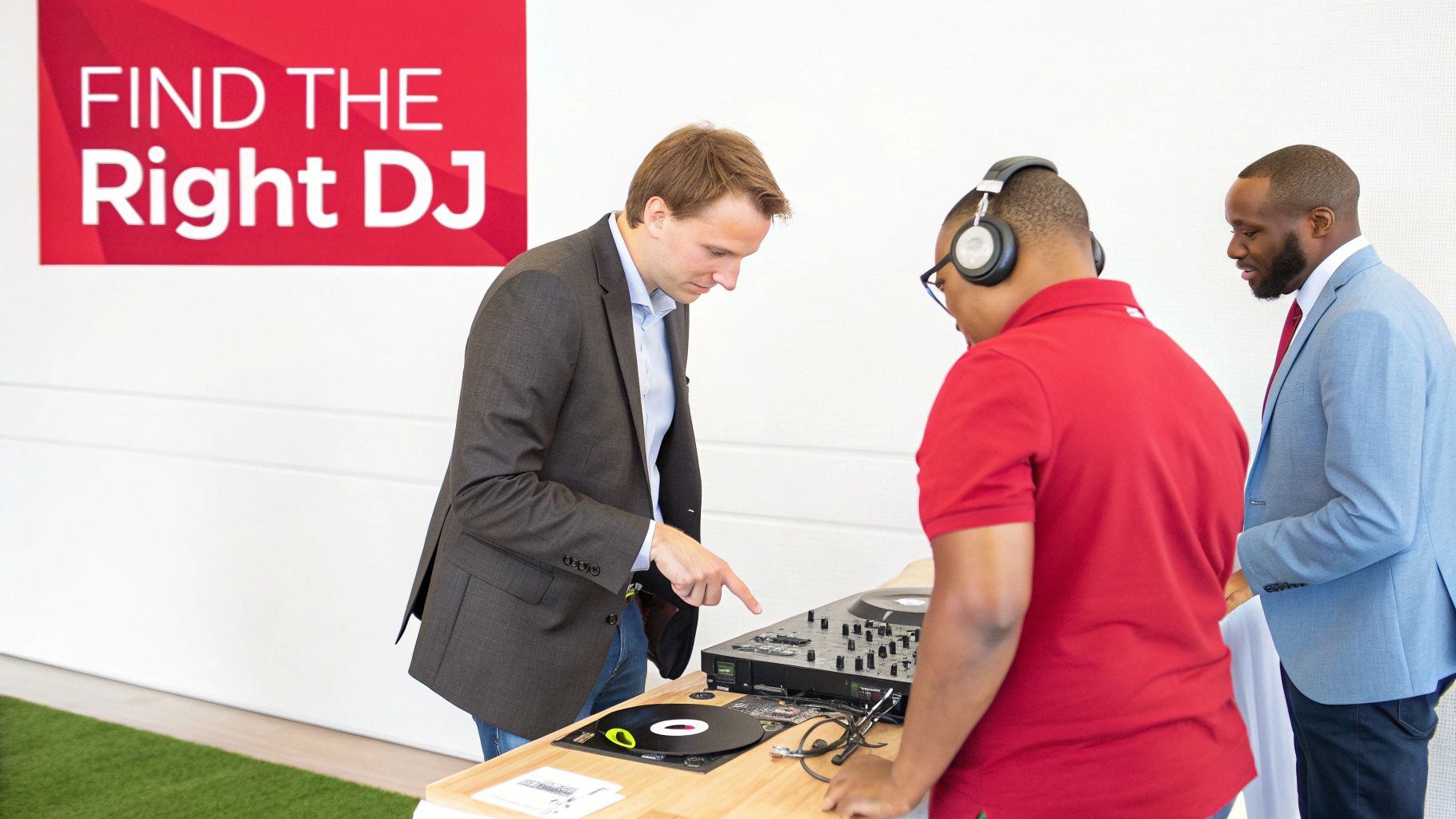
Start by zeroing in on their corporate portfolio. A DJ who spins at clubs every weekend might be fantastic at what they do, but they probably aren't the right fit for your annual awards gala. The pacing, the announcements, the whole dynamic is different. Look for photos, videos, and testimonials from events that look and feel like yours.
Listen for Versatility
Any DJ can throw together a high-energy dance mix. What you're listening for is range. Head over to their website or SoundCloud and check out their sample mixes. A true corporate pro can pivot on a dime.
- Can they set a sophisticated, understated mood for cocktail hour? Hunt for mixes labeled "lounge," "chill," or "cocktail."
- Do their mixes tell a story? You should hear a gradual build-up of energy, not just a wall of sound from the get-go.
- Are the transitions smooth? Jarring track changes or clashing tempos are the fastest way to kill the flow of an event.
A professional DJ’s mix is their resume. If you’re planning a black-tie fundraiser and all you hear are festival bangers, it's a hard pass. Their audio samples should instantly give you confidence that they can nail the specific atmosphere you’re creating.
It's About More Than Just the Music
In the corporate world, a DJ often wears more than one hat. They’re not just background noise; they're an essential part of the event's success. This means you need a polished professional who can also step up as a confident Master of Ceremonies (MC).
When you first chat with them, get a feel for their mic presence. Can they make announcements clearly and professionally? Can they introduce your CEO or an award winner with poise? This is a non-negotiable skill for keeping your event on track and your audience engaged. A great MC can command a room, while an awkward one… well, we’ve all seen it.
The best corporate event DJs also bring more to the table, offering bundled services that make your life a whole lot easier. Look for pros who provide integrated solutions, like:
- Professional Lighting: Think uplighting matched to your brand colors, intelligent lighting that brings the dance floor to life, and custom gobos projecting your company logo.
- AV Support: A DJ who can seamlessly manage microphones, projectors, and presentation audio is an absolute game-changer.
- Photo Booths: These are always a hit. Modern, interactive photo booths are a fantastic add-on for boosting guest engagement and creating shareable moments.
We’re also seeing DJs expand their turf way beyond traditional venues. Top pros are now performing in retail stores, gyms, and other unique spaces, which really speaks to their adaptability. As detailed on zipdj.com, this kind of flexibility is a key trait to look for when you're vetting someone for your one-of-a-kind event.
You’ve found the perfect DJ. Their vibe is right, their mixes are killer, and you know they'll get the crowd moving. But even the most talented DJ can be derailed by a technical hiccup.
This is where the less glamorous—but absolutely critical—part of event planning comes in: sorting out the technical needs and venue logistics. Getting this right is the difference between a flawless audio experience and a disaster waiting to happen. It all boils down to clear communication between your DJ, the venue, and you.
Start With the DJ’s Tech Rider
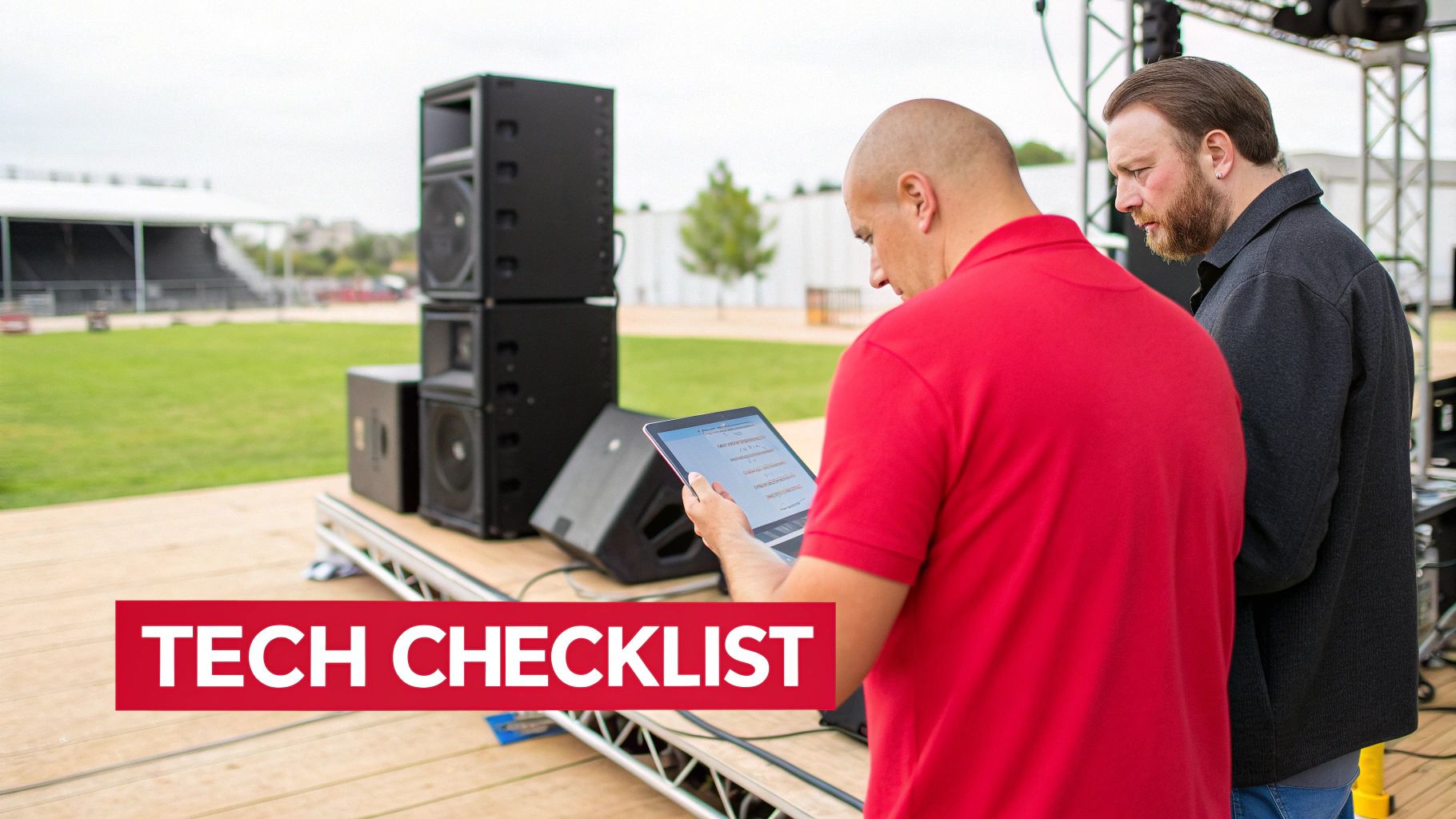
Before you even start picturing the setup, ask your DJ for their technical rider. Don't let the term scare you; it's just a straightforward document outlining all their equipment and setup needs. Think of it as their professional wish list to guarantee a high-quality show. It'll cover everything from the number of power outlets they need to the size of the table for their gear.
Unpacking the Technical Details
Once you have that rider, your very next move is to send it to your venue coordinator. They know their space inside and out—its power capabilities, its acoustic quirks, and its limitations. Never assume the venue has everything covered. A quick chat weeks in advance can prevent a full-blown crisis during soundcheck.
Here are the big three things to get sorted right away:
- Power Supply: Does the DJ need a dedicated circuit? Where are the outlets in relation to the performance area? Bad or shared power is a leading cause of equipment failure and embarrassing audio cut-outs.
- Sound System: Is your DJ bringing their own speakers, or are they plugging into the venue's in-house system? If it's the latter, you must confirm their gear is compatible.
- Staging and Space: How much of a footprint does the DJ's setup have? This includes their table, speakers, and any lighting they might bring. Make sure the spot you've picked out is safe, stable, and not in the middle of a major walkway.
This kind of coordination is at the very heart of what we do. It’s a huge piece of the puzzle, and to see how it all fits together, it helps to understand what event production truly entails.
Real-world tip: Don’t just ask if the venue has power. Ask where it is and if it’s on a dedicated circuit. A DJ sharing a circuit with the catering team’s coffee warmers is a recipe for a tripped breaker right in the middle of the CEO's speech.
To make sure nothing gets missed, a checklist is your best friend. Here’s a simple table you can use to guide your conversation with the DJ and venue manager.
DJ Technical Rider Checklist
This checklist will help you cover all the essential questions with your DJ and venue, ensuring everyone is on the same page and all technical needs are met well before showtime.
| Requirement Category | Key Questions to Ask | Who is Typically Responsible (DJ/Venue/Planner) |
|---|---|---|
| Power | How many outlets are needed? Do you require a dedicated circuit? | Venue provides access; Planner confirms location/needs |
| Audio | Will you use the venue's sound system or bring your own? What specific cables/connections are needed? | Varies; must be confirmed by DJ and Venue |
| Staging | What are the dimensions of your setup? (table size, speaker placement) | Venue provides space/stage; Planner ensures it's adequate |
| Internet | Do you require a hard-wired ethernet connection or reliable Wi-Fi? | Venue provides; Planner confirms speed and password |
| Load-in/Load-out | When do you need access for setup and teardown? Is there a loading dock? | Venue provides access; Planner coordinates timing |
| Microphones | How many mics are needed (wired/wireless)? Who is providing them? | Can be DJ, Venue, or a separate AV provider |
Using a simple checklist like this streamlines communication and makes sure no detail, big or small, falls through the cracks. It's all about proactive planning.
The Right Gear for the Job
The corporate event world has pushed DJ technology forward in massive ways. In fact, corporate gigs are a huge part of the industry, with about 27% of DJs regularly performing at private and corporate functions. This demand has helped drive the DJ console market toward a projected value of $104.5 billion by 2032—a clear sign that companies are investing in top-tier gear for their events.
A true professional will always have reliable, industry-standard equipment. Your role is to be the bridge, making sure the venue can fully support that gear. By connecting the dots between your DJ and the venue, you eliminate the guesswork and set the stage for a seamless event that sounds absolutely incredible.
Nailing the Interview and Contract
You've sifted through portfolios, listened to mixes, and found a DJ who seems to have the right sound. Great. Now comes the real test: making sure they’re a true professional who can handle the pressures of a corporate event, not just a weekend warrior with a great playlist.
This part of the process is less about their BPMs and more about their business acumen. Think of it as your safety net. A solid interview and an even more solid contract are what separate a smooth, successful event from a stressful, chaotic one.
The Questions That Really Matter
You have to go deeper than, "What kind of music do you play?" The goal here is to see how they think on their feet and handle the unexpected curveballs that events always throw.
Many of the same principles for vetting a professional apply whether you're planning a black-tie gala or a wedding. We cover some similar ground in our guide on how to choose a wedding DJ, and those tips are just as useful here.
Try these questions to get a real feel for their experience:
- "How do you handle song requests from guests?" This is a big one. You want a DJ who has a strategy for politely managing requests while protecting the carefully planned atmosphere of your event.
- "What's your backup plan if equipment fails or you have an emergency?" A pro won't even flinch at this question. They'll have backup gear on-site and a network of other trusted DJs they can call in a pinch.
- "Walk me through your experience as an MC at corporate events." Ask for specific examples. How do they command a room for announcements without being cheesy? How do they keep the timeline moving?
- "What's your standard attire for a formal corporate function?" Their look needs to match your brand and the event's dress code. No surprises.
These questions tell you if you're hiring a vendor or a true event partner.
Deconstructing the DJ Contract
Once you’ve found your DJ, the contract is what makes it official. It protects you, it protects them, and it eliminates any "he said, she said" confusion later on. If a DJ is hesitant to provide a detailed written agreement, that's a massive red flag.
A professional contract isn’t just a formality; it’s a roadmap for your event. It ensures that every detail, from the first song to the final payment, is clearly defined and agreed upon, leaving no room for last-minute surprises or miscommunications.
Don't sign anything until you've confirmed it includes these critical elements:
- Performance Details: The contract must spell out the exact date, venue address, and the specific start and end times for the performance. No ambiguity.
- Payment Schedule: It should clearly list the total fee, the deposit amount, and the due dates for every single payment.
- Cancellation Policy: What if you have to cancel? What if they have to cancel? This clause needs to lay out the terms for both scenarios in black and white.
- Liability Insurance: This is non-negotiable. Confirm the DJ carries their own liability insurance. Most professional venues require it, and it's a crucial layer of protection for your company.
The professional DJ world is a serious business. The global electronic music sector, which is the bedrock of the corporate DJ scene, was valued at a record $12.9 billion in 2024. This isn't a hobby—it's a mature industry, and you should expect a comprehensive, legally sound contract from any reputable pro. You can learn more about the industry’s strong growth on MusicWeek.com.
By taking the interview and contract process seriously, you’re not just hiring a DJ; you’re securing a reliable partner who will help make your event a success.
Creating a Seamless Event Timeline with Your DJ
The secret to a killer corporate event isn't just one big moment; it's a series of perfectly timed smaller ones that flow together effortlessly. That flow comes from a meticulously planned timeline, or what we in the biz call a "run of show."
This document is your event's playbook. Collaborating with your DJ to build it isn't just a good idea—it's absolutely essential. This is where you map out the entire evening's vibe, using music to guide your guests from the minute they walk in the door to the final farewell.
This isn’t just about picking songs for the dance floor. It's about strategy. You'll work together to set a relaxed, welcoming tone with some background grooves as guests arrive and grab a drink. That first impression sets the stage for everything else.
Mapping Key Moments to Music
Think about your event in chapters. Each part of the evening has a different job to do, and the music needs to match. A real pro will help you pinpoint these key moments and find the perfect sound to make them pop.
- Arrival & Cocktail Hour: You want something sophisticated but low-key. Music that lets people mingle and chat without having to shout over it.
- Introductions & Announcements: A quick, punchy musical sting is perfect here. It grabs everyone’s attention and signals that something important is about to happen.
- Awards Ceremony: Keep the energy up! Short, upbeat walk-up tracks for each person coming on stage make it feel exciting and professional, not long and drawn-out.
- Dinner Service: Time to bring the tempo down. A shift to a more elegant, relaxed playlist creates the right atmosphere for dining and conversation.
- Open Dancing: This is the main event! Your DJ will build a set that ramps up the energy and is curated specifically for your crowd.
When you plan this thoughtfully, the music never feels random. It feels like an intentional part of the experience, supporting your goals for the event.
Once you’ve found the right DJ and are ready to ink the contract, this timeline collaboration is your very next step.
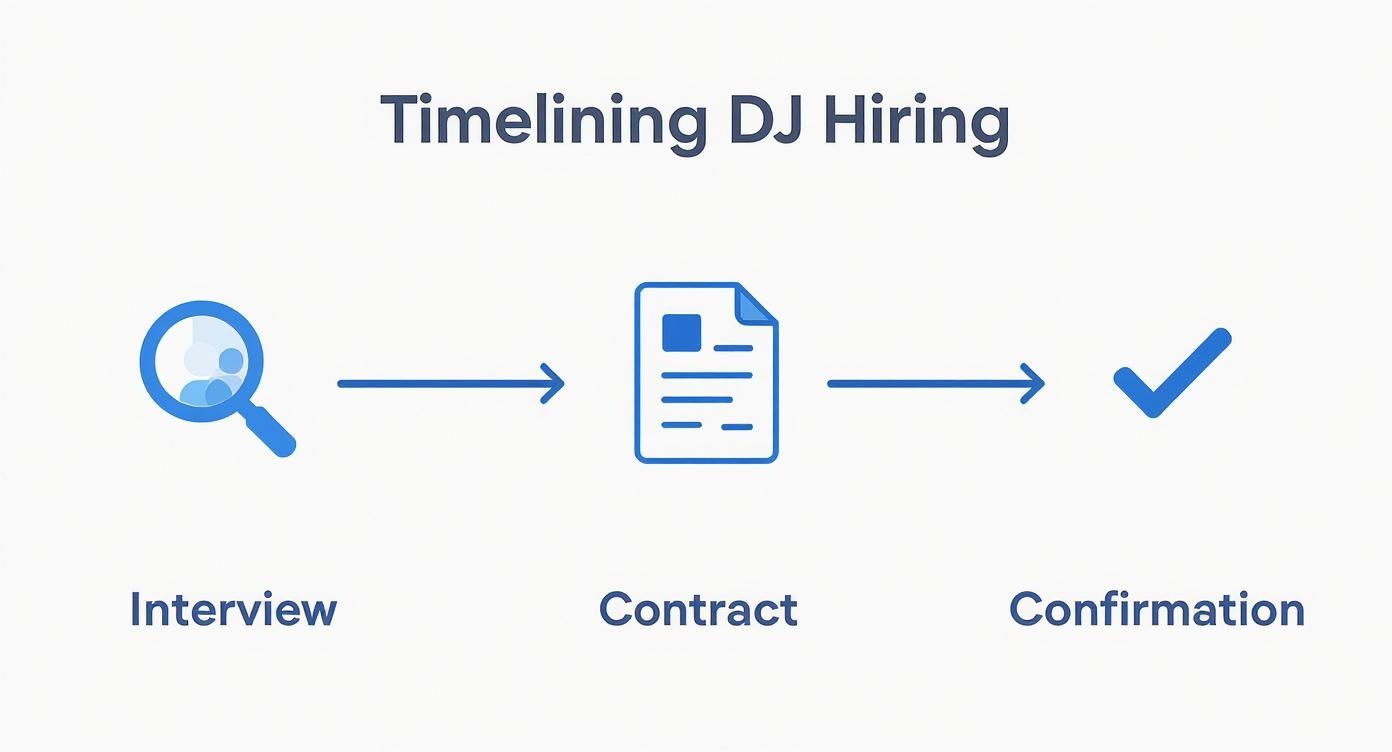
A solid agreement is the foundation, but this detailed creative collaboration is what brings the event to life.
The Power of a Shared Plan
Okay, so you and your DJ have drafted the perfect timeline. You're not done yet. The final, most critical step is to share that run of show with all of your vendors. Every single one.
Your caterer needs to know when the speeches are. Your photographer needs to know when the awards are being handed out. Your venue coordinator needs a heads-up on any special announcements.
Your DJ often becomes the unofficial quarterback of the evening's flow. When everyone is working off the same timeline, your DJ can give a subtle nod to the catering captain before a toast or ensure the house lights dim at just the right moment.
This is how you avoid those awkward pauses or technical fumbles that can kill the mood. For instance, if the DJ knows a big presentation is happening at 8:15 PM, they'll have the music faded out and the right audio input patched in and ready to go.
A shared plan lets everyone—from the DJ to the venue staff—work as a single, cohesive team. That’s how you deliver a polished, professional experience that people will be talking about long after the night is over.
Got Questions About Hiring a Corporate DJ? We've Got Answers
Even if you're a seasoned event planner, booking entertainment can feel like a whole different ball game. It’s natural to have questions, and getting them answered upfront is the key to finding a partner you can trust. Let's walk through a few of the most common questions we hear from clients just like you.
Getting this stuff sorted out early prevents any last-minute scrambles and kicks off a great partnership from day one.
How Far in Advance Should I Book?
For the best selection of talent, you’ll want to book your DJ at least 3 to 6 months before your event. This gives you plenty of breathing room to find the perfect fit without feeling rushed.
Now, if your event falls during a high-demand season—think December holiday parties or the busy spring and fall conference rush—you'll want to extend that timeline. Booking 9 to 12 months out is a seriously smart move for those peak dates. The best corporate DJs get snapped up early, and locking in your entertainment lets you tick a huge item off your list.
Can I Give You a Playlist?
Of course! But let's think of it as a collaboration. A short list of "must-play" songs for key moments (like walk-up music or an awards intro) and a "do-not-play" list are incredibly helpful. It gives your DJ a real feel for your company culture and the vibe you're aiming for.
That said, a truly great DJ's biggest strength is their ability to read the room.
Trust your DJ to have the flexibility to adapt to the crowd's energy. They'll use your suggestions as a guidepost while mixing in other tracks that are proven to keep the dance floor packed and the mood just right. It's that balance that makes an event feel both personal and professionally mixed.
This approach ensures the music feels organic and connects with everyone in the room, not just a select few.
What Happens if There's an Emergency?
This is the big one—a non-negotiable you need to lock down before signing anything. Any reputable DJ or entertainment company worth their salt will have a rock-solid backup plan.
This usually means they have a network of equally talented DJs on standby who can step in at a moment's notice if your scheduled performer has an unavoidable emergency. This guarantee shouldn't just be a verbal promise; it needs to be spelled out clearly in your contract.
Here’s what to look for:
- A guaranteed replacement policy: The agreement should state that a replacement of comparable skill and experience will be provided, no questions asked.
- Liability insurance: Proof of insurance is an absolute must. It protects you, the venue, and the performer.
- A clear communication plan: The contract should detail exactly how and when you'll be notified if any issues come up.
A pro’s preparedness for the unexpected is the clearest sign of their experience. It gives you total peace of mind, ensuring your event goes off without a hitch, no matter what’s happening behind the scenes.
At Showboss KC, we’re all about proactive planning and clear communication. From detailed run-of-shows to ironclad backup plans, we sweat the details so you can focus on your guests. Contact us today to discuss the vision for your next Kansas City corporate event.