

Planning a corporate event feels like conducting an orchestra. Every detail, from the initial budget meetings to the final thank-you email, must harmonize perfectly to create a memorable experience. Get one element wrong, and the entire production can fall flat, failing to deliver on its intended return on investment. This is especially true in a dynamic market like Kansas City, where expectations for engagement and production quality are higher than ever.
Whether you're launching a new product, hosting a national sales conference, organizing an executive retreat, or planning the annual holiday party, a meticulous plan is non-negotiable. Success isn't accidental; it's the result of a deliberate, step-by-step process that accounts for every contingency. This comprehensive corporate event planning checklist is your strategic blueprint, broken down into ten critical phases that cover the entire event lifecycle.
From defining clear business objectives and managing complex budgets to coordinating high-impact audio-visual production and executing a seamless day-of run of show, we've got you covered. We'll provide actionable steps, expert tips, and local KC insights from the production professionals at Showboss KC to ensure your event not only runs smoothly but also achieves its core objectives and leaves a lasting impact on your attendees. Consider this your definitive guide to transforming a concept into a flawless, applause-worthy corporate gathering.
1. Define Event Objectives & Goals
Before a single dollar is spent or a venue is toured, the most critical step in any successful corporate event planning checklist is defining its core purpose. Establishing clear, measurable objectives is the foundational blueprint that dictates every subsequent decision, from content and programming to technology and marketing. Without a defined "why," your event risks becoming a costly, unfocused gathering with no discernible return on investment.
This initial phase involves answering fundamental questions: What is the primary reason for this event? Are you launching a new product, celebrating a company milestone, educating employees, or fostering client relationships? Your answers will directly influence the event’s tone, scale, and structure.
From Vague Ideas to Actionable Metrics
Moving from a general concept to a strategic plan requires translating broad goals into specific, measurable outcomes. This process ensures every element of your event serves a unified purpose and aligns with broader business objectives.
- Quantitative Goals: These are the hard numbers. Think in terms of a specific number of registrations, a target percentage for lead generation, a desired sales figure, or a certain level of social media engagement (e.g., 1,000 uses of the event hashtag).
- Qualitative Goals: These focus on perception and sentiment. Examples include improving employee morale, enhancing brand reputation, strengthening partner relationships, or establishing thought leadership within your industry.
Pro-Tip: Document these objectives in a shared project charter. This document should be the North Star for all stakeholders, from the marketing team to your AV partner, ensuring everyone is working toward the same definition of success.
For example, a tech company launching a new software might set a quantitative goal of securing 50 pre-orders and a qualitative goal of generating positive media coverage in three key industry publications. This clarity prevents scope creep and keeps the team focused on what truly matters. Revisit these objectives at key planning milestones to ensure your event remains on track to deliver meaningful results.
2. Establish Budget & Secure Funding
With clear objectives defined, the next logical step in your corporate event planning checklist is establishing a comprehensive budget. This isn't just about crunching numbers; it's about assigning a financial value to your goals and creating a roadmap for responsible spending. A well-constructed budget is the primary tool for maintaining financial control, preventing scope creep, and ensuring the event is not only successful but also profitable.
This critical phase involves a detailed estimation of all potential expenses, from big-ticket items like venue and production to smaller costs like marketing and staffing. Securing the necessary funding and determining how costs will be allocated across departments are essential steps to gain organizational buy-in and prevent financial friction down the line.
From Estimates to a Strategic Financial Plan
Transforming a rough cost estimate into a strategic financial document requires a line-by-line breakdown of every anticipated expense. This detailed approach provides transparency for stakeholders and empowers your team to make informed decisions throughout the planning process.
- Fixed Costs: These are expenses that remain the same regardless of attendee count. This includes venue rental, AV and production packages, speaker fees, and entertainment.
- Variable Costs: These costs fluctuate based on the number of guests. Examples include catering (per-person cost), printing materials, swag bags, and registration processing fees.
Pro-Tip: Always build a contingency fund of 10-15% of your total budget into your initial plan. This financial cushion is crucial for handling unforeseen expenses, such as last-minute equipment rentals or unexpected staffing needs, without derailing your entire event.
For instance, a startup's $75,000 product launch will allocate funds differently than a Fortune 500 company's $1.5 million annual summit. The key is to use historical data from similar events as a baseline and track every expense in real-time with budget management software. This proactive financial management keeps your event on track and demonstrates a strong return on investment to leadership.
3. Select & Book Venue
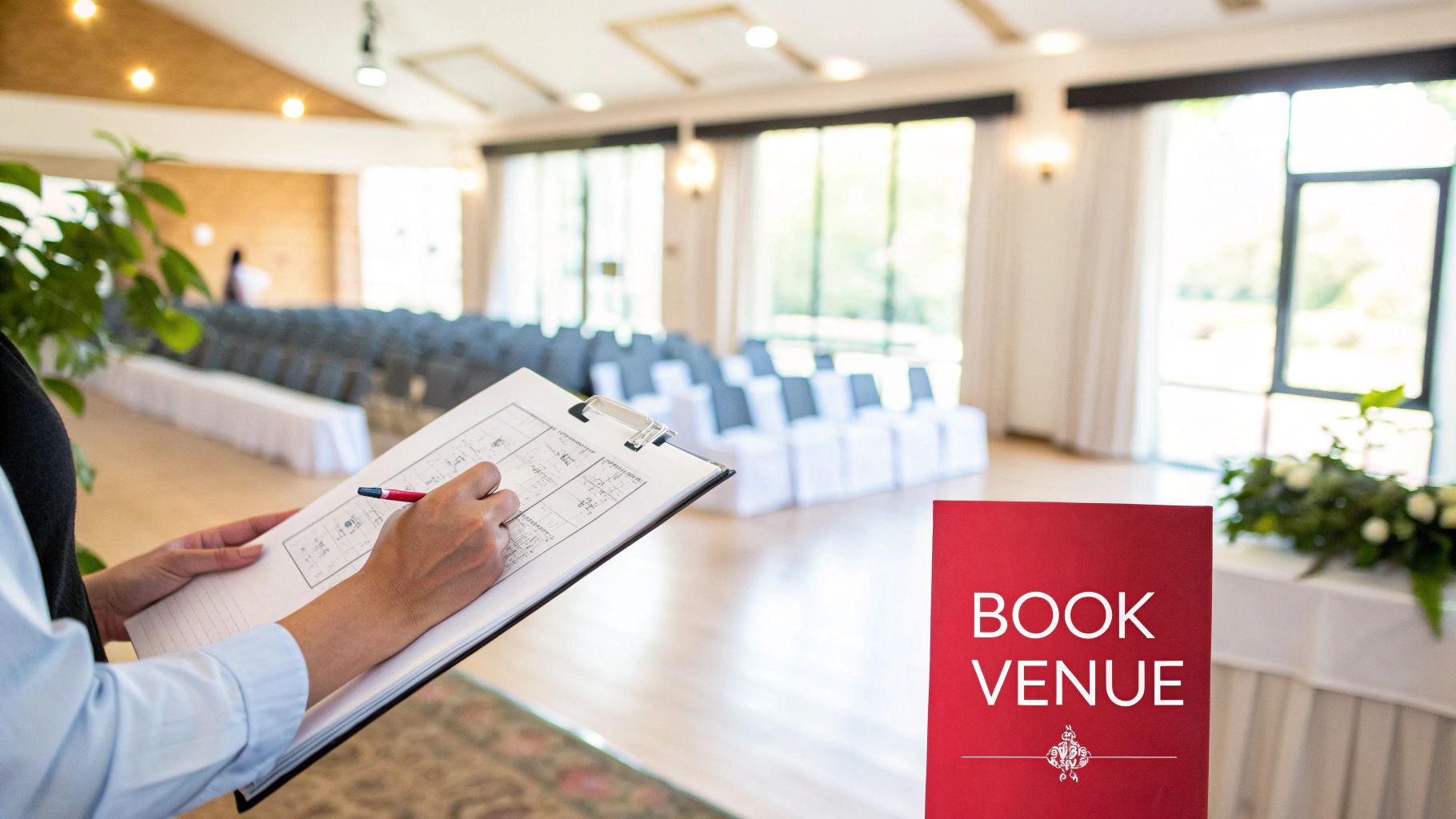
Once your event’s objectives and budget are defined, securing the right venue becomes a top priority. This decision is far more than just finding a physical space; the venue sets the tone, dictates logistical possibilities, and is often one of the largest line items in your budget. The right location enhances the guest experience, while the wrong one can create insurmountable obstacles, regardless of how well other elements are planned.
This stage involves identifying potential locations that align with your event's scale, brand, and technical needs. Whether it's a sprawling tech conference at a convention center or an intimate networking event in a boutique hotel, the venue choice directly impacts everything from catering and production to attendee accessibility.
From Shortlist to Signed Contract
Transitioning from a list of possibilities to a signed contract requires a methodical evaluation process. Each potential venue must be scrutinized against your event’s specific requirements to ensure it’s a perfect fit, not just a convenient option.
- Capacity and Layout: Does the venue comfortably accommodate your expected guest count? Consider the flow of traffic, registration areas, breakout rooms, and networking spaces. A site visit is non-negotiable to visualize how your event will unfold.
- Technical & AV Capabilities: Can the venue’s in-house AV team and infrastructure support your production needs? Ask about power availability, rigging points, internet bandwidth, and any restrictions on bringing in external vendors like Showboss KC for specialized staging or LED walls.
- Logistics and Accessibility: Evaluate parking availability, proximity to public transportation, and ADA compliance. A venue that is difficult for guests to reach can negatively impact attendance and overall satisfaction.
- Contractual Details: Carefully review contracts, paying close attention to cancellation policies, attrition clauses for room blocks, and what is included in the pricing. Hidden fees for staffing, security, or cleaning can quickly inflate your budget.
Pro-Tip: Always request and check references from planners who have hosted similar events at the venue. Ask specifically about their experience with the venue staff, flexibility, and any unexpected challenges they encountered. This inside information is invaluable.
For example, a corporate retreat at a resort property requires evaluating not just meeting rooms but also recreational amenities and dining options. A product launch in a historic mansion needs confirmation of its AV capabilities and load-in logistics. Booking your venue 6-12 months in advance is crucial for securing your preferred date and gaining leverage in negotiations.
4. Plan Event Schedule & Program
With your objectives defined and budget set, the next crucial step in your corporate event planning checklist is crafting the event’s heartbeat: the schedule and program. This is more than just a timeline; it's a strategic framework designed to guide attendee experience, manage logistical flow, and ensure your event’s core messages are delivered with maximum impact. A well-architected program dictates the energy, engagement, and overall success of the day.
This phase involves mapping out every single component, from keynote presentations and breakout sessions to meals, networking breaks, and entertainment. The goal is to create a balanced, engaging journey that respects attendees' time and attention spans, preventing fatigue and maintaining high levels of participation from start to finish. A thoughtful program is the difference between a memorable experience and a long, forgettable day.
From a Timeline to an Experience
Transforming a simple agenda into a compelling experience requires a strategic approach to content, pacing, and flow. This ensures your schedule not only looks good on paper but also functions seamlessly in a live environment, keeping attendees captivated and energized.
- Structure for Engagement: Build your schedule around key moments. Place your most dynamic speakers or high-value content during peak attention times, typically late morning. Consider alternating between intense learning sessions and lighter, more interactive activities, like networking games or entertainment. Explore some unique corporate event entertainment ideas to break up content-heavy blocks.
- Pacing and Flow: The human brain can only absorb so much information at once. Plan sessions to last no more than 45-60 minutes and schedule 15-minute breaks at least every 90 minutes. Crucially, build 5-10 minute buffers between every single agenda item to account for transitions, Q&A running long, or technical adjustments.
Pro-Tip: Create a master "Run of Show" document. This hyper-detailed schedule should break down every segment to the minute, including speaker walk-on music cues, lighting changes, and slide transitions. Share this with your AV team, stage manager, and speakers to ensure flawless execution.
For instance, a one-day leadership summit might start with a high-energy welcome, followed by a keynote, a 20-minute networking break, two concurrent breakout sessions, and then lunch. The afternoon could feature interactive workshops and a closing panel discussion. This varied structure keeps the day moving and caters to different learning styles, ensuring the program delivers on your event objectives.
5. Invite Speakers & Secure Presenters
The content and programming are the heart of your event, and securing compelling speakers is paramount to delivering value and driving attendance. Booking the right presenters transforms a standard meeting into a must-attend experience, enhancing your event's credibility, marketing appeal, and overall impact. This step is far more than just filling a slot on the agenda; it’s about curating expertise that directly supports your event objectives.
This process involves identifying individuals whose message and reputation align with your theme, negotiating terms, and managing all logistical and technical aspects of their participation. Whether it’s an industry titan, a technical expert, or an inspirational motivator, your choice of speakers directly shapes the attendee experience and is a cornerstone of a comprehensive corporate event planning checklist.
From Wish List to Confirmed Lineup
Transitioning from a list of potential speakers to a confirmed, prepared lineup requires a systematic approach. The goal is to secure talent that not only draws a crowd but also delivers content that resonates deeply with your audience and reinforces your event's core message.
- Speaker Identification & Outreach: Start by identifying speakers who are authorities on your event’s topic. Contact them at least 4-6 months in advance, as high-demand presenters have packed schedules. Your initial outreach should clearly state the event's purpose, audience profile, and proposed topic.
- Logistical & Technical Coordination: Once a speaker accepts, the real work begins. This includes negotiating fees, travel, and accommodation, as well as collecting presentation materials, headshots, and biographies. It is crucial to coordinate their specific AV needs, such as microphone preferences, presentation format (e.g., PowerPoint, Keynote), and requirements for video or audio playback.
Pro-Tip: Create a comprehensive speaker briefing document. This guide should include the event schedule, key talking points, audience demographics, logistical details, and contact information for your onsite AV team. A pre-event tech rehearsal is non-negotiable to ensure a seamless presentation.
For example, a technology summit might secure a well-known CEO as the keynote to generate buzz and an academic researcher to provide in-depth, technical insights. Having backup speakers in mind is also a critical contingency. This strategic curation ensures your event delivers on its promise of valuable, engaging content.
6. Manage Guest List, Registration & Staffing
Once your event’s foundation is set, the next crucial layer involves managing the people who will bring it to life: your guests and your staff. An effective system for controlling attendee numbers, collecting key information, and deploying a well-trained team is what separates a chaotic gathering from a seamless, professional experience. This element of your corporate event planning checklist directly impacts everything from catering counts and seating arrangements to on-site problem-solving and overall guest satisfaction.
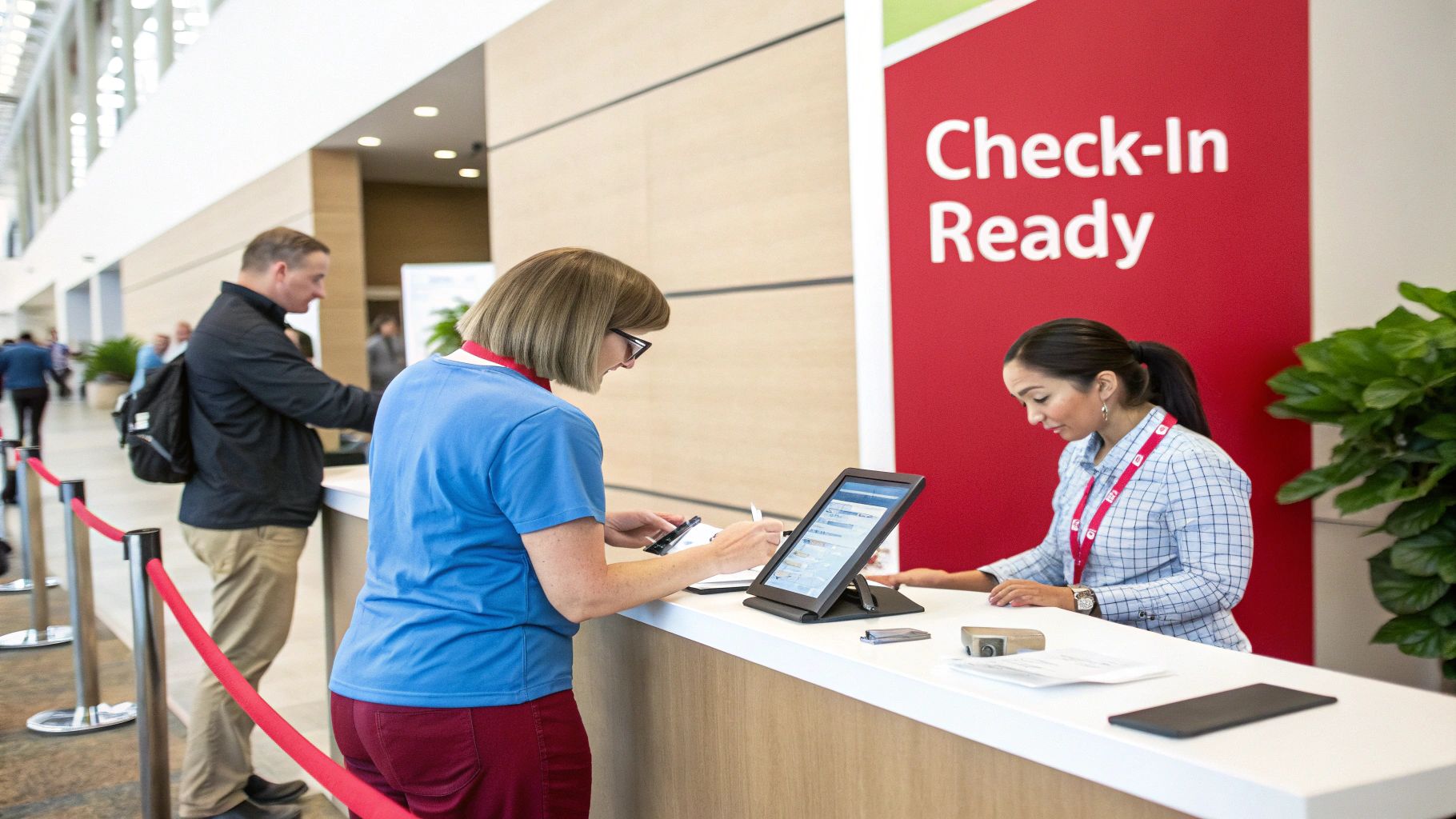
This phase is about precision and foresight. It involves establishing capacity limits, deploying a user-friendly registration system, tracking RSVPs meticulously, and building a reliable team. Whether you're coordinating a small group of senior leaders or a conference with thousands, a clear strategy for guest and staff management is non-negotiable for operational success.
From Headcounts to Actionable Teams
A successful event requires more than just knowing how many people will attend; it demands a structured approach to both registration and on-site support. This means creating a smooth guest journey from the moment they RSVP to their last interaction at the event, all while your team operates like a well-oiled machine behind the scenes.
- Guest Management: This is your data collection and logistics hub. Use an event management platform like Cvent or Eventbrite to automate registrations, collect essential information (name, company, dietary needs), and send automated reminders. Consider tiered registration, like early-bird pricing or VIP packages, to create urgency and segment your audience.
- Staffing & Volunteer Coordination: This is your operational backbone. Develop detailed job descriptions for every role, from registration desk attendants to AV liaisons. Recruit and train your team thoroughly, ensuring everyone understands the event flow, key contacts, and emergency protocols. For large-scale events, assign team leads for major areas to streamline communication.
Pro-Tip: For guest registration, plan to over-invite by 20-30% to account for the inevitable no-shows and last-minute cancellations. For staffing, over-staff by 10-15% to build in a buffer for unexpected absences, ensuring you're never short-handed on event day.
For example, a trade show requiring pre-registration can use this data to print badges in advance for expedited entry, drastically reducing check-in lines. Similarly, a multi-day festival can assign dedicated staff teams to specific functions like stage management, guest services, and security, creating clear lines of command and efficient problem resolution. This dual focus on guests and staff ensures a controlled and positive environment for everyone involved.
7. Coordinate Catering & Food/Beverage
Beyond the keynote speakers and breakout sessions, the quality of your food and beverage service is one of the most memorable elements for attendees. Poor catering can overshadow even the best content, making this a critical component of any corporate event planning checklist. This stage involves much more than just picking a menu; it's about creating an experience that fuels your guests, facilitates networking, and complements the event’s overall flow.
This process covers everything from vendor selection and menu tasting to managing dietary restrictions and timing meal service. Whether it's a simple coffee break or a formal multi-course dinner, a well-executed catering plan directly impacts attendee satisfaction and their perception of your company. It demonstrates care and attention to detail, making guests feel valued and comfortable throughout the day.
From Headcounts to Hors d'oeuvres
Turning your catering vision into a seamless reality requires meticulous coordination and communication with your chosen vendor. It’s about aligning the culinary experience with your event’s schedule, budget, and guest profile to ensure a smooth and enjoyable service.
- Service Style: The format of your event dictates the service. An executive retreat may call for a plated, multi-course dinner, while a fast-paced tech conference benefits from grab-and-go lunch stations and continuous coffee breaks to maximize learning time. An evening networking reception is often best served by passed hors d'oeuvres and strategically placed bar stations.
- Dietary Accommodations: Proactively planning for dietary needs is no longer optional; it's a standard of professional event management. At a minimum, plan for vegetarian, vegan, and gluten-free options. Clearly labeling all food items with major allergens is a crucial step to ensure guest safety and comfort.
Pro-Tip: Confirm your final guaranteed headcount with the caterer 7-10 days before the event. While it’s wise to account for a potential 10-20% no-show rate, also ask your caterer to prepare for a 5% overage to accommodate any unexpected guests or last-minute additions.
For instance, an all-day employee training summit might feature a light breakfast with pastries and coffee, a mid-morning snack break, a buffet-style lunch with diverse options, and an afternoon energy boost with snacks and beverages. This thoughtful scheduling keeps attendees engaged and focused, preventing lulls in energy and ensuring the program remains the central focus.
8. Arrange Marketing & Promotion
A meticulously planned event with world-class content is meaningless if no one shows up. Strategic marketing and promotion are the engines that drive awareness, registrations, and ultimately, attendance. This phase moves beyond a simple "if you build it, they will come" mindset and focuses on creating a comprehensive plan to reach, engage, and convert your target audience into attendees.
This process involves developing a multi-channel marketing strategy, designing compelling promotional materials, and building a communication timeline that generates excitement and maintains momentum. From email campaigns to social media buzz, effective promotion ensures your event stands out in a crowded market and connects with the right people.
From Announcement to Attendance
Transforming your event from an internal project into a must-attend industry gathering requires a structured promotional rollout. This ensures you build a groundswell of interest rather than relying on a last-minute push, creating a seamless journey for potential attendees from initial awareness to final registration.
- Digital Outreach: This is the cornerstone of modern event promotion. It includes creating a dedicated event landing page with all key details, running targeted email marketing campaigns, and leveraging social media platforms like LinkedIn for B2B events.
- Partnerships & Amplification: Extend your reach by collaborating with others. This can involve co-promotion with event sponsors, partnering with industry influencers to tap into their audience, or launching referral programs that incentivize registered attendees to invite their colleagues.
Pro-Tip: Start your core promotional activities at least 8-12 weeks before the event. Create an early-bird registration window with a 10-20% discount to generate immediate sign-ups, which provides valuable social proof and helps forecast attendance numbers.
For instance, a regional tech summit could launch its campaign with an email blast announcing keynote speakers, followed by a steady stream of social media content featuring speaker quotes, behind-the-scenes glimpses, and testimonials from past attendees. Integrating interactive elements like contests or polls can further boost engagement and make your event a key part of your overall brand activation strategy. Read about how effective promotion contributes to successful brand activations. This methodical approach in your corporate event planning checklist ensures a full house on event day.
9. Manage Audio/Visual & Technology
In the modern corporate event landscape, technology isn't just a support function; it's the central nervous system of the entire experience. From crystal-clear sound during a keynote to a flawless hybrid broadcast, managing audio/visual and technology is a critical component of any corporate event planning checklist. Poor technical execution can instantly undermine exceptional content, frustrate attendees, and damage your brand’s reputation.
This phase is about securing the infrastructure that delivers your message. It involves selecting experienced AV partners, designing a technical setup that matches your event's scale and goals, and implementing rigorous testing protocols. Whether it’s a simple slideshow or a multi-stage production, a proactive and professional approach to technology is non-negotiable for a successful event.
From Technical Specs to Seamless Execution
Translating your event vision into a functional technical plan requires a detailed and methodical process. This is where you move beyond simply renting equipment to designing an integrated system that creates an immersive and reliable environment for every attendee, both in-person and virtual.
- Infrastructure Design: This covers the core technical needs. It includes specifying the right number and type of microphones, designing stage lighting, planning for video projection or LED walls, and ensuring robust WiFi and power distribution. For hybrid events, this also involves camera placement, broadcast switching, and platform integration.
- Content Management: This focuses on the presentation itself. It involves creating strict technical guidelines for speakers regarding slide formats (e.g., 16:9 aspect ratio), video file types, and submission deadlines. It also includes having a plan for managing, testing, and cueing all digital content.
Pro-Tip: Conduct a full technical rehearsal with all key presenters at least one day before the event. This isn't just a soundcheck; it's a complete run-through of slides, videos, and transitions to identify and fix issues before your audience arrives.
For example, a large conference with multiple breakout rooms requires a sophisticated plan to manage AV in each space simultaneously, while a high-profile product launch needs broadcast-quality live streaming and recording. A deep understanding of event production is essential to coordinate these complex elements. By partnering with a professional AV team, you ensure every technical detail is meticulously planned and flawlessly executed.
10. Plan Post-Event Follow-Up & Evaluation
The final, and often overlooked, item on any comprehensive corporate event planning checklist is strategizing for what happens after the lights go down. An effective post-event plan is not an afterthought; it is a critical phase that maximizes your event's return on investment, nurtures new relationships, and captures invaluable data to improve future gatherings. The value of your event doesn't end when the last attendee leaves, it extends through strategic follow-up.
This phase involves a coordinated effort to engage attendees, analyze performance against your initial goals, and convert event momentum into tangible business outcomes. From lead nurturing to content repurposing, a strong post-event strategy ensures the impact of your efforts is felt for weeks and months to come, justifying the investment and paving the way for even greater success next time.
From Closing Remarks to Continuous Engagement
Translating post-event activities from a simple to-do list into a strategic engagement loop requires a structured approach. The goal is to reinforce key messages, demonstrate appreciation, and extract actionable insights that prove event value and inform your next planning cycle.
- Data & ROI Measurement: This is where you connect the dots back to your initial objectives. Track and analyze metrics like final attendance numbers, session popularity, lead conversion rates, social media engagement, and revenue generated. Present this data in a clear post-event report.
- Audience Nurturing: This involves all communications with your attendees, speakers, and sponsors after the event. It includes feedback surveys, thank you emails, content delivery (like session recordings or slide decks), and targeted follow-ups for sales leads.
Pro-Tip: Segment your post-event communications. Send tailored messages to attendees, no-shows, sponsors, and speakers. A sponsor might receive a report on their specific ROI, while a no-show could get a "sorry we missed you" email with a link to key content.
For instance, a sales kickoff event should be followed by immediate lead distribution to the sales team with a clear 3-day follow-up deadline. Simultaneously, a feedback survey should be deployed to all attendees within 48 hours to capture fresh insights on content and logistics, with an incentive like a gift card drawing to boost response rates. This multi-pronged approach ensures no opportunity is missed.
10-Point Corporate Event Planning Comparison
| Item | Implementation complexity | Resource requirements | Expected outcomes | Ideal use cases | Key advantages |
|---|---|---|---|---|---|
| Define Event Objectives & Goals | Low–Medium: stakeholder alignment and SMART goal setting | Time from leadership, meeting coordination, baseline data | Clear success metrics, aligned planning decisions, measurable ROI targets | Any event; essential at project start and strategic initiatives | Focused resource use, easier decision-making, measurable evaluation |
| Establish Budget & Secure Funding | Medium–High: forecasting, approvals, contingency planning | Finance involvement, budget tools, vendor quotes, contingency funds | Approved budget, controlled spend, vendor selection criteria | Large-scale, multi-department or funded events | Prevents overruns, enables cost optimization, builds stakeholder confidence |
| Select & Book Venue | Medium–High: site visits, contract negotiation, compliance checks | Venue research, site visits, deposits, legal/insurance review | Secured date/location, logistical baseline (capacity, tech) | In-person conferences, retreats, large gatherings | Provides concrete parameters, often includes venue support services |
| Plan Event Schedule & Program | Medium: detailed timing, speaker sequencing, buffers | Program team, speaker coordination, run-of-show documents | Engaged attendees, smooth transitions, predictable flow | Conferences, training days, multi-track events | Maximizes engagement, efficient time management, professional delivery |
| Invite Speakers & Secure Presenters | High: sourcing talent, negotiation, logistics coordination | Speaker fees, travel/accommodations, contracts, briefing time | High-quality content, increased credibility and marketing reach | Thought leadership events, keynote-driven conferences | Boosts attendance and credibility, leverages speaker networks |
| Manage Guest List, Registration & Staffing | High: systems integration, staffing plans, privacy compliance | Registration platform, staff/volunteers, check-in tech, training | Accurate headcount, smooth check-in, improved attendee experience | Large conferences, ticketed events, high-volume registrations | Personalized experience, operational reliability, data capture for follow-up |
| Coordinate Catering & Food/Beverage | Medium: menu planning, dietary accommodations, service timing | Catering vendors, per-person budget, service staff, labeling | Satisfied attendees, smoother networking, inclusivity for diets | All-day events, receptions, dinners, VIP functions | Enhances attendee satisfaction, supports networking, reflects brand quality |
| Arrange Marketing & Promotion | Medium–High: campaign planning, multichannel execution | Marketing team, creative assets, ad spend, CRM/email tools | Awareness, registrations, sponsor visibility, built momentum | Public conferences, product launches, paid-ticket events | Drives attendance, builds pre-event engagement, amplifies sponsor value |
| Manage Audio/Visual & Technology | High: equipment design, testing, redundancy planning | AV vendor, equipment, IT staff, reliable bandwidth, backups | Reliable presentations, streaming/recording, attendee engagement tools | Hybrid events, multi-stage conferences, virtual productions | Professional content delivery, expanded remote reach, recordings for reuse |
| Plan Post-Event Follow-Up & Evaluation | Medium: survey design, data analysis, lead follow-up | Survey/analytics tools, CRM, content production resources | Actionable insights, lead conversion, repurposed content, documented learnings | Lead-gen events, recurring conferences, annual summits | Enables continuous improvement, extends ROI, preserves institutional knowledge |
Bringing It All Together: Your Next Step to a Flawless KC Event
Navigating the complexities of event planning can feel like conducting an orchestra, where every instrument, every musician, and every note must align perfectly to create a masterpiece. The comprehensive corporate event planning checklist you've just reviewed is your sheet music. It provides the structure, the timing, and the essential components, from defining your objectives and securing a budget to managing post-event analytics. Each step, from venue selection to marketing promotion, is a critical note that contributes to the final harmony.
However, a flawless performance isn't just about reading the notes; it's about the artistry, the passion, and the technical precision behind the execution. This is where your event transforms from a well-organized meeting into a truly memorable experience. The most meticulously planned agenda can fall flat if the sound system crackles during the CEO's keynote, the lighting fails to create the right atmosphere, or the entertainment doesn't resonate with your audience. These production elements are not just add-ons; they are the sensory foundation of your event.
Key Takeaways for Exceptional Execution
As you move from this checklist to your actual planning process, keep these core principles at the forefront. They represent the difference between simply hosting an event and creating an impactful moment.
- Strategy Before Logistics: Never lose sight of your "why." Every decision, from the catering menu to the DJ's playlist, should intentionally support your primary event goals. A clear objective is the compass that guides every other item on your checklist.
- Budget as a Strategic Tool: Your budget is more than a list of expenses; it's a roadmap for resource allocation. Prioritize spending on elements that directly impact the guest experience and your event's core objectives, such as high-quality audio-visual production and engaging entertainment.
- The Power of Partnership: You cannot do it all alone, nor should you have to. The most successful event planners understand the value of assembling a team of expert vendors. This is especially true for technical production, where specialized knowledge is non-negotiable.
Your Actionable Next Steps
With this framework in hand, your journey is just beginning. The path to a seamless event starts now, and your immediate actions will set the tone for the entire project.
- Customize Your Checklist: Take the detailed sections of this guide and adapt them to your specific event. Create a master document or project management board (like Asana or Trello) and assign deadlines and owners to each task. This transforms a general guide into a bespoke action plan.
- Assemble Your Core Team: Identify your internal stakeholders and external partners immediately. For any event in the Kansas City area, securing a top-tier production partner should be one of your first calls. Venues and production companies often book months, or even a year, in advance.
- Initiate Vendor Conversations: Start reaching out to key suppliers, especially your venue and AV/production company. Use your clearly defined goals and budget to guide these conversations. A partner like Showboss KC can provide early consultations to help you understand what's possible within your budget, ensuring your technical plans are both ambitious and realistic from day one.
Ultimately, this corporate event planning checklist is designed to empower you. It provides the scaffolding to build an event that not only runs smoothly but also achieves its strategic purpose, leaving a lasting, positive impression on every single attendee. By focusing on meticulous planning and aligning with expert partners who can handle the complex technical details, you are free to focus on what matters most: creating connections and delivering an unforgettable experience.
Ready to ensure your event's production is as flawless as your planning? Let Showboss KC handle the audio, video, staging, and entertainment, so you can focus on your guests. Visit Showboss KC to see how our expertise aligns with your corporate event planning checklist and request a quote for your next Kansas City event.