

Corporate event planning is a high-stakes blend of art and science, demanding meticulous strategy, creative execution, and flawless logistics. Whether you're an HR manager orchestrating an annual retreat, a marketing director launching a new product, or a seasoned planner coordinating a large-scale conference, the goal remains the same: create an impactful experience that achieves business objectives and leaves a lasting impression. With countless moving parts, from budgeting and venue selection to technology integration and post-event analysis, the path to a successful event can be complex and demanding.
This guide provides a comprehensive, actionable framework to navigate every stage with confidence. We've compiled essential corporate event planning tips that go beyond the basics, offering a blueprint to transform your vision into a seamlessly executed and memorable occasion. Inside, you'll find proven strategies, practical templates, and even Kansas City-specific insights to help you not only manage the intricate details but also maximize your event's return on investment.
We will move directly into the core components that define event success, covering everything from establishing clear objectives and KPIs to measuring your final results. You will learn how to build a robust budget, select the perfect venue, curate engaging content, and develop a detailed day-of timeline. This listicle is designed to be your go-to resource, providing the structure and clarity needed to elevate your next corporate gathering from a simple meeting to a strategic business asset. Forget the stress and uncertainty; let’s begin building your blueprint for an unforgettable event that resonates with attendees and delivers tangible results for your organization.
1. Establish Clear Event Objectives and KPIs
The most critical first step in corporate event planning is defining what success looks like before you book a single vendor. Establishing clear, measurable objectives transforms your event from just a gathering into a strategic business tool. This foundational process ensures every decision, from venue selection to the run-of-show, is purposeful and aligned with your company's core goals. Without this clarity, you risk investing time and resources into an event that feels good but delivers no quantifiable return on investment.
This approach moves beyond vague aims like "a fun holiday party." Instead, it demands specific Key Performance Indicators (KPIs) that prove the event’s value. These metrics become your North Star, guiding your planning and providing a concrete way to measure success after the last guest has departed. To get started, you can explore the foundational steps of how to plan corporate events to build a solid framework.
Why It's a Top Priority
Setting objectives first is non-negotiable because it directly impacts your budget, content, and technology choices. An event aimed at generating sales leads will have a different structure and technology stack than one focused on boosting internal morale. Defining these goals prevents scope creep and ensures every dollar spent contributes to a meaningful business outcome.
Practical Implementation
Start by answering the question: "What do we want our attendees to think, feel, or do after this event?" Your answers will lead to clear objectives.
-
For Lead Generation: A Kansas City tech firm might aim to capture 150 qualified leads from their annual conference. Their KPIs would include the number of booth scanner interactions, marketing qualified leads (MQLs) generated, and the lead-to-customer conversion rate within 90 days post-event.
-
For Employee Engagement: A corporate retreat at The Elms Hotel & Spa could aim for a 15% increase in employee satisfaction scores. KPIs would be pre- and post-event survey results, participation rates in team-building activities, and anecdotal feedback from department heads.
-
For Brand Awareness: A product launch at the T-Mobile Center might target 500,000 social media impressions. KPIs would include hashtag usage, media mentions, and website traffic spikes during the event.
2. Create a Comprehensive Budget and Contingency Planning
Once you have defined your objectives, the next critical pillar of successful corporate event planning is building a comprehensive budget. A meticulously detailed budget acts as your financial roadmap, ensuring every dollar is allocated purposefully and preventing the costly overruns that can jeopardize an event’s success. It moves you from guesswork to a data-driven approach, providing transparency and control from the initial concept to the final invoice.
This process isn't just about listing expenses; it's about strategic financial management. A key component is a built-in contingency fund, typically 10-15% of your total budget. This reserve isn't a slush fund, it's a safety net that provides the flexibility to handle unforeseen challenges, like a last-minute audio visual need or a spike in catering costs, without compromising the core event experience.
Why It's a Top Priority
A detailed budget is non-negotiable because it is the primary tool for making informed decisions and measuring financial ROI. It forces you to prioritize spending based on your event objectives and prevents "scope creep" where small, unbudgeted additions slowly inflate costs. Without a solid budget and contingency, you are essentially flying blind, risking financial strain and rushed, poor-quality decisions when unexpected issues inevitably arise.
Practical Implementation
Start by itemizing every potential line item, from major expenses like venue rental to smaller details like name badges and parking validation.
-
For Large Conferences: A Fortune 500 company hosting a national sales conference at the Kansas City Convention Center might use zero-based budgeting, requiring justification for every expense. They would build in a 15% contingency to cover potential speaker travel disruptions or the need for additional breakout room technology.
-
For Product Launches: A tech startup launching a new app at Crossroads Hotel could create a tiered budget. "Must-have" items like professional staging and lighting are secured first, while "nice-to-have" elements like a branded photo booth are funded if costs for essentials come in under budget.
-
For Internal Events: A company planning an employee appreciation event at The Abbott might use historical data from last year's holiday party to create a baseline budget. They would get quotes from at least three caterers to ensure competitive pricing and track all expenses in real-time with event management software.
3. Select the Right Venue and Logistics
Your venue is more than just a physical space; it’s the canvas upon which your entire event experience is painted. Selecting the right venue is a strategic decision that directly influences attendee perception, logistical feasibility, and your budget. This choice must align perfectly with your event objectives, audience size, and brand identity, as the location sets the tone long before the first guest arrives and can significantly impact attendance and overall engagement.
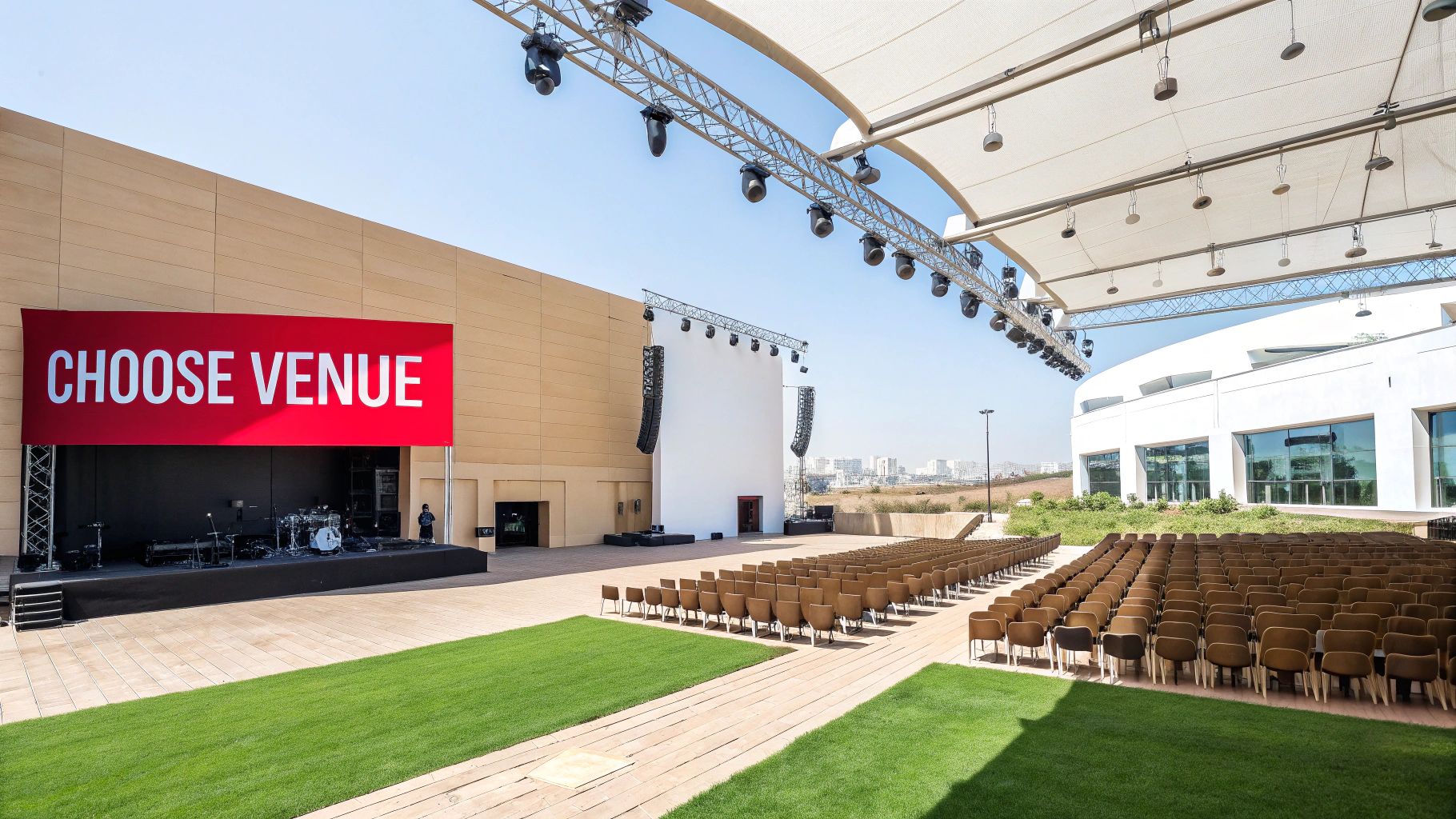
The right venue simplifies logistics, while the wrong one creates endless complications. Considerations like accessibility, parking, built-in AV capabilities, and layout flexibility are not minor details; they are critical to operational success. Booking your venue 6-12 months in advance is a key corporate event planning tip that secures availability for prime locations and provides crucial negotiating leverage for better rates and inclusions.
Why It's a Top Priority
Venue selection has a domino effect on your event. It dictates everything from catering options and decor possibilities to transportation logistics and technology integration. A venue that is difficult to access or lacks adequate parking can frustrate attendees before they even walk through the door. Conversely, a well-chosen, impressive space like the Loews Kansas City Hotel can elevate the perceived value of your event and reinforce a premium brand image, making a powerful first impression.
Practical Implementation
Begin your search by creating a checklist of non-negotiable requirements based on your event goals and audience profile.
-
For a Major Tech Conference: A company launching a new software platform would require a venue like the Kansas City Convention Center. Key needs include multiple breakout rooms for specialized sessions, robust Wi-Fi infrastructure to support thousands of devices, and exhibition space for sponsor booths.
-
For an Executive Retreat: A financial firm aiming to foster team cohesion might select a boutique venue like The Elms Hotel & Spa. The priority here is an exclusive, distraction-free environment with high-end amenities, on-site dining, and recreational activities that encourage networking and relaxation.
-
For a Brand Activation: A consumer goods company launching a new product could choose a unique, high-traffic space like the Crossroads Arts District during First Fridays. The focus would be on foot traffic, brand visibility, and a flexible layout that can accommodate interactive displays and a high-energy atmosphere.
4. Develop a Marketing and Promotion Strategy
A brilliant event concept is only effective if people know about it. Developing a multi-channel marketing and promotion strategy is how you transform a well-planned event into a well-attended one. This process involves creating a coordinated plan to build awareness, drive registrations, and generate genuine excitement across various platforms, ensuring your message reaches the right audience at the right time.
Effective promotion is a sustained campaign, not a last-minute email blast. It requires a thoughtful timeline, typically starting 8 to 12 weeks before the event, that leverages email, social media, your company website, and potentially paid advertising and partnerships. This integrated approach maximizes reach and creates a sense of momentum leading up to event day, making it a can't-miss occasion.
Why It's a Top Priority
Without a dedicated promotion plan, you risk low attendance, unmet registration goals, and a diminished return on your event investment. A strong marketing strategy ensures that all the effort put into securing speakers, planning content, and choosing a venue pays off. It’s the engine that drives ticket sales, fills seats, and builds a community around your brand before the doors even open.
Practical Implementation
Start by building a content calendar that outlines key messages, channels, and posting dates. This organized approach ensures consistent and strategic communication.
-
For a Tech Conference: A Kansas City software company could emulate HubSpot's INBOUND conference strategy by launching an early-bird ticket discount via a segmented email campaign. They would support this with a social media blitz featuring speaker spotlights, behind-the-scenes content using a unique hashtag like #KCTechSummit24, and retargeting ads for website visitors who didn’t complete registration.
-
For a Product Launch: To unveil a new product at The Abbott, a local brand could partner with Kansas City influencers and industry bloggers for pre-event coverage. They could run a ticket giveaway contest on Instagram, share teaser videos of the product, and send exclusive "sneak peek" updates to their most engaged email subscribers.
-
For an Internal Summit: To drive excitement for an all-hands meeting at the Overland Park Convention Center, the internal communications team could create a dedicated microsite with the agenda and speaker bios. They would use company-wide emails to highlight key sessions, leverage a private Slack channel for Q&As, and encourage department heads to champion the event.
5. Curate High-Quality Speakers and Content
The content of your event, particularly the speakers and presenters, is the engine that drives attendee value. Curating high-quality, relevant content ensures your audience leaves with tangible takeaways, feeling their time was well spent. This process goes beyond simply filling a speaking slot; it involves strategically selecting voices that align with your event objectives, resonate with your audience, and enhance your company's credibility and thought leadership.
A well-curated program with a mix of industry leaders and fresh perspectives is a powerful marketing tool that can significantly boost registrations. Much like TED Conferences or SXSW, the right speaker lineup transforms an ordinary meeting into a must-attend industry event. This is a critical component of effective corporate event planning tips because poor content can undermine even the most flawlessly executed logistics.
Why It's a Top Priority
Your speakers are a direct reflection of your brand. A compelling presenter can elevate your event's reputation, while a lackluster one can diminish its impact and leave attendees disengaged. Investing in quality content and speakers ensures your core message is delivered effectively, reinforces your event's objectives, and provides the ROI your attendees are seeking. It’s the difference between an audience that is passively listening and one that is actively inspired.
Practical Implementation
Begin by defining the key themes that support your event goals. Use these themes to build a speaker wishlist that balances star power with specific expertise.
-
For a Tech Conference: A Kansas City-based SaaS company hosting a user summit at the Loews Hotel could secure a nationally recognized keynote speaker on AI innovation. They would supplement this with breakout sessions led by their own top product developers and power users who can provide practical, in-depth tutorials.
-
For a Leadership Retreat: An internal leadership event for a local financial firm might feature a renowned author on organizational psychology. This would be paired with workshops led by internal C-suite executives who can connect these broader concepts directly to the company’s strategic challenges.
-
For a Marketing Summit: To attract a wider audience, an event at the Kansas City Convention Center might balance a celebrity CMO keynote with panels featuring local marketing leaders from companies like Hallmark or H&R Block. This mix offers both high-level inspiration and regionally relevant insights.
6. Implement Technology and Event Management Tools
In today's fast-paced corporate environment, relying on manual processes like spreadsheets and email chains is no longer sustainable for event planning. Leveraging event management software, mobile apps, and digital solutions streamlines every phase of your event, from initial registration to post-event analytics. This technology transforms complex logistical challenges into manageable, automated workflows, freeing you up to focus on strategy and attendee experience.
Adopting the right tech stack improves operational efficiency, enhances attendee engagement, and provides invaluable data. Platforms like Splash or Eventbrite simplify ticketing and communication, while tools like Slido can drive real-time interaction during sessions. Integrating these systems is a core component of modern event strategy, ensuring a seamless experience for both planners and guests.
Why It's a Top Priority
Technology is the backbone of a modern, scalable event. It eliminates human error in registration, provides a central hub for all event information, and captures critical data points that prove ROI. An event without a solid tech foundation risks appearing disorganized and dated, potentially leading to a poor attendee experience and a lack of measurable outcomes. Proper tech integration is a key element of comprehensive event production, connecting all the moving parts.
Practical Implementation
Start by auditing your event needs and identifying where technology can solve your biggest pain points. Is it registration management, attendee communication, or in-session engagement?
-
For Streamlined Registration: A company hosting a large-scale sales kickoff at the Kansas City Convention Center could use Salesforce Marketing Cloud to manage invitations, registration, and personalized communication, ensuring data flows directly into their CRM for immediate follow-up by the sales team.
-
For Enhanced Engagement: A local nonprofit's annual gala at The Guild KC could use a mobile app like EventMobi. Attendees can view the auction items, receive real-time push notifications about the program, and participate in live polls, all from their phones, boosting participation and donations.
-
For Data-Driven Insights: A tech conference might utilize its event platform to track session attendance, poll responses, and networking connections. This data provides clear insights into which topics resonated most, informing the content strategy for next year’s event.
7. Create a Detailed Event Day Timeline and Logistics Plan
A successful event runs like a perfectly choreographed performance, and the script is your event day timeline. This minute-by-minute plan, often called a run-of-show, is the master document that synchronizes every vendor, staff member, and activity. It transforms a complex series of moving parts into a seamless experience for your guests, ensuring that everything from the keynote speaker’s entrance to the final farewell happens precisely on schedule.
This document goes beyond a simple agenda; it's a comprehensive logistics plan detailing every action from the first vendor arrival to the final truck leaving the venue. By mapping out every dependency and transition, you eliminate ambiguity and empower your team to execute flawlessly. A well-crafted timeline is one of the most vital corporate event planning tips for minimizing day-of stress and managing unforeseen challenges.
Why It's a Top Priority
Without a detailed timeline, you invite chaos. Vendors may arrive at the wrong time, presentations can run long, and crucial moments can be missed. This document is the single source of truth that aligns your entire team, from the AV technicians managing sound cues to the catering staff serving dinner. It is the tactical blueprint that brings your strategic event vision to life, ensuring smooth transitions and a professional, polished execution.
Practical Implementation
Begin by working backward from your event start time to map out setup, then forward to plan the event flow and breakdown. Be obsessively detailed.
-
For a Corporate Gala: A timeline for a fundraiser at The Grand Hall at Power & Light would detail vendor load-in times, catering prep schedules, lighting and sound checks, speaker green room arrival times, and specific music cues for awards presentations.
-
For a Multi-Session Conference: Planning a tech summit at the Overland Park Convention Center requires a master timeline plus individual timelines for each breakout room. This ensures AV support, speakers, and room hosts are all synchronized across dozens of simultaneous sessions.
-
For a Product Launch: A precise run-of-show for a brand activation in the Crossroads Arts District would script the exact moment for the product reveal, coordinating lighting, video, and audio for maximum impact, followed by a schedule for media interviews and guest experiences.
To build a robust plan from the ground up, you can use our corporate event planning checklist as a foundational guide for your timeline. Create a visual Gantt chart, build in 10-15 minute buffers for key transitions, and hold a final walkthrough with all key personnel 24-48 hours before the event to solidify the plan.
8. Prioritize Attendee Experience and Engagement
Once your core objectives are set, the next critical layer is to view every decision through the lens of your attendees. Prioritizing the attendee experience means designing an event that is not just informative but also intuitive, comfortable, and memorable from the moment they register to their final departure. A seamless and engaging experience directly correlates with higher satisfaction, which boosts brand perception, encourages repeat attendance, and ultimately drives the ROI you defined in step one.
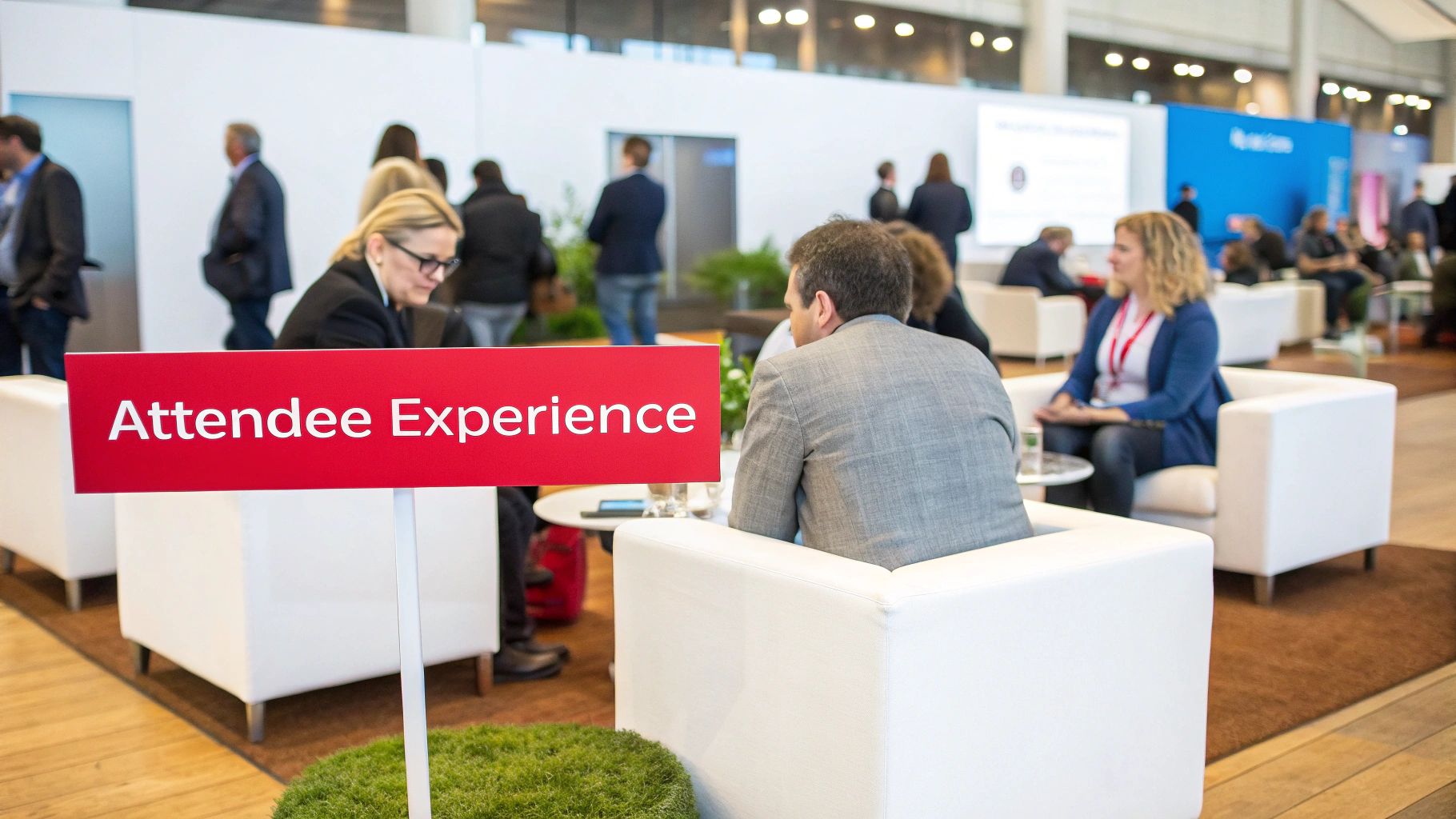
This people-centric approach is one of the most effective corporate event planning tips because it shifts the focus from what you want to say to what you want your audience to feel. World-class events like HubSpot's INBOUND conference excel at this by offering diverse breakout sessions, networking lounges, and entertainment, catering to varied interests and learning styles. They understand that a positive experience is what transforms a passive listener into an active brand advocate.
Why It's a Top Priority
A negative attendee experience can undermine even the most brilliant content or lavish venue. Long registration lines, confusing layouts, poor audio, or a lack of networking opportunities create friction that detracts from your core message. Conversely, a well-designed experience makes attendees feel valued, respected, and eager to participate, making them more receptive to your goals, whether it's lead generation or internal training.
Practical Implementation
Map the entire attendee journey and identify potential pain points and opportunities for delight at each stage.
-
Pre-Event: A local non-profit hosting a fundraiser at The Abbott could create a simple, mobile-friendly registration process and send a "know before you go" email with parking info, the agenda, and a note about the dress code.
-
During the Event: A tech company at the Overland Park Convention Center could designate quiet zones for introverts or focused work, provide clear, branded signage, and use an event app for real-time agenda updates and Q&A sessions. Incorporating a dynamic photo booth or a brand activation can create memorable, shareable moments.
-
Post-Event: Send a thank-you email with a link to a concise feedback survey. Ask specific questions about their experience, such as "How would you rate the check-in process?" or "Which session did you find most valuable?" to gather actionable data for next time.
9. Establish Strong Sponsorship and Partnership Strategy
For many corporate events, especially large-scale conferences or community-facing brand activations, a robust sponsorship strategy can be the difference between breaking even and achieving spectacular success. Developing a structured program goes beyond simply asking for money; it involves creating mutually beneficial partnerships that enhance the attendee experience, reduce your event costs, and deliver tangible value to your sponsors. This strategic approach transforms sponsors from advertisers into integrated event partners.
This process requires you to think like a marketer, identifying what potential partners want to achieve and crafting packages that help them meet their goals. Instead of a one-size-fits-all approach, a tiered system with clear value propositions allows businesses of all sizes to participate. Salesforce’s Dreamforce, with its hundreds of sponsors across multiple levels, is a masterclass in creating a thriving partner ecosystem where everyone wins.
Why It's a Top Priority
A strong sponsorship and partnership strategy directly impacts your event's financial viability and overall quality. Revenue from sponsors can unlock bigger budgets for keynote speakers, better technology, and premium experiences that you couldn't otherwise afford. Furthermore, partnering with respected brands in your industry lends credibility and expands your promotional reach to new, relevant audiences, making this one of the most vital corporate event planning tips for growth.
Practical Implementation
Begin by defining your ideal sponsor profile. What companies share your target audience but aren't direct competitors?
-
For a Tech Conference: A Kansas City tech summit could offer a "Presenting Sponsor" package to a major local tech employer. Benefits might include a keynote speaking slot, exclusive naming rights to the networking lounge, and premium logo placement on all marketing materials, including the event stage backdrop.
-
For a Non-Profit Gala: A charity fundraiser at The Guild could create tiered packages. A "Gold" tier might offer a branded photo booth activation and ten VIP tickets, while a "Silver" tier offers logo placement on table centerpieces and a mention in the event program.
-
For a Community Festival: An outdoor festival at Berkley Riverfront could partner with a local beverage distributor for exclusive pouring rights. The sponsor gains direct access to thousands of attendees, while the event secures product and a significant reduction in operational costs.
10. Measure, Analyze, and Report Event Results
The event isn't over when the last guest leaves; it's over when you've proven its value. Measuring, analyzing, and reporting on event results is the crucial final step that closes the loop on your initial objectives. This process turns your event from a one-time expense into a data-backed investment, providing concrete evidence of its Return on Investment (ROI) and generating powerful insights to make future events even more successful.
This final phase connects directly back to your KPIs established in the planning stage. It’s where you answer the most important question for stakeholders: "Was it worth it?" A well-structured report not only justifies the budget but also solidifies your role as a strategic planner who delivers measurable business impact. Without this analysis, you're missing a massive opportunity to learn, improve, and demonstrate your event’s strategic importance.
Why It's a Top Priority
Failing to measure results makes it nearly impossible to secure buy-in and budget for future initiatives. Data-driven reporting removes subjectivity and replaces "I think it went well" with "We achieved a 25% increase in qualified leads." This professional approach builds credibility with leadership and provides a clear roadmap for what to replicate and what to refine, making your corporate event planning tips and strategies more effective over time.
Practical Implementation
Begin measurement long before the event starts by setting up your tracking systems. Use a combination of quantitative data and qualitative feedback for a complete picture.
-
For Sales & Lead Generation: A Kansas City software company hosting a user conference can use UTM parameters on all promotional links to track which channels drove the most registrations. Post-event, they can track the lead-to-customer conversion rate within their CRM, tying new revenue directly back to event attendance.
-
For Brand Awareness: Following a major brand activation at Union Station, the marketing team can analyze social media analytics to measure hashtag usage, organic reach, and sentiment. They can also track media mentions and website traffic referrals from press coverage to quantify brand lift.
-
For Employee Satisfaction: An internal company-wide summit should be followed by a Net Promoter Score (NPS) or satisfaction survey sent within 48 hours. Comparing these scores to pre-event benchmarks provides a clear metric for engagement, while open-ended questions offer valuable qualitative feedback.
10-Point Corporate Event Planning Comparison
| Item | Implementation complexity | Resource requirements | Expected outcomes | Ideal use cases | Key advantages |
|---|---|---|---|---|---|
| Establish Clear Event Objectives and KPIs | Low–Medium; requires stakeholder alignment | Low; leadership time and baseline data | Clear direction and measurable ROI | Any event; essential for lead gen, launches, retreats | Focuses planning, enables ROI measurement, improves buy-in |
| Create a Comprehensive Budget and Contingency Planning | Medium; detailed estimation and review | Medium; finance input, vendor quotes, tracking tools | Cost control and financial flexibility | Large conferences, long-planning events, high-cost productions | Prevents overspend, improves negotiations, shows fiscal responsibility |
| Select the Right Venue and Logistics | Medium; site visits and contract negotiation | Medium; deposits, logistics staff, site assessments | Better attendee experience and fewer on-site issues | In-person conferences, trade shows, galas | Enhances attendee experience, reduces extra rentals, adds credibility |
| Develop a Marketing and Promotion Strategy | Medium–High; multichannel coordination | Medium–High; marketing team, content, ad spend, tools | Higher attendance, engagement, and campaign data | Public conferences, product launches, registration-driven events | Drives registrations, builds anticipation, generates audience data |
| Curate High-Quality Speakers and Content | High; sourcing, vetting and scheduling speakers | Medium–High; speaker fees, outreach, content production | Improved attendance quality, media coverage, NPS | Thought-leadership summits, industry conferences, flagship events | Attracts attendees, boosts credibility and media interest |
| Implement Technology and Event Management Tools | Medium–High; integration and testing required | Medium–High; software licenses, IT support, training | Operational efficiency and real-time insights | Hybrid/virtual events, large-scale conferences, data-driven events | Streamlines operations, boosts engagement, captures data |
| Create a Detailed Event Day Timeline and Logistics Plan | Medium; detailed but repeatable planning | Medium; planners, staff coordination, communication tools | Smooth execution, quick problem resolution | Complex productions, product launches, multi-track conferences | Minimizes delays, clarifies roles, enables contingency response |
| Prioritize Attendee Experience and Engagement | Medium; experiential design and coordination | Medium–High; F&B, seating, engagement elements, signage | Higher satisfaction, retention, positive word-of-mouth | Customer conferences, networking events, brand experiences | Increases satisfaction and NPS, improves sponsorship value |
| Establish Strong Sponsorship and Partnership Strategy | Medium–High; sales and tailored packages | Medium–High; sales resources, fulfillment, reporting | Reduced net costs, added value, sponsor ROI | Trade shows, large conferences, industry gatherings | Generates revenue, enhances offerings, builds long-term partnerships |
| Measure, Analyze, and Report Event Results | Medium; requires framework and analysis | Medium; analytics tools, surveys, CRM integration | Clear ROI, actionable insights for improvement | Ongoing event programs, stakeholder-funded events | Demonstrates impact, informs future decisions, validates investment |
Partnering for Success: Bringing Your Vision to Life
You have navigated the strategic landscape of corporate event planning, from establishing crystal-clear objectives and KPIs to meticulously measuring your post-event results. The ten pillars we've explored provide a comprehensive blueprint for success, transforming what can be an overwhelming process into a manageable, strategic endeavor. Mastering these corporate event planning tips is not just about avoiding common pitfalls; it’s about architecting an experience that resonates deeply with your audience and delivers a tangible return on investment.
The journey from a concept on a whiteboard to a flawlessly executed event is complex. It involves a delicate balance of macro-strategy, like defining your brand’s message, and micro-details, such as ensuring the run-of-show is timed to the minute. Each step, from crafting a bulletproof budget to curating engaging content and leveraging the right technology, is a critical component of a larger, interconnected system.
From Blueprint to Reality: The Power of Execution
A strategic plan is essential, but its true power is only unlocked through flawless execution. You can have the perfect venue, like Kansas City's Union Station, and a world-class keynote speaker, but if the audio system fails, the lighting is flat, or the technology creates friction for attendees, the entire experience is compromised. The most memorable events are those where the strategic vision is seamlessly supported by impeccable technical production and engaging elements that captivate the senses.
This is where the theoretical becomes tangible.
- Clear Objectives (Tip #1) are brought to life when your stage design and branding are visually cohesive and impactful.
- Attendee Engagement (Tip #8) soars when a high-energy DJ sets the perfect networking vibe or an interactive photo booth creates shareable, branded moments.
- A Detailed Timeline (Tip #7) runs smoothly only when your AV team, lighting technicians, and other vendors operate in perfect sync, guided by a professional production manager.
Think of your event plan as the architectural blueprint and the execution partner as the master builder. One cannot exist without the other. The true value of mastering these corporate event planning tips lies in understanding how to bridge that gap, ensuring every strategic decision is amplified, not diminished, by the on-the-ground reality.
The Lasting Impact of a Well-Executed Event
Ultimately, a successful corporate event does more than just inform or entertain. It builds community, strengthens brand loyalty, and drives business forward. When you move beyond simply checking boxes and focus on creating a truly immersive and frictionless experience, you forge a powerful connection with your audience. They will remember not just what was said, but how they felt: valued, inspired, and connected. This emotional resonance is the hallmark of an event that has achieved its strategic purpose.
By embracing this holistic approach, you elevate your role from a planner to a strategic experience architect. You are not just organizing a meeting; you are creating a pivotal brand moment that can influence perceptions, foster relationships, and deliver measurable results long after the final guest has departed. The principles outlined in this guide are your foundation for building those impactful moments, time and time again.
Ready to turn your strategic plan into an unforgettable live experience? The team at Showboss KC specializes in providing the professional staging, crystal-clear audio, dynamic lighting, and engaging entertainment that bring corporate visions to life in the Kansas City area. Let us handle the technical production so you can focus on what matters most: your guests. Contact Showboss KC today to discuss how we can help make your next event a resounding success.