

Before you even think about tasting catering samples or touring a single venue, the real work of a killer fundraising event begins. It all starts with a rock-solid strategic blueprint. This isn't just about throwing a party; it's about engineering an experience that connects donors to your cause and inspires real generosity.
Skipping this foundational stage is like building a house without a plan—it’s messy, inefficient, and you probably won't like the final result.
Building Your Strategic Fundraising Blueprint
The first step is to get granular about what "success" actually means. Sure, you want to raise money, but a truly impactful event serves much broader goals. Think bigger. Are you trying to reel in new major donors? Re-engage supporters who have fallen off the radar? Or maybe you need to build community buzz around a new program. Your event can, and should, do more than just hit a dollar amount.
Define Mission-Aligned Goals
Vague goals like "raise a lot of money" just don't cut it. You need SMART goals: Specific, Measurable, Achievable, Relevant, and Time-bound. Compare the vague goal to this: "Raise $50,000 by November 15th to fund our winter meal program for 100 local families." See the difference? One is a wish; the other is a plan.
I always recommend setting layered objectives. Think in terms of:
- Financial Goals: The net revenue you aim to clear after every single expense is paid.
- Engagement Goals: How many new donors do you want to walk away with? What percentage of attendees do you hope to convert into recurring givers?
- Awareness Goals: The number of media mentions, your social media reach, or getting specific community leaders to show up.
Weaving proven nonprofit fundraising strategies into your plan from day one is the key to maximizing your impact.
Craft a Realistic and Detailed Budget
Your budget is your event's financial roadmap. It needs to be brutally honest and account for everything, down to the last roll of tape. A classic rookie mistake is underestimating costs, which can completely torpedo your net fundraising total.
Start by listing every possible expense category: venue, catering, A/V production, entertainment, marketing, staffing, permits, insurance—the works. And whatever you do, don't forget a contingency fund. I tell every client to set aside 10-15% of the total budget for the inevitable surprises. It's a total lifesaver.
For a deep dive and a tool to get you started, our event budget planning template is a fantastic resource.
Here’s a look at how you might structure that budget:
Sample Fundraising Event Budget Breakdown
This table gives you a practical look at how to allocate funds. Remember, these percentages are a starting point and will shift based on your event's specific needs and priorities.
| Expense Category | Description | Estimated Budget % |
|---|---|---|
| Venue & Catering | Rental fees, food, beverage, service staff, and taxes. Often the largest expense. | 40-50% |
| A/V & Production | Sound system, lighting, staging, screens, and technical crew. | 10-15% |
| Entertainment | Speaker fees, band, DJ, or other performers. | 5-10% |
| Marketing & Promotion | Invitations, social media ads, ticketing platform fees, and promotional materials. | 5-10% |
| Staffing & Volunteers | Event manager, security, and costs associated with volunteer management (t-shirts, food). | 3-5% |
| Decor & Rentals | Thematic decorations, floral arrangements, table linens, and furniture. | 3-5% |
| Miscellaneous | Permits, insurance, payment processing fees, and other administrative costs. | 2-5% |
| Contingency Fund | A crucial buffer for unexpected expenses or emergencies. | 10-15% |
Having this kind of detailed breakdown prevents financial surprises and keeps your planning focused and on track.
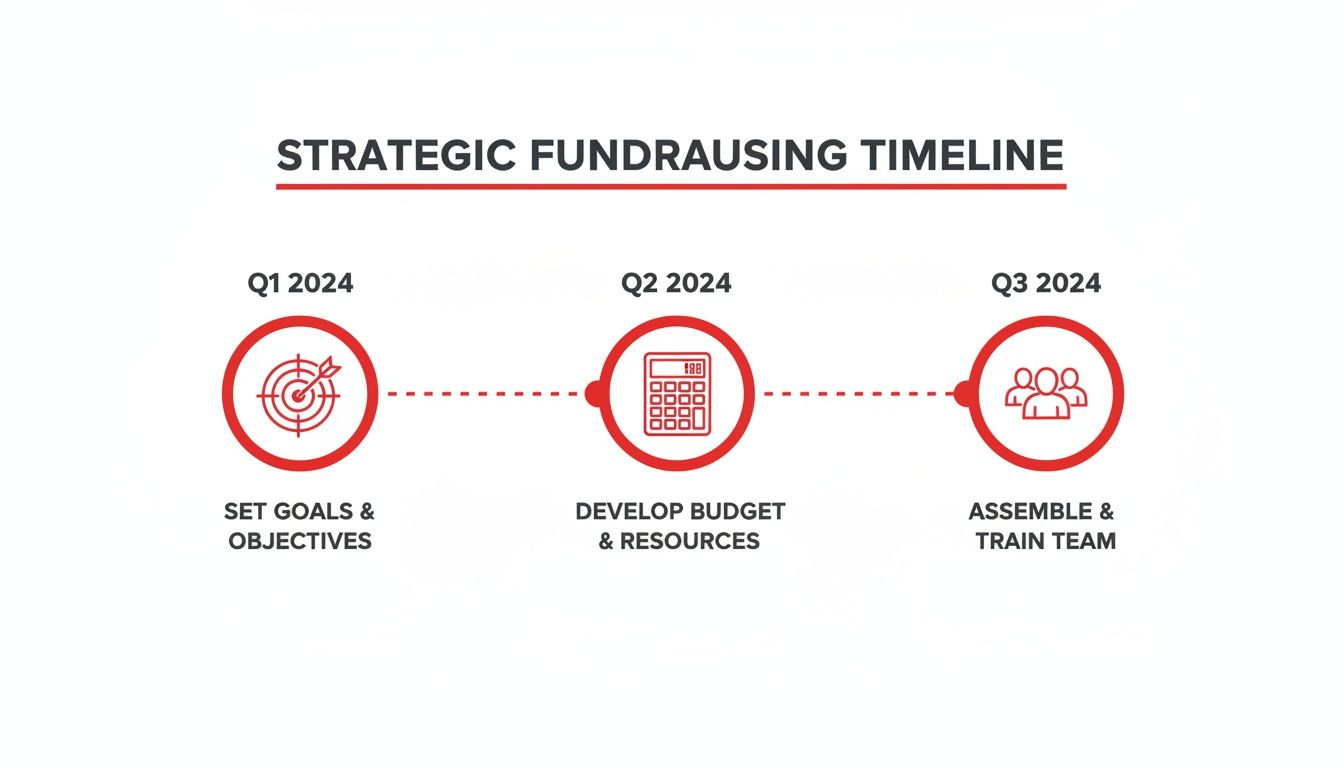
As you can see, locking in your goals, budget, and team is the essential work of your first quarter. It sets the stage for everything that follows.
Assemble Your Event Committee and Timeline
Let's be real: no one can pull off a great fundraising event alone. You need a passionate and skilled committee where everyone knows their role.
Assign specific leads based on people's strengths. Here's a simple structure that works:
- Chairperson: The project manager who keeps the whole train on the tracks.
- Sponsorship Lead: The deal-maker focused on securing corporate and major donor support.
- Marketing Lead: The storyteller who manages all promotions, ticketing, and comms.
- Logistics Lead: The details person who wrangles the venue, vendors, and day-of execution.
Once your dream team is in place, build a master timeline. Start from your event date and work backward, mapping out every single task, its deadline, and who owns it. This is all about accountability and making sure nothing falls through the cracks. It's especially critical if your event is in the fall, since 17-33% of all annual giving happens in December. You want to be ready.
Crafting an Unforgettable Donor Experience
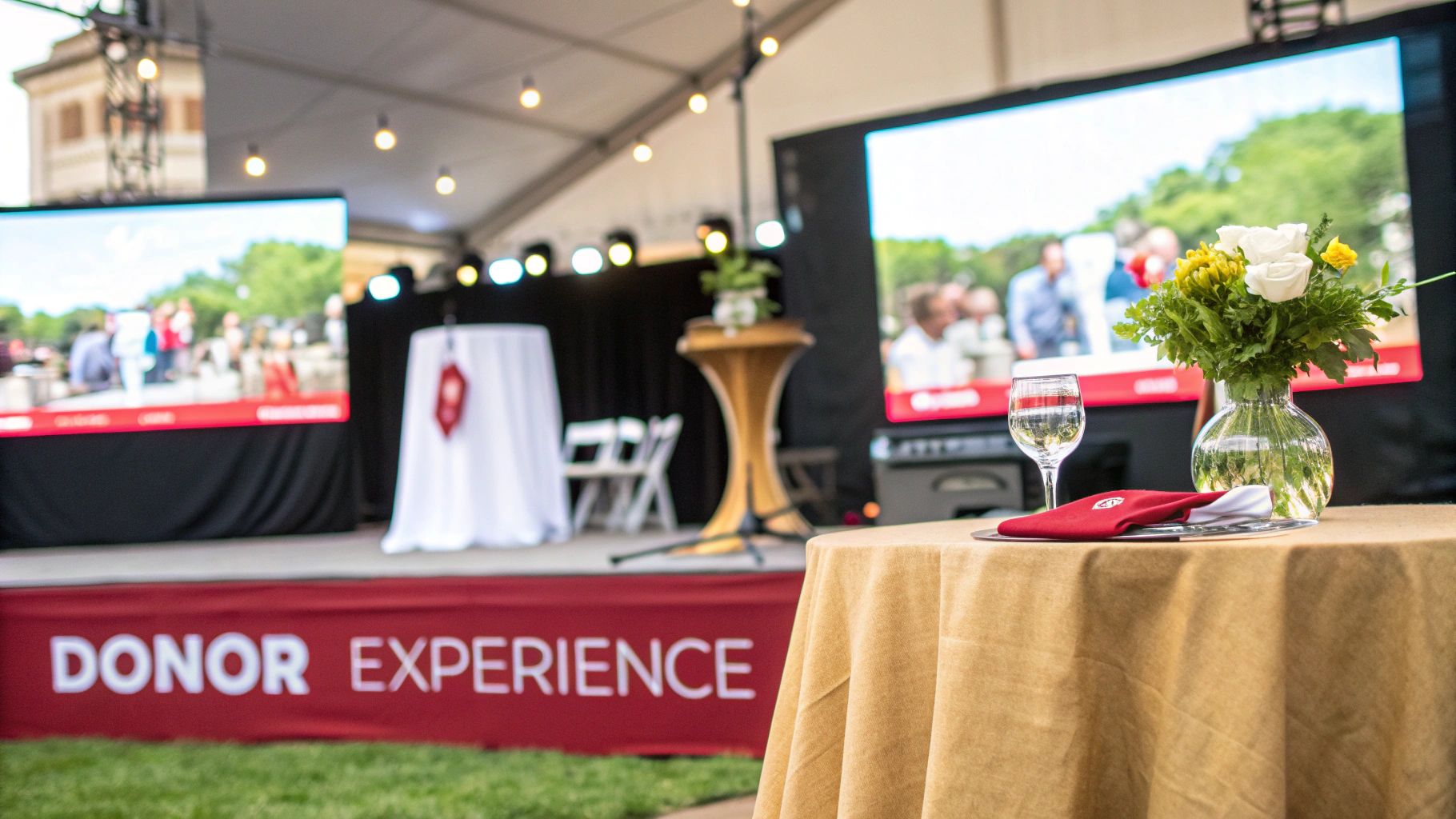
A truly impactful fundraiser isn't just a gathering—it's an experience. This is where you move beyond spreadsheets and checklists into the art of storytelling, forging a genuine emotional connection between your donors and your cause. The goal is to create a memorable atmosphere that inspires generosity long after the night is over.
It all starts by picking a theme and format that actually clicks with your target audience. A black-tie gala might be the perfect setting to cultivate major corporate sponsors, while a family-friendly 5k or a casual community cook-off could be the key to engaging a much broader base of local supporters.
Think about who you're trying to reach. A formal, seated dinner creates opportunities for intimate conversations and high-impact asks. On the other hand, an interactive, festival-style event can generate incredible community buzz and attract new, younger donors. The trick is to align the format with your specific fundraising goals and the people you want in the room.
Choosing the Right Venue and Vendors
Your venue isn't just four walls; it’s the canvas for your entire event. As you scout potential spaces, keep these critical factors in mind:
- Capacity and Flow: Can the space comfortably hold your expected crowd? Is there a logical flow from check-in to the main event areas?
- Ambiance and Vibe: Does the venue’s style—whether it's modern, historic, or rustic—match your organization's brand and the event's theme?
- Tech Capabilities: Does it have the bones for your A/V needs? Think sufficient power, rigging points for lighting, and reliable Wi-Fi.
- Accessibility: Is it easy to find? Is there enough parking? And most importantly, is it fully accessible for all your guests?
Once you've got a shortlist, it's time to negotiate. Don't be shy about asking for nonprofit discounts or seeing if they'll throw in essentials like tables, chairs, or basic lighting. When it comes to vendors—caterers, florists, photographers—look for partners who get the unique demands of a fundraiser and are genuinely excited to help you succeed. A great vendor is more than a contractor; they're part of your team.
A classic rookie mistake is picking a venue that looks amazing but is a logistical nightmare. Always, always do a thorough site visit with your production team to spot potential headaches with power, load-in access, or sound bleed before you sign anything.
Weaving Your Mission Into Every Detail
A memorable experience is one where your mission is felt, not just talked about. This is where you bring powerful storytelling to life, turning a simple gathering into a compelling narrative that moves people to act.
How do you do that? Integrate your cause into every little detail.
Maybe the table centerpieces are created by the very people your organization serves. Or you feature a short, professionally produced video that shows the direct impact of a donor's contribution. Instead of a generic welcome speech, have a beneficiary share their own powerful, personal story. These are the authentic touches that create the emotional resonance that drives giving.
Understanding what donors care about right now can also give you an edge. The 2025 Giving USA Report found that giving to the international affairs sector grew by 17.7% to $35.54 billion. If your mission aligns with trending causes like international aid, human services, or education, lean into that narrative. You'll connect with what's already inspiring people to give.
Elevating the Experience with Professional Production
This is what takes your event from good to truly unforgettable. Professional production isn't just an expense; it's an investment in creating an atmosphere that makes your message hit home with maximum impact. It’s the difference between a school assembly and a sold-out show.
Think about how these elements can transform your event:
- Custom Lighting: Lighting does more than just help people see. It sets a mood, highlights architectural details, and can bathe the room in your brand colors. Pin-spotting silent auction items can dramatically increase their perceived value and drive more bids.
- Immersive Video: A massive LED video wall can become a dynamic backdrop for sponsor logos, mission-focused videos, and a real-time fundraising thermometer. It creates a central focal point that keeps everyone engaged and excited.
- Crystal-Clear Audio: Make sure every word from the stage is heard perfectly. Nothing kills the energy faster than a crackling microphone during a heartfelt appeal.
These technical pieces work together to build emotional momentum, guiding your guests on a journey that culminates in the desire to support your cause.
Whether you're planning a gala or a walk-a-thon, exploring creative and impactful nonprofit fundraiser event ideas can help you design an experience that stands out. The right mix of theme, venue, storytelling, and professional production is the formula for an event that doesn't just meet its financial goals—it builds a stronger, more dedicated community around your mission.
Securing Sponsorships and Promoting Your Event
A sold-out event starts long before the doors ever open. It’s fueled by a solid financial runway and a marketing strategy that gets people talking. This is where you build the foundation—securing the cash you need to operate and creating the buzz that guarantees a full house.
Mastering this stage comes down to tackling two things at once: locking in corporate sponsorships and driving ticket sales with great promotion.
Develop High-Value Sponsorship Packages
Let's talk about corporate sponsorship. This isn't just about asking for a check; it's about building a genuine partnership. Businesses aren't just looking to slap their logo on a banner anymore. They want to connect with causes that mirror their own values and engage with an audience that matters to them.
To get sponsors excited, you have to offer them something they actually want. Ditch the generic Gold, Silver, and Bronze tiers and create packages that spell out exactly what a partner gets in return. Think in terms of visibility, access, and engagement.
Here’s what a modern, high-value package might look like:
- Brand Visibility: This is the baseline. We're talking prominent logo placement everywhere—from the event website and social media campaigns to stage banners and printed programs.
- Exclusive Access: Offer them something others can't get. A block of VIP tickets, an invitation to a private pre-event reception, or a meet-and-greet with your keynote speaker.
- Direct Engagement: Give your top-tier sponsor a moment in the spotlight. Maybe they get to briefly address the audience, play their promo video on the big screen, or host a cool branded activation like a photo booth.
The goal is to create tiered offerings where the value clearly increases at each level, making it a no-brainer for them to invest more. You're not asking for a handout; you're offering a powerful marketing opportunity. Learning how to find corporate sponsors who are a natural fit for your mission is half the battle—you want businesses whose brand values are already in sync with your work.
Craft a Multi-Channel Marketing Plan
Once your funding is starting to take shape, it's time to get people in the door. You can't just send one email and hope for the best. A multi-channel promotional plan is your key to building excitement and moving tickets.
Your marketing needs to create a sense of urgency. You want people to feel like this is the place to be. We recommend starting your outreach at least 8-12 weeks before the event to build momentum and give early-bird offers a chance to work their magic.
Don’t just sell tickets; sell the experience. Use your marketing to paint a vivid picture of the evening. Share sneak peeks of the entertainment, highlight a unique auction item, or introduce the compelling story of a beneficiary. This narrative-driven approach is far more effective than simply listing event details.
Leverage a Mix of Promotional Tactics
A smart promotional strategy hits your audience from multiple angles. Think of it as a coordinated campaign where every channel works together to amplify your message.
Essential Promotional Channels
| Channel | Best For | Actionable Tip |
|---|---|---|
| Email Marketing | Nurturing your existing supporters and past attendees. | Create a segmented email series: an initial "save the date," an official invitation with an early-bird discount, and a "last chance" reminder. |
| Social Media | Building broad awareness and community engagement. | Use high-quality visuals, video testimonials from past attendees, and a countdown to the event. Create a unique event hashtag. |
| Local Media Outreach | Reaching a new, local audience and adding credibility. | Send a press release to local news outlets, radio stations, and community bloggers. Offer an exclusive interview with your CEO or event chair. |
| Partner Networks | Tapping into the audiences of your sponsors and partners. | Provide sponsors with a "promotional toolkit" including pre-written social media posts, email copy, and graphics they can easily share. |
Finally, make it incredibly easy for people to buy tickets. A clunky or confusing registration page will kill your sales. Use a trusted, mobile-friendly platform that makes the checkout process a simple, two-minute task. Every bit of friction you remove makes it that much more likely an interested person becomes a registered guest.
Managing Event Day Logistics and Execution
After all the planning, budgeting, and sleepless nights, the big day is finally here. This is where the strategy becomes a living, breathing experience, and success comes down to how well you can juggle a hundred moving parts at once. Let's talk about making sure the day-of execution is as smooth as your fundraising pitch.
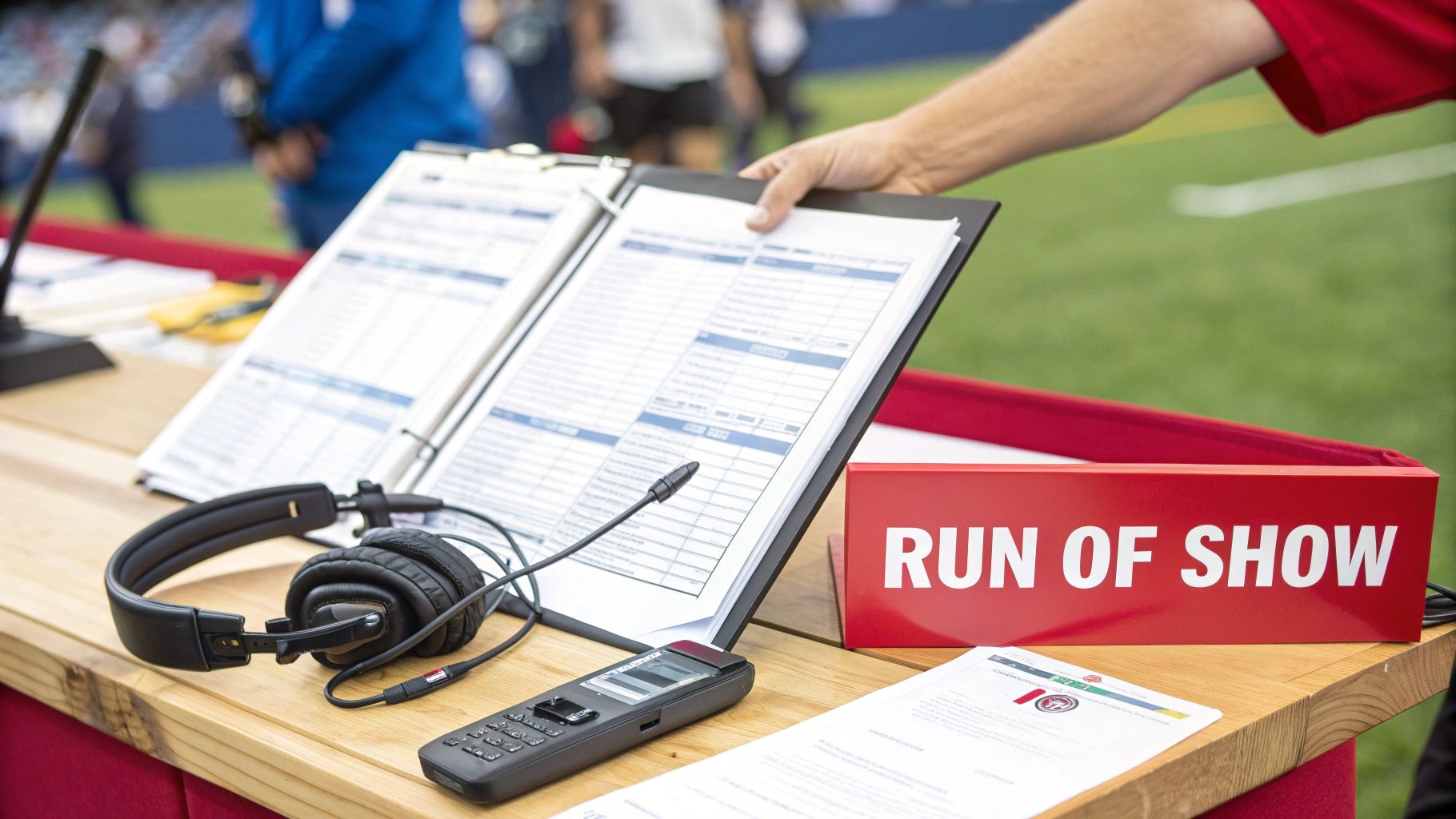
The absolute anchor of a well-run event is a hyper-detailed run-of-show document. Forget a simple schedule—this is your minute-by-minute script for the entire day. It starts the moment the first vendor truck pulls up and doesn't end until the last chair is stacked. This document is the one source of truth for your entire team.
Your Run-of-Show is the Playbook
Think of the run-of-show as the event's central nervous system. A truly great one has cues for every single action, leaving no room for guesswork.
- Pre-Event Setup: Pinpoint arrival times for catering, A/V sound checks, and décor placement. Get granular.
- Event Timeline: Script everything. Guest arrival, the check-in flow, cocktail hour, the call to be seated, welcome remarks, dinner service, program segments (like a speaker or video), the big fundraising appeal, and every entertainment cue.
- Technical Cues: This is mission-critical. Note specific lighting changes, audio cues for walk-on music, and exactly when to roll a video. For example: "7:45 PM – Lights dim to 50%. 'Impact Story Video' starts. Audio cue: Play Video Track 1."
- Post-Event Breakdown: Schedule vendor teardown, the final venue walkthrough, and trash removal so you can get out on time.
This level of detail empowers your team to own their roles, which frees you up to handle the unexpected and, most importantly, connect with your donors.
Getting Your Vendors and Volunteers in Sync
Your vendors—the catering manager, A/V crew, and venue staff—are an extension of your team. You absolutely must hold a pre-event huddle with all key vendor leads about an hour before doors open. Run through the entire schedule together. This quick sync-up gets everyone on the same page and helps them anticipate what’s coming next.
Volunteer management is just as crucial. Your volunteers are the face of your organization, and when they feel confident, your guests feel welcome.
- Give Them Clear Roles: Don't just say, "help with check-in." Get specific. "Greeter at the Main Entrance," "Registration Table 1 (Last Names A-M)," or "Silent Auction Section Monitor."
- Arm Them with a One-Sheet: Every volunteer should get a simple, one-page guide. It needs their specific duties, a venue map, who their direct point-of-contact is, and a few key timeline points.
- Hold a Pre-Shift Briefing: Rally all volunteers 30-45 minutes before guests arrive. Walk them through their jobs, answer questions, and get them excited about the mission. Their energy is contagious, so make sure it's a good one.
A well-briefed volunteer can turn a potentially chaotic check-in into a warm, seamless experience. Give them the info to answer basic questions like "Where are the restrooms?" or "When does the auction close?" It’s a small touch that makes a massive difference.
Preparing for the Unexpected
Let’s be real: no matter how perfectly you plan, something will go wrong. The keynote speaker will hit traffic. The Wi-Fi for your credit card processors will go down. A sudden storm will roll in. The key isn't to avoid problems—it's to have a plan for them before they happen.
Brainstorm a list of potential "what-ifs" and map out a clear response for each. Who has the final say on moving an outdoor event inside? What’s the backup plan if a speaker cancels at the last minute?
Knowing the answers ahead of time lets you respond with calm authority instead of frantic improvisation. This kind of proactive thinking is what separates the pros from the amateurs and is essential when learning how to organize fundraising events that build real donor confidence.
Extending Engagement and Measuring Success
The fundraiser doesn’t end when the lights go down and the last guest heads home. In fact, what you do in the hours and days that follow is just as critical as the event itself.
This post-event phase is your golden opportunity to solidify relationships, showcase your impact, and set the stage for even greater success next year. It’s tempting to breathe a sigh of relief when it's over, but the real relationship-building work is just getting started. Your follow-up strategy needs to be prompt, personal, and powerful to turn one-time attendees into lifelong supporters.
A Powerful Post-Event Follow-Up Strategy
Your first move should happen fast—within 24 hours. Send a heartfelt, personalized thank-you email to every single attendee, sponsor, and volunteer. Generic, mass-blasted messages just won't cut it here. You need to segment your lists and tailor the content.
- For attendees: Thank them for coming and give them the big number—the total amount raised. Make them feel part of the victory.
- For sponsors: Acknowledge their specific contribution. Better yet, include a high-quality photo of their branding in action at the event.
- For volunteers: Thank them for their time and energy, calling out the specific role they played in making the day a success. They are your unsung heroes.
A prompt and personal thank-you is more than just good manners—it’s the first step in donor retention. It makes people feel seen and valued, dramatically increasing the likelihood they'll support you again.
Amplify Your Success and Gather Feedback
Once the thank-yous are out, it's time to shout your success from the rooftops. Share the total funds raised across your social media channels, but don’t stop there. More importantly, talk about the direct impact those donations will have.
Create visually engaging posts with professional photos and maybe even a quick video recap of the event's highlights. This public celebration does two things: it makes your donors feel proud of their contribution and creates a bit of "fear of missing out" for those who couldn't make it.
Next, while the experience is still fresh, send out a short feedback survey. You can use simple tools like Google Forms or SurveyMonkey to ask a few pointed questions.
- What did you enjoy most about the event?
- What could we improve for next year?
- On a scale of 1-10, how likely are you to attend again?
This feedback is pure gold. It gives you actionable insights to make your next fundraiser even better.
Analyze Your Results to Plan for the Future
Now it's time to move from feelings to figures. To truly understand your event's performance, you need to dig into the data and analyze your key performance indicators (KPIs). This is how you prove your event was a smart investment of time and resources.
Your primary metric is the return on investment (ROI). It’s a simple calculation: subtract your total event expenses from your gross revenue, then divide that net revenue by the expenses. A high ROI means your event was an efficient fundraising machine.
Beyond ROI, look at donor engagement metrics. How many first-time donors did you acquire? What was the average gift size? These data points help paint a complete picture of your success. For a comprehensive look at this process, check out our guide on how to measure event success.
Don't underestimate the power of timing. Data shows that donors who gave on GivingTuesday were retained at a 65% rate, which is significantly higher than the 52% for donors who gave at other times of the year. This suggests that a well-executed event, tied to a larger moment, creates a powerful connection that keeps donors coming back for more.
Got Questions? We’ve Got Answers.
Even the most buttoned-up event plan comes with a few question marks. It’s just part of the process. Below, we’re tackling some of the most common hurdles and practical questions that pop up when you’re in the thick of fundraising event planning.
Think of this as advice from someone who’s been there.
How Far Out Should We Really Start Planning?
This is the big one, and the answer completely depends on the scale of your event. If you're planning a massive gala, a formal dinner, or a multi-day conference, give yourself 9-12 months. Seriously. That much lead time is your best friend for locking down the best venues and in-demand vendors before they’re snatched up by someone else. It also gives you a comfortable runway to build out your sponsorships without a last-minute scramble.
On the other hand, for smaller community-driven events like a local 5k, a walk-a-thon, or a more casual charity auction, a 4-6 month window usually works just fine. The golden rule here is that more time is always better. It gives you breathing room, more negotiating power, and a much less frazzled planning team.
What Are Some Creative Ways to Actually Raise Money During the Event?
Ticket sales get people in the door, but the real fundraising magic happens once they’re there. You have a captive audience that’s connected to your cause. It’s time to move beyond the standard silent auction and get creative.
Here are a few ideas that consistently deliver:
- The Fund-A-Need: You might know this as a "paddle raise," and it is pure gold. You share a specific, emotional story about a tangible need—like funding a mentorship program for 50 kids—and ask guests to pledge money right then and there. When you pair this with a powerful video and an emcee who knows how to work a room, it can easily become the most profitable few minutes of your entire night.
- Auction Off Experiences, Not Just Things: People are craving unique experiences. Instead of another gift basket, auction off a private dinner cooked by a beloved local chef, a walk-on role in a community theater show, or a weekend getaway package donated by a hotel sponsor. These are things money can't typically buy.
- Make Giving Fun and Interactive: Sprinkle opportunities to give throughout the evening. Put donation QR codes on cocktail napkins or on the prints from the photo booth. A "wine pull" or a "mystery box" raffle where every single ticket is a winner (even if it's a small prize) is a fantastic way to generate quick, easy revenue while keeping the energy high.
If there's one mistake I see people make over and over, it's underinvesting in the guest experience. They focus so hard on cutting costs that they end up with terrible audio, a messy check-in, or boring entertainment. All of that completely undermines the mission and tanks donations.
Think of professional event production—great sound, lighting, and staging—as an investment, not an expense. It creates an atmosphere that makes your guests feel important and inspires them to be generous. It shows your donors you value their time and their contributions.
How Can I Make My Sponsors Feel Genuinely Appreciated?
This is so crucial. Making your sponsors feel valued is about so much more than slapping a logo on a banner. If you want them to come back year after year, you have to treat them like true partners in your mission.
Of course, you’ll thank them from the stage and feature them in a video. Give them the best seats in the house and offer a few exclusive perks, like a private VIP reception or a meet-and-greet with your keynote speaker.
But the real work begins after the event is over. Send them a beautiful, detailed impact report showing exactly what their contribution helped accomplish. Fill it with high-quality photos of their logo at the event and guests having an amazing time. This gives them a tangible return on their investment and turns a one-time sponsorship into a lasting partnership.
Ready to put on a fundraising event that not only hits your goals but leaves every guest feeling inspired? The right production partner changes everything. Showboss KC brings the expert A/V, stunning LED video walls, and immersive lighting that take your donor experience from memorable to unforgettable. Let us worry about the tech, so you can focus on your mission.