

Alright, let's break down the whole reception planning beast into something that actually makes sense. Think of it less as a giant, terrifying to-do list and more like a roadmap with five key phases. Getting these right from the start saves you so much stress (and money) down the line.
We'll start with the big picture—the vision and the budget—and then work our way down to the nitty-gritty of your event timeline. It’s all about mapping out a clear path so you can actually enjoy the process.
High-Level Reception Planning Steps
Before we dive deep into each specific part of planning, it helps to have a bird's-eye view of the entire journey. This is your project charter, the thing you’ll glance back at to make sure you’re still on track while juggling vendors, costs, and creating those amazing moments for your guests.
I always tell my clients to keep a simple breakdown like this handy. It's a quick, easy way to remember the core stages and what you’re trying to accomplish in each one.
| Phase | Key Actions | Outcome |
|---|---|---|
| Vision + Budget | Set your style, define your must-haves, and nail down a realistic per-guest cost. | Aligned creative and financial goals. No more budget surprises! |
| Venue + Vendors | Secure your location and start negotiating contracts with your dream team. | A reliable, professional team locked in and ready to go. |
| Guest Experience | Plan the seating chart, craft the perfect menu, and decide on entertainment. | Guests who feel comfortable, engaged, and totally wowed. |
| Timeline + Floorplan | Create a detailed schedule of events and map out the entire room layout. | A smooth, seamless flow from cocktail hour to the last dance. |
| Destination Details | Manage travel logistics, hotel blocks, and any local permits you might need. | A stress-free destination event for you and your guests. |
Think of this as your foundational framework. Once you have this down, customizing every single detail becomes so much easier and way more fun.
Where to Even Begin?
First things first: sit down with your partner (and your planner, if you have one) for a real "vision session." This is where you get on the same page about what’s truly important. Is it the food? The band? The open bar? Figure out your non-negotiables right away.
From there, you can start taking some initial, concrete steps:
- Gather vendor proposals. Don't just look at the final number; compare their pricing structures and what’s actually included.
- Draft a flexible budget spreadsheet. I can't stress "flexible" enough. Organize it by vendor category so you know exactly where your money is going.
- Sketch a rough layout. You don't need fancy software. Just a simple drawing of your ideal seating arrangement and dance floor can help you visualize the space.
Keeping this high-level overview in mind prevents you from getting lost in the weeds and helps ensure every decision you make aligns with the big picture you're trying to create.
Up next, we’re going to get into the details of defining your vision and building a budget that works for you, complete with real-world examples from Kansas City weddings and some templates you can actually use.
Defining Your Reception Vision And Budget

Before you book a single vendor or even think about a color palette, the journey to an unforgettable reception starts with a simple conversation. Just the two of you. Sit down and let yourselves dream a little. What does this party actually feel like?
Are you picturing a glamorous, black-tie affair in a historic ballroom? Or is it more of a laid-back, barefoot-in-the-grass party under the stars? This initial vision is your North Star. It’s the gut feeling you’ll come back to for every single decision, from the venue to the final song of the night.
From Dream To Reality: Nailing Down Your Style
Your reception should feel like you. Think about your shared history and what you love to do together. Are you total foodies who would rather splurge on an incredible multi-course meal than over-the-top flowers? Or are you music lovers who know a high-energy live band is non-negotiable? These preferences are what will give your celebration its soul.
The goal here is to land on a cohesive vibe. It doesn't have to be a super-rigid theme, but having a clear direction—like "romantic garden party," "modern urban chic," or "bohemian disco"—is a game-changer. It ensures all the different pieces, from the lighting to the linens, tell the same story.
A great way to get the ball rolling is to start a shared Pinterest board. Pin anything and everything that catches your eye: table settings, lighting designs, color combos, and entertainment ideas. Before you know it, a clear style will start to take shape.
Building A Smart Wedding Budget
Okay, you’ve got the vision. Now for the part everyone dreads: the budget. But it doesn't have to be scary. A little structure goes a long way, and the best place to start is with your guest count.
Let’s be real—the numbers can be a shock. Recent industry reports show the average US wedding hosts around 116 guests at a cost of roughly $284 per person. This puts most total budgets somewhere between $33,000 to $36,000. And location matters—a lot. A Kansas City wedding will look very different from one in New York, where that average can easily jump to $65,000. You can check out more wedding trend insights to see how your vision lines up with the current reality.
Pro Tip: Your guest list is the number one driver of your total cost. If your initial estimates are making your eyes water, the single most effective way to bring them down is to trim the number of attendees. It's almost always better than cutting corners on the experience for everyone who is there.
Get a shared spreadsheet going or use a planning app to track every single potential expense. Honesty and transparency from day one will save you a ton of stress down the road.
Prioritizing Your Spending
Not all expenses are created equal. To figure out where your money should really go, you need to separate your "must-haves" from your "nice-to-haves." This is where you get honest about what truly matters to you as a couple.
Must-Haves (The Non-Negotiables):
- An Incredible Venue: This is the canvas for your entire event.
- Delicious Food and Drinks: People always remember a great (or terrible) meal.
- A Talented Photographer/Videographer: These are the memories you'll have for a lifetime.
- The Right Entertainment: The music and MC dictate the entire energy of the night.
Nice-to-Haves (The Things You Can Live Without):
- Elaborate Floral Installations: Simple, elegant arrangements can be just as impactful.
- A Custom Stationery Suite: Gorgeous, but digital invites can be just as chic and save a ton.
- A High-End Photo Booth: Always a fun bonus, but not essential to a great party.
- Lavish Guest Favors: A genuine, heartfelt thank-you goes a long way.
Here is a general look at how a reception budget often breaks down. Think of it as a starting point to be adjusted based on your personal priorities.
Sample Wedding Reception Budget Allocation
| Category | Percentage of Budget | Key Considerations |
|---|---|---|
| Venue, Food & Beverage | 45-55% | This is your biggest chunk. Includes rental fees, catering, bar service, and cake. |
| Entertainment/Music | 8-12% | Covers the DJ or band. A major factor in setting the party's energy. |
| Photography & Videography | 10-15% | Preserving memories is a top priority. Don't skimp here. |
| Decor & Florals | 8-10% | Centerpieces, bouquets, lighting, and other aesthetic elements. |
| Attire & Rings | 5-7% | Wedding dress, suits, and wedding bands. |
| Planner/Coordinator | 3-10% | Can range from full-service planning to day-of coordination. |
| Invitations & Stationery | 2-3% | Includes save-the-dates, invitations, menus, and thank-you cards. |
| Contingency Fund | 5-10% | CRITICAL! For unexpected costs, taxes, and tips that always pop up. |
This breakdown makes it clear: if a killer band is your top "must-have," you might need to pull a few percentage points from the decor budget. It’s all a balancing act, and these choices are what will make the day uniquely yours.
Choosing Your Venue And Assembling Your Vendor Team
You’ve got your vision and budget locked in—cheers to that milestone! Now it’s time to find the backdrop that feels like “you” and recruit the pros who’ll turn ideas into reality. Remember: your venue isn’t just where things happen, it’s what sets the tone for every toast, dance, and detail.
Finding The Perfect Venue For Your Vision
Narrow your list to three to five spaces that match your vibe—be it a rustic barn, an ultra-modern loft, or an elegant ballroom. Tour them at the same time your event will start. Light, noise, foot traffic—even the view from the windows—can make or break the atmosphere.
Go deeper than price and availability. Ask:
- What is the total rental fee, and what exactly does it include? (Tables, chairs, linens, AV gear—get clarity.)
- Do you have an exclusive or preferred vendor list? (This can open doors or create limits.)
- What are your setup and teardown policies? (Details on timing, loading docks, and staff help.)
- Is there a rain plan for outdoor areas? (You need a solid backup.)
- Are there restrictions on decor, music, or alcohol? (Avoid surprises on your big day.)
Negotiation can pay off. One couple scored an extra hour just by agreeing to use the venue’s in-house bar. A little flexibility goes a long way.
Assembling Your Dream Vendor Team
With the venue secured, focus on the experts who shape the guest experience. Most couples hire 10 to 14 vendors, and Gen Z weddings now average 131 guests, so coordination is key.
Start by booking the cornerstones:
- The caterer
- The photographer
- The entertainment
Expert Insight: From your very first email, reference a specific moment in a vendor’s portfolio—don’t send a copy-and-paste inquiry. It shows you’ve done your homework and helps you stand out.
Dig into full galleries, read varied reviews, and always schedule a call or meeting. You want chemistry as much as competency. For DJs and production crews, verify they’ve worked in your chosen venue. Familiarity with floor plans, power sources, and acoustics can save you headaches. You can learn more about what event production entails in our guide.
Securing Your Vendors With Clear Contracts
Lock in your team with iron-clad contracts. Each agreement should spell out:
- Full Names and Contact Information: Of both you and the vendor
- Date, Time, and Location: When and where services will take place
- Detailed Scope of Services: Exactly what’s provided and for how long
- Payment Schedule: Deposit amounts, due dates, and final balance
- Cancellation and Postponement Policies: Know your options if plans change
Think of your vendors as part of the wedding family. Keep lines of communication open, respect their expertise, and share your appreciation—whether it’s a quick thank-you email or a glowing online review. That goodwill pays dividends long after the last dance.
Crafting The Guest Experience: Food, Entertainment, And Ambiance
You've got the venue locked in and the big-ticket vendors are secured. Now comes the fun part—shifting your focus to the heart and soul of the celebration: the guest experience. This is where you get to weave together the food, music, and decor to create an atmosphere that feels like you.
The goal isn't just to have an event that looks beautiful in photos, but one that feels amazing to be at. You're designing a party that flows effortlessly, keeping your guests happy and engaged from the first toast to the last song.
Designing The Perfect Reception Menu
One of the first big decisions you'll make is how to feed everyone. The choice between a formal plated dinner, lively food stations, or a cool food truck really sets the tone for the entire evening.
A plated dinner is the classic, elegant choice. It's fantastic for keeping things on a schedule, as everyone gets served around the same time, making it easy to slot in toasts and speeches. The downside? It can feel a bit more restrictive, and you'll need those RSVPs back with meal choices in hand.
Food stations, on the other hand, are all about getting people to move and mingle. Think a build-your-own taco bar, a sophisticated pasta station, or a slider setup. This creates a really dynamic, casual vibe. Just be aware that it can lead to lines and requires a bit more logistical planning from your caterer to keep everything running smoothly.
For a relaxed, modern wedding, food trucks are a guaranteed hit. They're a built-in conversation starter and can be surprisingly affordable. Before you book, double-check that your venue has the space and power hookups needed. And always have a weather plan B—nobody wants to stand in a downpour for their dinner.
Real Wedding Scenario: We had a Kansas City couple who wanted the elegance of a seated dinner without the stuffy vibe. Their solution? "Family-style" service. Big, beautiful platters of food were brought to each table for guests to share. It perfectly blended formal dining with a warm, communal feel that got everyone talking.
As you plan the actual menu, aim for balance. It's always smart to have a crowd-pleaser (like chicken or beef) alongside a dish that’s more personal to you as a couple. And don't forget to confirm all dietary restrictions and allergies with your caterer early on. A seamless experience for every single guest is a sign of a truly well-planned event.
Setting The Mood With Music And Entertainment
The soundtrack to your reception is everything. It dictates the energy from start to finish. The age-old debate usually comes down to a live band versus a professional DJ, and each brings something totally different to the table.
Reception Entertainment: Band vs. DJ
Deciding between a band and a DJ is a major fork in the road for your reception's atmosphere. A band brings an undeniable live performance energy, while a DJ offers endless variety. Here’s a quick breakdown to help you weigh the options.
| Factor | Live Band | DJ |
|---|---|---|
| Vibe | High-energy, concert-like performance. Creates a major focal point. | Versatile and adaptable. Can curate a seamless flow for the entire night. |
| Cost | Typically higher due to more members, equipment, and production. | Generally more budget-friendly. |
| Variety | Limited to their specific repertoire and genre. | Virtually unlimited song library; can play any request instantly. |
| Space | Requires a larger performance area or stage and more power. | More compact setup, fits easily into most venue layouts. |
| MC Skills | The bandleader can MC, but it may not be their primary strength. | Professional DJs are often expert MCs, guiding the event's flow. |
Ultimately, there's no wrong answer—it's about what fits your vision. A band delivers an unmatched, raw energy that can turn a reception into a full-blown concert. The trade-off is often a higher price tag and a more limited song list.
A great DJ, however, is a master of versatility. They can read the room in real-time, switching from Motown to 90s hip-hop to today's hits to keep everyone from your grandparents to your college friends on their feet. If you’re leaning this way, you can find more tips on how to choose a wedding DJ in our detailed guide.
Want to add another layer of fun? Consider other interactive elements:
- A Modern Photo Booth: Think beyond a box of props. Go for custom backdrops, boomerang GIFs, or even a video guestbook.
- Live Event Painter: An artist captures your reception on canvas while your guests watch. You get a one-of-a-kind heirloom and a unique form of entertainment.
- Interactive Performers: Hire a magician to mingle during cocktail hour or a caricature artist to create fun, personalized favors for your guests.
Weaving It All Together With Ambiance
Ambiance is that final, crucial layer. It's the lighting, decor, and thoughtful little details that tie everything together and make the space feel like it was designed just for you.
- Lighting: This is your secret weapon. Uplighting can completely transform a neutral-colored room, bathing it in your wedding colors. Pin-spotting is perfect for drawing attention to your gorgeous cake or floral centerpieces.
- Florals & Decor: Your centerpieces, linens, and even your chair rentals should all echo your overall theme. Play with different heights and textures on your tables to create more visual interest.
- Spotlight Moments: Plan for one or two surprises that will totally delight your guests. This could be a choreographed first dance, a surprise performance from a talented friend, or a late-night snack truck pulling up with sliders and fries. These are the unexpected moments people will be talking about for years to come.
Mapping Out The Reception Timeline And Flow
By now, you’ve nailed down the menu, playlist, and overall vibe. Next up: choreographing the evening so it feels organic. Rather than a rigid, minute-by-minute itinerary, imagine a flexible framework—your vendors know what’s coming, and guests feel effortlessly guided.
A smart timeline weaves moments—guest arrivals, cocktail mingles, dinner service, speeches, dancing—into a seamless journey. Photographers grab every shot, caterers serve each course at the perfect moment, and the energy never dips.
This infographic breaks down the core elements of a great guest experience, showing how food, music, and ambiance work together to create a memorable flow.
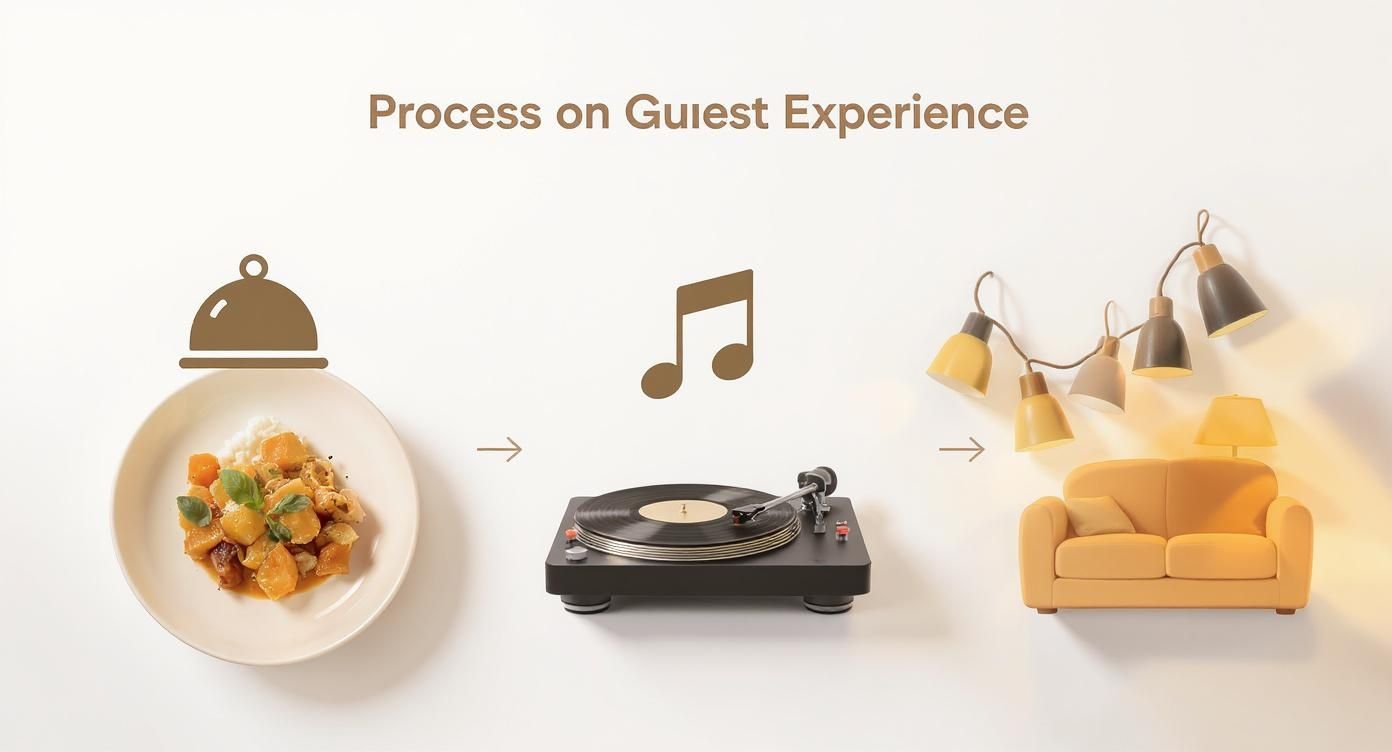
The visualization highlights a balanced rhythm across these three pillars, ensuring no single element overshadows the rest. With this guide in hand, you can fine-tune each segment to reflect your style and schedule.
Building A Customizable Timeline
Every celebration has its own personality, but most receptions share a familiar progression. Think of this outline as a starting line—you can stretch or shrink each segment based on what matters most to you. A five-hour reception often flows like this:
- 5:00 PM – Guest Arrival & Cocktail Hour: Soft tunes set the mood while friends and family mix over drinks and hors d’oeuvres.
- 6:00 PM – Grand Entrance & First Dance: Announce the wedding party, then glide into that first dance moments after the introductions.
- 6:15 PM – Welcome Toast & Dinner Service Begins: A quick hello from a loved one signals that dinner is officially underway.
- 7:15 PM – Speeches & Toasts: Drop these between courses to keep momentum—aim for 3–5 minutes per speaker.
- 8:00 PM – Cake Cutting & Parent Dances: A classic photo moment that naturally shifts the evening’s energy.
- 8:15 PM – Open Dance Floor: Crank up the volume, invite everyone to the floor, and sprinkle in extras like a photo booth.
- 9:45 PM – Bouquet/Garter Toss (Optional): Traditional, playful, or skip it—your call.
- 10:45 PM – Last Dance & Grand Exit: Choose a final song that leaves everyone smiling as you make your send-off.
Pro Tip: Always tuck in an extra 10–15 minutes around key transitions—think moving guests from cocktails to dinner or rounding up tables for toasts. Delays happen; buffers keep the night on track.
Designing A Floor Plan For Optimal Flow
Your timeline sets the schedule, but your floor plan defines how guests move through the space. A thoughtful layout invites conversation, dancing, and exploration without crowding.
Sketch out your venue, then think through these essential zones:
- The Dance Floor: Centered and open on all sides so no one has to squeeze past tables.
- The Bar(s): Off to the side of the entrance; two smaller bars can prevent long lines at larger events.
- The DJ Booth or Stage: Up front with a clear view of the dance floor—and easy power access.
- Interactive Stations: Whether it’s a dessert display or a photo booth ideas for parties, tuck these in visible spots to pull guests away from their seats.
Using Cues To Guide Your Guests
Top receptions feel effortless because every shift is signaled. Coordinate with your DJ, lighting technician, and planner to create subtle prompts.
For example, dimming the room lights while spotlighting the cake instantly tells everyone it’s time for dessert. Likewise, an upbeat opening number works as the universal “dance floor is open” cue. It’s these little production touches that turn a good party into a polished event.
Special Considerations For Destination Wedding Receptions
Planning a wedding from hundreds of miles away introduces a whole new layer to the process. It’s less about in-person meetings and site visits and more about becoming a master of remote coordination. Pulling it off successfully really comes down to constant communication, finding great local experts, and thinking through every detail of your guests' experience from the moment their plane touches down.
One of the first, and most overlooked, hurdles is the legal stuff. Getting married in another country isn’t just symbolic—it involves real paperwork. You absolutely need to research the marriage license requirements for your chosen destination far in advance. Some countries have tricky residency rules or require specific documents to be translated and notarized. Trust me, you don’t want to be scrambling over legal details at the last minute, so make this your very first task.
Building Your Local Team From Afar
Let’s be real: you cannot plan a destination wedding alone. Hiring a local wedding planner isn't a luxury; it's a necessity. They are your eyes and ears on the ground, bringing with them a network of trusted local vendors, from florists to DJs. A good local planner can navigate cultural nuances, language barriers, and logistical headaches you probably wouldn’t even see coming.
When it comes to vetting venues and vendors from another time zone, technology is your best friend.
- Insist on Live Video Tours: Have the venue manager or your planner walk you through the space on a video call. This gives you a real-time feel for the property, lets you check out the current lighting, and allows you to ask questions as you "move" through the rooms.
- Lean on Shared Inspiration Boards: Use platforms like Pinterest to build out detailed visual guides for your planner and decor team. Be super specific with your pins and add notes explaining exactly what you love about each image to avoid any creative misinterpretations.
- Schedule Recurring Check-ins: Set a standing time for video calls with your core team. It keeps the momentum going and makes sure everyone is on the same page with timelines and what’s next.
Your local planner is your most valuable asset. They can often negotiate better rates with vendors they have long-standing relationships with, potentially saving you more than their fee costs. Trust their expertise.
The trend of destination weddings is definitely on the rise, and they’re not just small elopements anymore. In 2024, the average guest count for these events hit a five-year high of 65 people. More and more couples are skipping the traditional resorts in favor of unique spots like private villas or secluded beaches. You can dig into more stats about the rise in destination wedding attendance to see the full picture. This shift just means that managing things like room blocks and guest communication becomes even more critical.
Crafting The Guest Itinerary And Timeline
A destination wedding is so much more than a single party—it's a multi-day experience. Your guests are investing serious time and money to be there for you, so a thoughtful itinerary is a must. The trick is to find that sweet spot between planned activities and giving everyone enough downtime to relax. Over-scheduling is a surefire way to burn out your guests before the big day even arrives.
Here's what a balanced itinerary might look like:
- Day 1 (Arrivals): Kick things off with a casual welcome reception or cocktail hour in the evening. It’s the perfect low-pressure way for everyone to settle in and start mingling.
- Day 2 (Adventure): Plan an optional group activity that shows off your location, like a boat trip, a guided city tour, or a group hike. It’s a fantastic way for your guests to bond and make their own memories.
- Day 3 (The Big Day): Let your guests have a lazy morning. Schedule the ceremony for late afternoon to catch that beautiful "golden hour" light and cooler temps, flowing right into the reception.
Finally, always build some cushion into your timeline to account for travel weirdness. Flight delays and unexpected traffic from the airport can and do happen. Building buffers into your wedding day schedule, especially if you have vendors traveling between locations, will keep stress levels down. A relaxed pace is the ultimate luxury for both you and your guests.
Last-Minute Wedding Reception Questions, Answered
Even with the best plan, things happen. When you’re moments from the reception starting, small hiccups can feel like huge disasters. But don’t worry, we’ve seen it all, and there’s almost always a quick fix.
Here are four of the most common last-minute issues we see and how to handle them like a pro.
What If My Timeline Gets Derailed?
A sudden downpour or a vendor running late can easily throw your perfectly crafted schedule off track. It’s frustrating, but it doesn't have to ruin the night.
I once saw a Kansas City couple have to completely swap their cocktail hour and grand entrance because of an unexpected storm. They made a quick call to their DJ, who shifted the music, and updated the digital timeline on their event app. The guests never even knew anything was amiss.
The secret is building in a little breathing room from the start:
- Add a 10-15 minute buffer between major events (like cocktails and dinner, or dinner and dancing).
- Schedule specific check-in times for vendors to connect with each other.
- Keep your coordinator in the loop with a group text for real-time updates.
- Use a shared timeline app so any changes are instantly visible to the whole team.
"Always plan extra time around vendor hand-offs. That single buffer saved us from a dinner service meltdown more than once." – A veteran wedding planner
A little flexibility means that if one part of the evening runs long, you can adapt on the fly without having to cut into special moments like speeches or the first dance.
Quick Tip: Send a simplified, one-page schedule to every single vendor about 24 hours before go-time. It keeps everyone on the same page.
How Can I Trim the Decor Budget Without It Looking Cheap?
Cutting costs doesn't have to mean sacrificing style. The key is to be strategic, not just cheap.
One of our couples wanted a lush, organic vibe but didn't have the budget for huge floral centerpieces. Instead, they used a mix of potted herbs and minimalist bud vases. The look was stunning, totally unique, and came in at 40% less than their original floral quote.
Here are a few other ways to save without losing impact:
- Rent a few large, dramatic statement pieces instead of buying tons of small, forgettable items.
- Check out local potters or even farmers' markets for unique, affordable vase rentals.
- Use LED uplighting to wash the room in color. It often has more impact than flowers and costs a fraction of the price.
- Get more bang for your buck by repurposing ceremony arrangements for the head table or gift table during the reception.
- DIY simple elements like table numbers using beautifully printed cardstock and simple holders.
Pro Insight: Create a focused mood board. It will help you pinpoint where a single splurge item will make the biggest splash, letting you save elsewhere.
A Vendor Is Late or Has an Issue. Now What?
It's the call every couple dreads, but it happens. A DJ gets a flat tire, or a piece of equipment fails during setup.
At a recent KC wedding, the DJ got stuck in highway traffic. The venue manager didn't panic. He immediately grabbed a backup sound system they kept on-site, and it was set up and running in minutes. The cocktail hour music started right on time, and no one was the wiser.
This is why a good Plan B is non-negotiable:
- Your vendor contracts should always include a clause about what happens if they can't make it (i.e., they provide a suitable backup).
- Keep a list of emergency contacts for other local pros, just in case.
- Have a printed copy of your timeline and key playlists in case of a tech failure.
- Always insist on a full soundcheck and equipment test at least an hour before guests arrive.
"The question I wish more couples would ask is, 'What’s your Plan B?' They usually don't think about it until it's too late." – An experienced AV tech
Taking these steps ensures a minor issue doesn't derail a major moment.
How Do We Handle Last-Minute Dietary Changes from Guests?
You will almost always have a guest who forgot to mention a dietary need until they're sitting at their table.
A couple recently had five guests suddenly request gluten-free desserts an hour before dinner service. Instead of scrambling, their caterer was prepared. The chef quickly whipped up a small, elegant flourless chocolate cake. Problem solved.
Here’s how to stay ahead of the curve:
- Send a final reminder for all dietary restrictions two weeks before the wedding.
- Confirm your final, detailed meal counts with your caterer 72 hours out.
- Ask your caterer to have a few "crowd-pleaser" alternatives on hand, like a beautiful fruit platter or mini cheesecakes.
- Make sure serving staff are trained on what’s in each dish and that everything is clearly labeled.
"Proactive allergy tracking cut our dinner service time by 30 minutes. It just makes everything smoother." – A local KC caterer
When you handle this gracefully, your guests feel seen and cared for, and you get to enjoy your dinner without any added stress.
Ready to elevate every moment with expert production and entertainment? Partner with Showboss KC for DJs, lighting, photo booths, and seamless event support that takes the stress off your shoulders. Book your consultation now.