

"Staging the event" is a phrase we hear a lot, but what does it really mean? It’s not just about throwing a platform at the front of a room. It’s the art of strategically designing an environment that grabs your audience, guides their experience, and hammers your message home with serious impact.
Great staging translates your vision into a physical reality. It’s the magic that ensures every technical and design element—from the lighting rig to the sound system—works in harmony to create a cohesive, unforgettable atmosphere.
Establishing Your Event’s Foundation
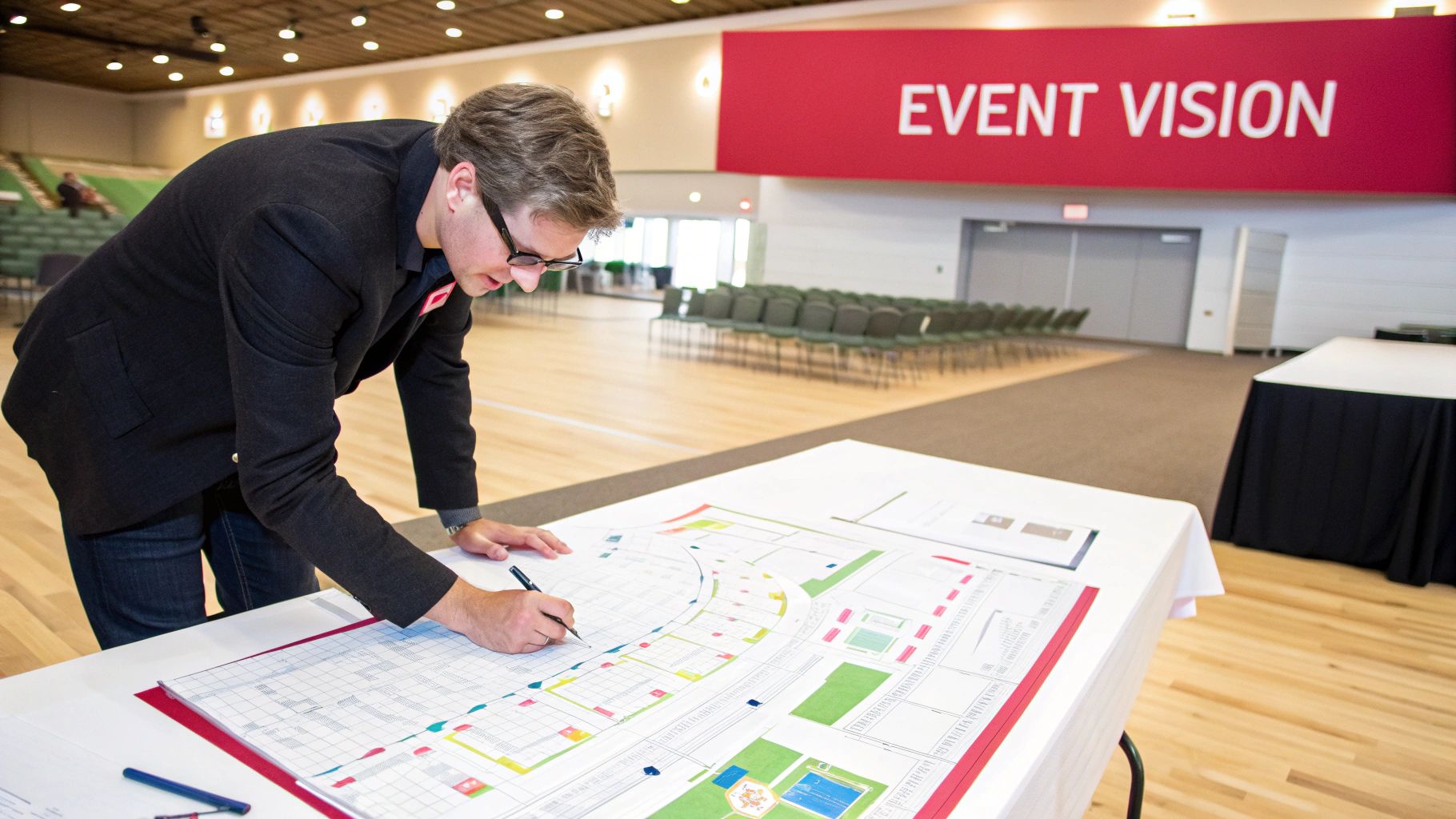
The most jaw-dropping events don’t start on load-in day. They start months before, with a solid, foundational plan. This is where you move past the checklists and get into the nitty-gritty, turning abstract ideas into a concrete, actionable strategy. It's about defining the entire journey for every single attendee, from the second they walk through the door.
This means mapping out the whole experience. You need to think about sightlines from the cheap seats, not just the front row. Consider how people will move through the space—from the registration desk to their seats to the breakout rooms. Pinpoint those key moments you want them to remember long after they've gone home.
Conducting a Professional Venue Assessment
Let me be clear: a thorough venue walk-through with your technical crew is non-negotiable. This isn’t a casual stroll. Think of it as a forensic investigation to sniff out potential disasters before they blow up your budget and your schedule.
You're there to verify the critical infrastructure. Here’s what we always zero in on during a site visit:
- Power Availability and Distribution: Where are the outlets? What’s their amperage? Will we need to bring in generators? Trust me, overlooking power is a classic, show-stopping mistake you don't want to make.
- Rigging Points and Load Capacity: We need to know every single point available for hanging lights, speakers, or LED screens. More importantly, we need to know the exact weight limits for each one to keep everyone safe and the setup sound.
- Loading Dock and Access Routes: How easy is it for a 53-foot semi to get to the loading dock? Are there freight elevators or long ramps we have to navigate with heavy gear? A tough load-in can derail your entire timeline before you've even started.
- Connectivity and Bandwidth: In this day and age, bad Wi-Fi is a dealbreaker. A solid foundation includes planning for connectivity. It’s worth looking at case studies on effective Wi-Fi provision for major events to see what’s possible.
This strategic framework ties everything together, from the creative concept to the on-the-ground logistics. It’s the difference between crossing your fingers for a good outcome and engineering a flawless one. If you want to dive deeper into the full scope of this process, you can explore what is event production and see how these crucial first steps fit into the bigger picture.
The goal of this initial phase is to build a blueprint that is both ambitious in its vision and perfectly achievable in its execution. Every decision made here directly impacts the final experience, making it the most critical stage of the entire process.
By meticulously planning your foundation, you're building a stable platform for a truly remarkable event. This diligence is what prevents those last-minute, panicked scrambles. It ensures that when the doors finally open, every single element is perfectly in place, ready to captivate your audience.
Bringing Your Staging Design to Life
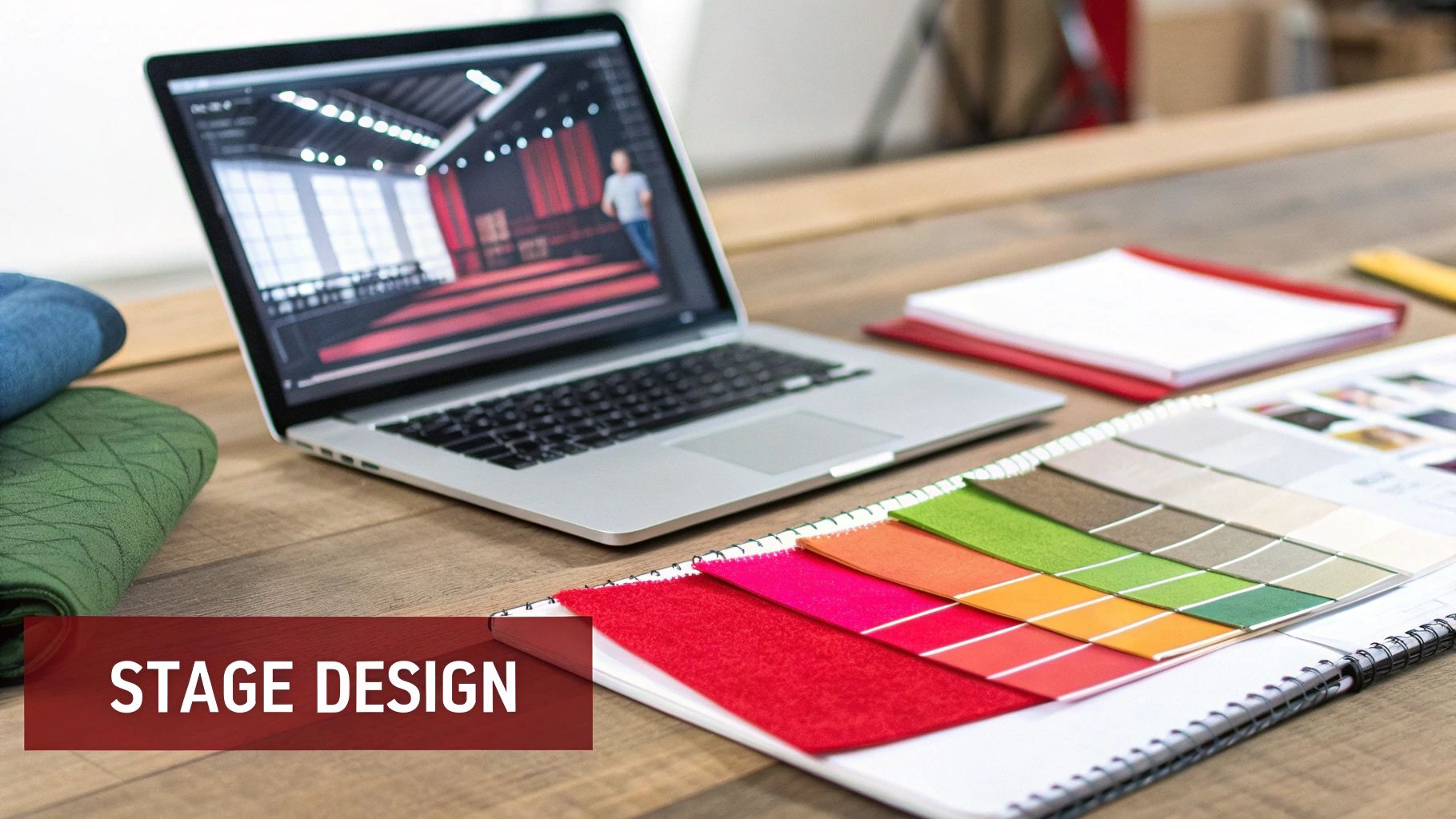
This is where the magic really starts to happen—where abstract ideas finally start looking like a real, tangible event. We’re moving from a vision board to a working blueprint, and it all begins not with hammers and nails, but with creative tools like mood boards and fabric swatches to lock in the perfect atmosphere.
Think of these early concepts as your North Star. They guide every single decision that follows, from the texture of a backdrop to the exact shade of a spotlight, making sure everything stays true to your event's core theme. Getting this right from the jump prevents those costly, last-minute changes that can derail a project.
From Mood Boards to 3D Renderings
Once we’ve nailed down the vibe, things get a bit more technical. That initial mood board gets translated into detailed sketches and, ultimately, into photorealistic 3D renderings. Honestly, this step is non-negotiable in modern event production. It lets you "walk through" the entire space digitally before a single piece of gear is even loaded onto a truck.
With a 3D model, you can check sightlines from every seat in the house, see exactly how the lighting will play off different surfaces, and figure out the perfect placement for video screens. For a corporate conference, this might mean guaranteeing the CEO’s keynote is perfectly visible from the cheap seats. For a music festival, it’s all about making sure that stage presence feels absolutely massive and immersive.
This visualization is your best defense against ugly surprises on show day. It’s where you catch potential headaches—like a branded backdrop being blocked by a speaker stack or a lighting rig hanging just a little too low—and fix them with a few clicks instead of a frantic on-site scramble.
A detailed 3D rendering isn't just a pretty picture. It's the functional blueprint that connects creative vision to technical reality. It ensures what you imagined is what actually gets built—safely, efficiently, and on budget.
This rendering becomes the master plan for the entire production crew. They use it to map out everything from cable runs to truss placement, making the load-in process exponentially smoother and faster.
Mastering Stage Composition and Materiality
A great stage is so much more than just a platform. It's about creating a cohesive world using structures, lighting, and video, where every single element works together to direct the audience's focus and tell your event's story.
You have to consider the core structural building blocks:
- Backdrops: These set the entire scene. A simple pipe-and-drape can give a wedding an elegant, clean look, while a custom-built set piece with integrated LED panels delivers that "wow" factor for a major product launch.
- Risers: Whether you're elevating a panel of speakers or creating dynamic levels for a band, tiered platforms are essential. They guarantee visibility and add a ton of visual interest.
- Set Pieces and Props: This is where you get to make it yours. Custom elements—whether it’s a branded lectern or unique scenic decor—are what make a stage design truly memorable and one-of-a-kind.
The materials you choose are just as critical as the structures themselves. You don't always need the most expensive option to create a premium feel. For example, clever lighting on textured fabrics can create a sense of depth and luxury for a fraction of the cost of building solid set pieces. The key is to pick materials that not only fit the theme but are also durable, fire-rated, and practical for the venue.
Designing for a Hybrid World
These days, the design process has to extend way beyond the physical room. The explosion of hybrid events means your stage must look just as incredible on a screen as it does to the people in the front row.
The virtual event market, estimated at USD 236.7 billion in 2025, is projected to skyrocket past USD 537 billion by 2029. This isn't a fluke—it shows that designing for the camera is no longer optional. With 74.5% of planners now using hybrid models, building in virtual components is just part of the job. You can dig into more of these fascinating event industry statistics to see just how much the landscape is shifting.
This reality impacts every single design choice. High-contrast colors, glare-free surfaces, and strategic camera placement become critical. Your design has to be built from the ground up for a remote audience, making sure they feel just as plugged-in as those in the room. This means your production partner needs to understand both live and broadcast environments to deliver a plan that’s beautiful, safe, and effective on every platform.
Integrating Audio, Lighting, and Video Seamlessly
Truly exceptional event staging isn't just about having the biggest speakers, the brightest lights, or the largest video screen. It’s about making these powerful tools disappear into one unified, immersive experience. The real magic happens when audio, lighting, and video work together to tell a single, compelling story.
When these elements are in sync, the audience isn't just watching a presentation; they're feeling it. A perfectly timed lighting change can amplify a speaker's key point, while a crisp audio cue paired with a dynamic video transition can create a moment of genuine excitement. This synergy is what separates a forgettable event from an unforgettable one.
Mastering the Art of Event Audio
Crystal-clear audio is the invisible foundation of any successful event. If your audience can't hear the message—whether it's a CEO's keynote or a bride's vow—the entire experience falls apart. It’s about more than just making things loud; it's about delivering pristine, intelligible sound to every single person in the room.
This all starts with selecting the right tools for the job. You can't just use any microphone.
- Lavalier Mics: These are perfect for presenters who need their hands free, clipping directly onto clothing for clear, consistent vocal pickup.
- Handheld Mics: The classic choice for Q&A sessions or performers who want to control their sound.
- Podium Mics: A go-to for formal presentations, ensuring a stationary speaker is heard without a single issue.
Beyond the mics, a well-designed sound system is what guarantees even coverage. This means carefully planning speaker placement to eliminate "dead spots" and "hot spots," so the person in the back corner hears just as clearly as the one in the front row. For a deeper look at the components involved, check out our guide on selecting the right audio-visual equipment for events.
Sculpting the Atmosphere with Lighting
Lighting is one of the most powerful—and often underestimated—tools in event production. It does so much more than just illuminate a space; it paints with emotion, directs focus, and can completely transform the mood of a room. With the right design, you can make a cavernous ballroom feel intimate or a simple stage feel absolutely grand.
Think of your lighting designer as a sculptor of atmosphere. They use a combination of techniques to create depth, texture, and visual interest.
- Color: Warm tones like ambers and reds can create an energetic, exciting vibe for a product launch, while cool blues and purples set a sophisticated, calm mood for a corporate gala.
- Texture: Using gobos—stencils placed inside lights—we can project patterns onto walls or floors, breaking up flat surfaces and adding a layer of visual complexity.
- Movement: Automated "moving head" lights can sweep across the audience to build energy during a concert or slowly pan to reveal a new speaker, guiding everyone's attention exactly where you want it.
Great lighting design is intentional. It reinforces the event's brand, enhances key moments, and ensures the audience is looking and feeling precisely what you want them to, from start to finish.
Making a Visual Impact with Video
In our visually driven world, video has become a centerpiece of modern event staging. From massive LED walls displaying custom content to multi-camera setups for a flawless live stream, video elements are key to engaging your audience. They provide a dynamic canvas for branding, presentations, and pure spectacle.
An LED video wall, for example, serves as a high-impact digital backdrop that can change instantly. It can take your audience from a branded welcome screen to a live video feed to an animated graphic in seconds. For events incorporating virtual presenters, mastering techniques like using a green screen like a pro is crucial for that polished, professional look.
The professional lighting and staging sector has seen huge investment as organizers aim for higher production values. Projections show this trend continuing, with research indicating a compound annual growth rate of around 6.1% for live events solutions from 2024 through 2029. This growth, which puts the global sector's revenue at an estimated USD 4.2 billion, highlights just how critical high-quality staging has become.
To give you a better idea of how these components come together for different occasions, here’s a quick breakdown of what’s typically needed.
Key Technical Components for Different Event Types
| Component | Corporate Event Focus | Wedding Focus | Festival Focus |
|---|---|---|---|
| Audio | Clear vocal reinforcement (lavalier, podium mics), distributed speakers for even coverage, background music playback. | High-quality mics for vows/speeches, DJ sound system with subwoofers for dancing, ceremony audio solutions. | Large-scale line array systems for maximum coverage, robust monitor systems for performers, powerful subwoofers. |
| Lighting | Stage wash for speakers, branded gobos/colors, intelligent lighting for walk-ins and awards, uplighting for atmosphere. | Uplighting to match decor, pin-spotting for centerpieces, dance floor lighting effects, custom monogram projection. | Dynamic stage lighting with moving heads, strobes, and atmospheric effects (haze), large-scale truss structures. |
| Video | LED walls or projectors for presentations, confidence monitors for presenters, IMAG (live camera feed) for large rooms. | Custom slideshows or video montages, live-streaming for remote guests, LED wall for a modern photo backdrop. | Large LED walls for main stage visuals, live camera feeds, graphics for sponsor loops and artist announcements. |
Each event has its own unique recipe for success, but the right technical ingredients are always a critical part.
Ultimately, integrating these three pillars—audio, lighting, and video—is an art form. It requires a technical director who understands how the systems communicate and a creative team that knows how to use them to create emotion. When it’s done right, the technology becomes invisible, and all that's left is a powerful, memorable experience.
Navigating Budgets and Managing Vendors
Let's be honest: a brilliant creative concept is just a dream without a solid budget and the right team to bring it to life. Getting your event staging right really comes down to mastering two things: financial planning and vendor management. This is where the real work happens, turning your big ideas into a seamless, on-the-ground reality and avoiding those costly last-minute surprises.
The events industry is huge, with projections showing it would blow past USD 50 billion globally by 2025. That figure, from an analysis of the exhibition market, shows just how much is being invested in top-tier production. To make an impact, you need a budget that can keep up—and you need to manage it flawlessly.
Breaking Down Your Staging Budget
A truly realistic budget goes way beyond just the obvious costs. Sure, everyone remembers to budget for the stage deck and the backdrop, but it's the hidden expenses that always seem to trip people up. A good budget anticipates everything.
Think about these key cost centers:
- Staging and Rigging: This isn't just the stage itself. It includes all the truss structures needed to hang lights, sound, and video, plus the highly skilled labor required to build it all safely.
- Labor Costs: Never, ever underestimate your labor budget. You need to account for technical directors, audio engineers, lighting designers, and all the stagehands for load-in, the show itself, and the teardown afterward.
- Transportation and Logistics: All that gear has to get to your venue and back. For bigger shows, this can mean multiple semi-trucks, and that comes with a significant price tag.
- Contingency Fund: This is non-negotiable. Always, always set aside 10-15% of your total budget for the unexpected. A piece of gear could fail, or a storm could delay your load-in. A contingency fund is what turns a potential crisis into a simple hiccup.
Finding the Right Production Partner
The production company you choose is so much more than a supplier—they're your partner in making it all happen. Finding the right fit is everything. The process should start with a detailed Request for Proposal (RFP) that clearly lays out your vision, your technical must-haves, and what you want to achieve. A thorough RFP brings in serious, professional bids.
When those proposals start rolling in, fight the temptation to just go with the lowest number. The cheapest bid often means you're compromising on equipment quality, crew experience, or the level of support you'll get. You have to evaluate bids on overall value. Do they get your vision? Do they have a portfolio of events similar to yours? Taking the time to read reviews and learn about the reputation of local event production companies is one of the smartest moves you can make.
The best vendor isn't the one with the lowest bid, but the one that provides the most value. Look for a partner who offers creative solutions, demonstrates a deep understanding of your goals, and has the expertise to execute flawlessly.
Once you’ve made your choice, that contract is your bible. It needs to spell out the scope of work, payment schedules, and who is responsible for what. Pay very close attention to the fine print, especially clauses about insurance, liability, and cancellations. A strong contract protects everyone and eliminates any gray areas before showtime.
Maintaining Clear and Consistent Communication
You can have the perfect budget and an ironclad contract, but without great communication, things can still go sideways. From day one, set up a clear line of communication and a regular meeting schedule with your vendors. It’s the only way to keep everyone on the same page about goals, timelines, and the inevitable changes that pop up.
We live by shared documents—run-of-show schedules, contact lists, and stage plots should all be in one place where everyone can access the latest version. A quick weekly check-in call can stop a small misunderstanding from becoming a major on-site headache. It all comes down to building trust and ensuring that when the doors open, your entire team—from your internal staff to every external vendor—is moving as one well-oiled machine.
Executing On-Site From Load-In to Load-Out
All the planning, budgeting, and creative brainstorms have led you here. This is where the blueprint comes to life, putting your team’s precision and coordination to the ultimate test. On-site execution is a carefully choreographed dance, moving from the first truck arriving to the final cable being coiled.
A flawless event day isn't luck—it's the direct result of a killer plan that everyone understands. The clock starts ticking the second that first road case hits the loading dock. Every minute is precious, and a well-managed timeline is the only way to get the doors open on time without any last-minute chaos.
Orchestrating a Smooth and Safe Load-In
Load-in is way more than just unloading trucks. It’s a strategic move that sets the tone for the entire production. An efficient load-in is safe, methodical, and ensures every piece of gear gets assembled in the right order. A messy one? That just leads to bottlenecks, safety risks, and delays that can cost you.
We live by a simple "first in, last out" philosophy. The gear you need first is always the last thing packed on the truck, so it’s the first thing to come off. This usually means structural pieces like rigging and truss come in before the more delicate tech like projectors and mics.
Here’s a quick checklist to keep your load-in on track:
- Pre-Arrival Crew Briefing: Before anyone lays a hand on gear, get the crew together. Run through the floor plan, point out emergency exits, and make sure everyone knows their specific job.
- Venue Sign-Off: Double-check with the venue manager that all access routes are clear. You also need to confirm that power distribution points are unlocked and ready for your techs to plug in.
- Staggered Truck Arrivals: Got more than one truck? Schedule their arrival times to avoid a traffic jam at the loading dock. This keeps the gear flowing in at a steady, manageable pace.
- Department-Specific Staging Areas: Mark out specific zones on the event floor for audio, lighting, video, and staging. This stops gear from piling up and keeps everyone's workspace clear and organized.
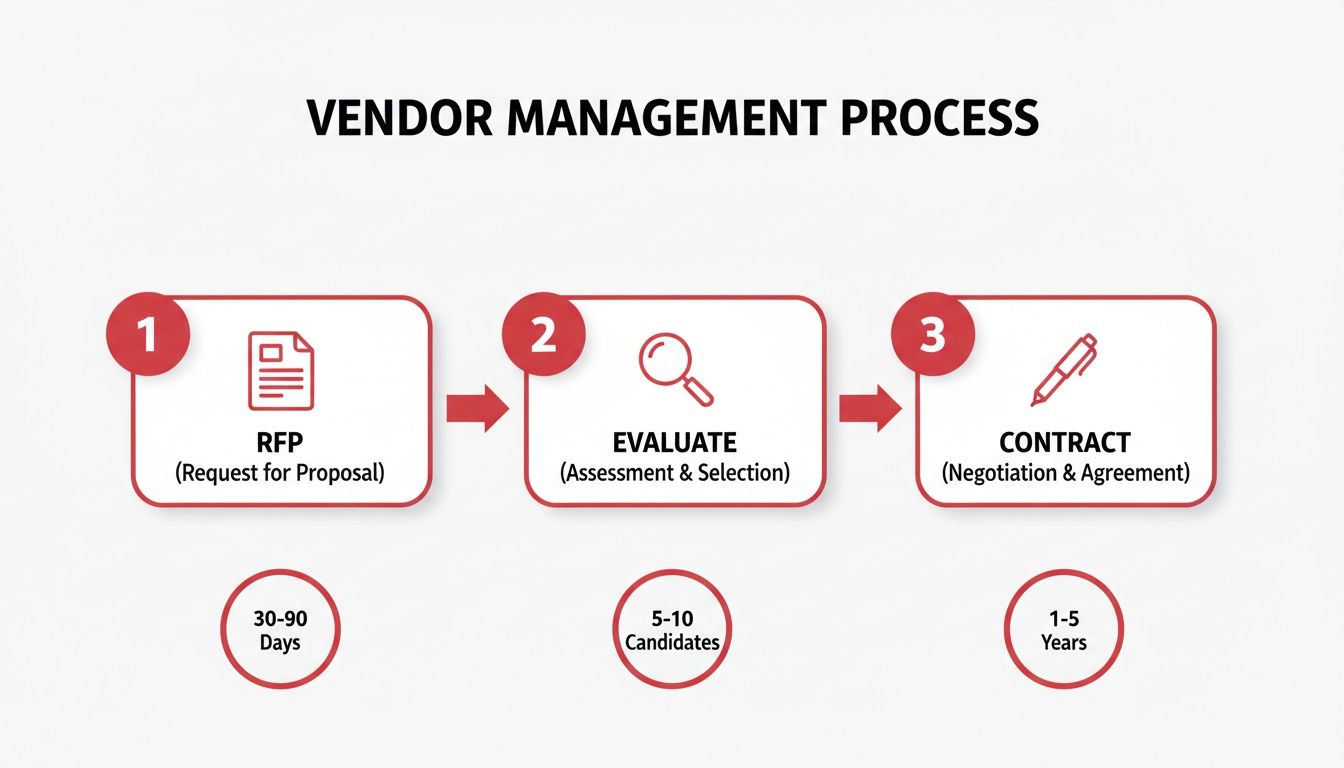
This graphic breaks down how a structured approach—moving methodically from the initial proposal to a signed contract—is the bedrock of a solid vendor partnership.
The Run-of-Show: Your Live Event Playbook
Once everything is built, tested, and ready to go, the focus shifts to the live show. The master document for this part of the day is the run-of-show (RoS). This is not just a simple agenda; it's a minute-by-minute, sometimes second-by-second, script that lays out every single cue for the entire event.
Two key players make the magic happen:
- Technical Director (TD): The TD owns the gear. They’re responsible for making sure all the audio, video, and lighting equipment is working perfectly and that every operator is ready to hit their cues.
- Stage Manager (SM): The SM owns the show. They're the voice in everyone’s headset, calling every single cue from the RoS. They ensure presenters walk on stage at the exact right moment and that the technical elements fire precisely when they're supposed to.
The run-of-show is the single source of truth during a live event. It keeps the entire production crew—from the person running slides to the one on spotlights—perfectly in sync for a seamless, professional show.
Mastering the Art of the Load-Out
The second the last guest walks out the door, the final phase kicks off: the load-out, or "strike." This process demands the same level of organization and safety as the load-in, just done in reverse. A rushed or sloppy strike can lead to damaged equipment, a burnt-out crew, and a strained relationship with the venue.
A clean load-out is a signature of professionalism. The goal is simple: leave the venue looking even better than when you arrived. This means a full sweep for stray gear, trash, or leftover gaff tape. Trust us, a happy venue manager is your best friend for future events.
The process is just a logical reversal. The last things that came in are the first to go out. Decorative elements and smaller electronics get packed up while the big structural components are being taken down. Just like load-in, clear communication and defined roles are everything for a safe and efficient teardown. It’s all about finishing strong and leaving a great impression.
A detailed run-of-show is non-negotiable for a smooth event. It’s the playbook everyone follows. Here is a simplified version of what that might look like:
Sample Run-of-Show Template
| Time (HH:MM:SS) | Item/Action | Audio Cue | Lighting Cue | Video Cue | Notes/Talent |
|---|---|---|---|---|---|
| 18:55:00 | Doors Open | House Music – Playlist 1 | House Lights at 75% | Welcome Graphic on Loop | — |
| 19:00:00 | CEO Welcome Speech | Mic 1 Live, Music Fade Out | Stage Wash, Center Spotlight | CEO Headshot on Side Screens | CEO Jane Doe enters stage left |
| 19:05:00 | Award Presentation 1 | Award Music Sting (AQ 3) | Follow Spot on Presenter | Winner Graphic (VQ 5) | Presenter: John Smith |
| 19:10:00 | Video Roll | Play Video File: "Recap.mp4" | Stage Lights to Blue Wash | Full-screen video playback | — |
| 19:15:00 | End of Program | House Music Fade In | House Lights Up to 100% | Thank You Graphic on Loop | Announce dinner is served |
This template ensures every technical department and on-stage talent knows exactly what’s happening and when, preventing missed cues and keeping the entire show tight.
Got Questions About Event Staging? We've Got Answers.
Pulling off a killer event means juggling a thousand details, and it's totally normal to have questions, especially when it comes to the technical side of things. Getting the staging, sound, and lighting right is a huge part of the puzzle.
We hear a lot of the same questions from our clients, so we've put together some straight-shooting answers to help you get a handle on the process.
How Far Out Should I Start Planning My Event Staging?
This is the big one, and the answer really depends on the scale of your event.
For the heavy hitters—think multi-day conferences, music festivals, or a really tricked-out gala—you want to give yourself a runway of 6 to 12 months. That might sound like a long time, but it’s what you need to thoughtfully develop the concept, lock in the perfect venue, and get the best vendors on board without scrambling.
If you're planning something a bit smaller, like a one-day corporate meeting, a trade show booth, or a wedding, a 3 to 6-month lead time usually works just fine. The absolute first thing you need to do, no matter the size, is book your venue and your production partner. Their availability and the venue's built-in tech capabilities will steer almost every decision you make from that point forward.
What Are the Biggest Staging Mistakes You See People Make?
Honestly, the most painful (and expensive) mistakes usually happen way before the event day. We’ve seen it all. Under-budgeting for power and labor is a classic one that can literally shut a show down. Another is completely forgetting about sightlines—what looks amazing from the front row could be totally blocked for half your audience in the back.
But the single biggest mistake? Not creating a detailed run-of-show document. It’s the playbook for the entire event. Without it, you’re just asking for missed cues, awkward dead air, and a whole lot of stress for everyone backstage.
Poor communication between the client, the planner, and the production team is another huge one. It leads to last-minute changes and frantic fixes that a simple site visit with your technical team could have easily prevented.
What’s the Difference Between a Stage Manager and a Technical Director?
Great question. These two roles are the unsung heroes of any live event, and while they work side-by-side, they have very different jobs. Think of them as the two captains steering the ship.
- The Technical Director (TD) is the master of all the gear. They’re responsible for making sure every piece of audio, video, lighting, and rigging equipment is installed correctly and runs without a hitch. The TD owns the tech.
- The Stage Manager (SM) is the one running the live show. They follow the run-of-show down to the second, calling out every single cue to the operators (like, "Lighting, go to state two") and guiding presenters and performers on and off the stage. The SM owns the timeline and the people.
Having both of these pros in place with a clear chain of command is the secret to a flawless show where every single element works together perfectly.
Ready to turn your vision into a flawlessly executed event? The experts at Showboss KC are here to manage every detail of your staging, audio, lighting, and video needs. Let's create an unforgettable experience together. Learn more and book your consultation with Showboss KC today!