

A great wedding reception timeline is more than just a schedule; it's the hidden blueprint for a stress-free party. Think of it as your secret weapon. It’s a structured guide that outlines everything from the cocktail hour buzz to that final, magical send-off.
This customizable roadmap keeps you, your vendors, and your coordinator all on the same page, making sure every big moment—the first dance, those heartfelt toasts, the cake cutting—lands perfectly and without a hitch.
Crafting The Foundation Of Your Reception Timeline
Before you get lost in the details, you need to understand the core components of your timeline. It’s like building a house: you have to frame the main rooms and put up the support walls before you even think about paint colors. The same idea applies here.
Mapping out your "big rocks" first makes filling in the smaller details so much easier later on. These non-negotiable moments are the anchors for the entire evening. The goal is to create a natural rhythm that feels celebratory and totally effortless for your guests, even though you’ve meticulously planned every second behind the scenes.
Identify Your Key Moments
Every reception is built around a handful of essential events that guide the evening's energy. These are your foundational pillars. Start by simply listing your must-have moments and giving each one a rough time estimate.
- Cocktail Hour: This is typically 45-60 minutes. It's a crucial buffer between the ceremony and dinner, letting guests grab a drink and mingle while you wrap up photos.
- Dinner Service: For a seated meal, you’ll want to block out 1 to 1.5 hours. Buffets or food stations might need a little more time to keep lines from getting long and to make sure everyone eats comfortably.
- Formal Toasts & Speeches: Keep this part tight and engaging. Aim for 15-20 minutes total, which works out to about 3-5 minutes per speaker.
- Major Dances: This includes your first dance and any parent dances. These usually happen right before you open the dance floor to everyone.
- Cake Cutting: This is a classic photo-op that often signals the party is about to kick into high gear or, in some cases, begin winding down.
Figuring out these key segments is the first real step in how to plan a wedding reception that feels like it flows perfectly.
To help you visualize this, here’s a quick breakdown of how these pieces fit together.
Key Reception Moments At A Glance
This table breaks down the standard timing and purpose of each reception segment to help you allocate time like a pro.
| Reception Segment | Typical Duration | Primary Purpose |
|---|---|---|
| Cocktail Hour | 45-60 minutes | Guest arrival, mingling, drinks, and appetizers. |
| Grand Entrance | 5-10 minutes | Introduces the newlyweds and wedding party. |
| Dinner Service | 60-90 minutes | The main meal for guests. |
| Toasts & Speeches | 15-20 minutes | Heartfelt words from family and friends. |
| Formal Dances | 10-15 minutes | First dance and parent dances. |
| Cake Cutting | 5 minutes | A symbolic tradition and great photo opportunity. |
| Open Dancing | 2-3 hours | The main party segment for guests to celebrate. |
| Grand Exit/Send-Off | 10-15 minutes | The final farewell moment for the couple. |
Seeing it all laid out like this really helps you understand how one event naturally leads into the next, creating that seamless experience you're after.
A well-paced timeline is the secret to a memorable wedding. It’s not just about what you do, but when you do it. The right flow keeps energy high and ensures guests are always engaged, never wondering what’s next.
Determine Your Reception Style and Length
The overall vibe of your reception will have a huge impact on its structure. A formal, multi-course seated dinner demands a more rigid schedule than a laid-back, cocktail-style party with roaming food stations.
Most wedding receptions in the U.S. last somewhere between 4 to 6 hours. This window usually gives you plenty of time to fit in all the key events without ever feeling rushed. To dig a little deeper into this, check out this excellent guide on crafting your perfect wedding reception timeline. Getting this initial planning right really does set the stage for a flawless celebration.
Sample Timelines You Can Actually Use
Theory is great, but seeing a wedding reception timeline in action is where it all clicks. To help you get started, I’ve mapped out three different schedules you can adapt for your own day. These aren't just generic templates; they're real, practical blueprints that show you how to create a natural rhythm for your celebration.
Think of these as your launchpad. Feel free to borrow ideas, tweak the timing, and plug in your own unique details. Whether you're dreaming of a classic evening party or a shorter afternoon get-together, these examples give you a solid foundation to build on.
This visual gives you a quick, bird's-eye view of how the main parts of the night fit together.
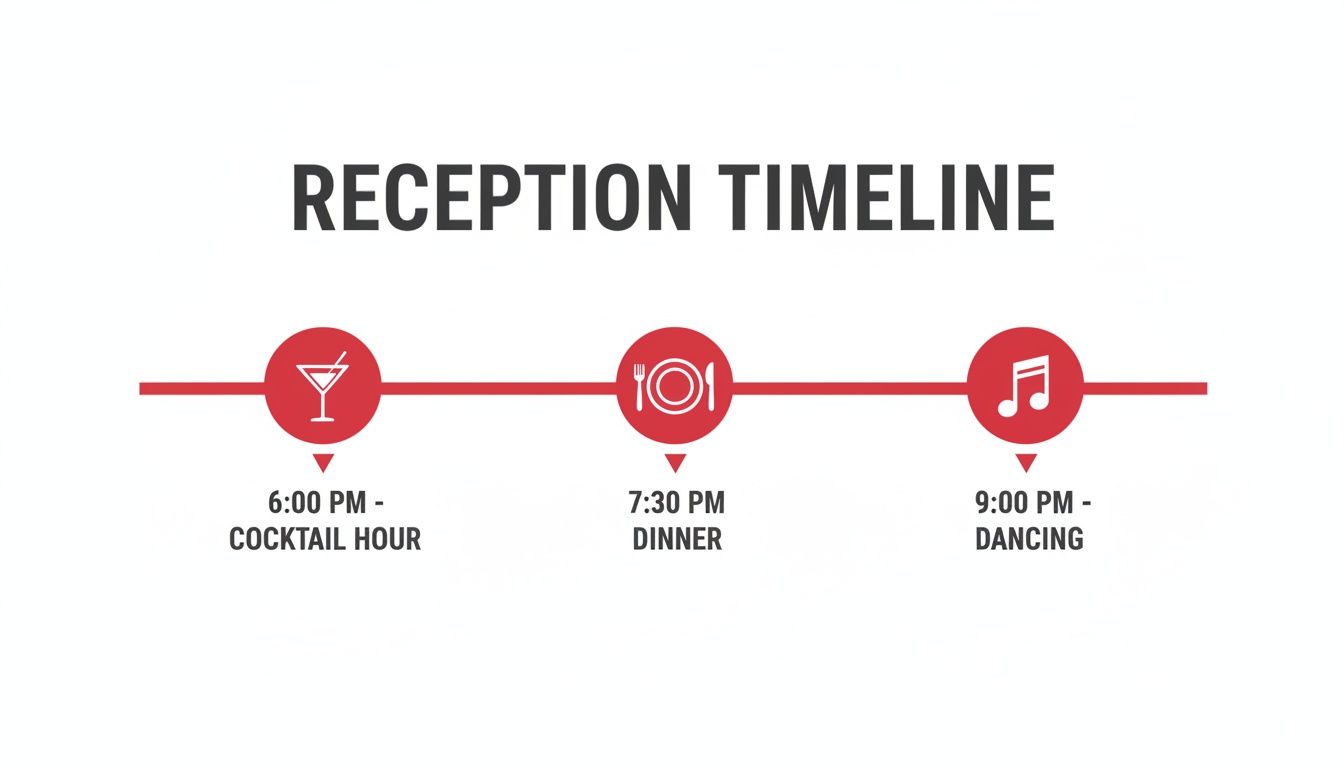
As you can see, each piece—from cocktails to dinner to dancing—plays its own role in building the energy for the night.
The Classic 6-Hour Evening Reception
This is the one we see most often, and for good reason. It’s the perfect blend of tradition and a seriously fun party. This timeline works best if your ceremony wraps up around 4:30 or 5:00 PM, keeping guests entertained from the moment they arrive until the final send-off, with no awkward lulls.
- 5:00 PM – 6:00 PM: Cocktail Hour & Photos
- 6:00 PM: Guests Invited to Be Seated for Dinner
- 6:15 PM: Grand Entrance & First Dance
- 6:30 PM: Dinner Service Begins & Welcome Toast
- 7:15 PM: Maid of Honor & Best Man Toasts
- 7:30 PM: Parent Dances (Father-Daughter, Mother-Son)
- 7:45 PM: Open Dance Floor
- 9:00 PM: Cake Cutting
- 10:45 PM: Last Dance Announcement
- 11:00 PM: Grand Exit
This structure gets all the formal moments out of the way early, which opens the door for a long, uninterrupted dance party.
The Extended 8-Hour Celebration
If your venue is flexible and you want to pack in more entertainment (or just more dancing), an 8-hour timeline is fantastic. This format is perfect for couples who want to add special performances, multiple food courses, or just love to party late into the night. It gives everything a little more room to breathe.
With most engagements lasting 13-15 months, couples have plenty of time to plan a more detailed schedule where the reception is the main event. A longer party like this usually wraps by midnight to keep guests’ energy high and respect venue rules.
Pro Tip: For a longer reception, think about adding a late-night snack around 10:30 PM. It’s a guaranteed way to refuel your guests and keep the party going strong.
The Sweet and Simple 4-Hour Afternoon Reception
A shorter, afternoon reception is a wonderful choice for a more intimate or laid-back wedding. We often see this timeline used for brunch or lunch celebrations, which creates a bright, cheerful atmosphere that’s all wrapped up by late afternoon.
- 1:00 PM: Guest Arrival & Cocktail Hour
- 2:00 PM: Grand Entrance & First Dance
- 2:15 PM: Lunch is Served & Toasts
- 3:15 PM: Cake Cutting & Parent Dances
- 3:30 PM: Open Dance Floor
- 4:45 PM: Last Dance
- 5:00 PM: Couple’s Send-Off
This condensed schedule hits all the traditional high notes while still giving you and your guests the rest of the evening to relax. For even more detailed breakdowns, you can download a sample timeline for a wedding reception to start customizing. These templates are the perfect tool to start mapping out the perfect flow for your big day.
How To Personalize Your Wedding Timeline
Think of a wedding reception timeline template as your starting point, not the finished product. The real magic happens when you start weaving in your personalities, transforming a basic schedule into a day that feels completely, authentically you.
This isn't about throwing out the rulebook. It's about making small, meaningful tweaks. Maybe you’re massive foodies and want to surprise everyone with a late-night taco truck, or you’ve asked your best friend’s band to play a special set. This is where you make the day your own.
Prioritize What Matters Most to You
First things first: what are your non-negotiables? Sit down together and figure out the one or two moments you've been dreaming about. Those become the anchors for the rest of your schedule.
For instance, if golden-hour photos are at the top of your list, you need to tell your photographer and coordinator right away. They can help you carve out that perfect 15-20 minute window just before sunset, making sure dinner or toasts don’t get in the way of that incredible light.
Or maybe you have grandparents who need to head out a bit earlier but absolutely cannot miss the big stuff. No problem. You can easily shift the cake cutting and parent dances to happen right after dinner. It’s a simple, thoughtful tweak that ensures your most important people get to see those moments without having to stay up past their bedtime.
Your wedding timeline should serve you, not the other way around. Don't be afraid to shift traditional elements to highlight what’s truly important to you and your families. It's these personal touches that make a wedding unforgettable.
Weave in Unique Entertainment and Experiences
Let's be honest, modern receptions are all about the experience. We're seeing a massive shift toward hyper-personalized events. In fact, 71% of couples are looking to cultural trends to create unique, interactive moments for their guests. Think high-tech photo booths, live painters, or pop-up food stations to keep the energy electric all night long.
Slotting these in without disrupting the flow is key. Here are a few ideas I've seen work incredibly well:
- Surprise Performance: The perfect time for this is right after the formal toasts. It’s a fantastic way to transition from the more formal, seated part of the evening into a high-energy dance party.
- Interactive Food Station: Bring out a late-night snack bar—sliders, a donut wall, you name it—about 90 minutes before the reception wraps up. It gives everyone a second wind for that final hour of dancing.
- Unique Photo Booths: A "glambot" or 360-degree photo booth is a huge hit. Set it up near the dance floor after dinner is cleared to encourage guests to move around and create awesome, shareable memories.
If you're brainstorming other creative touches, check out these top wedding reception entertainment ideas. The goal is to place these special features at points in the night where they boost the vibe, not bring it to a screeching halt.
Getting Your Vendors On The Same Page
A gorgeous timeline is a great start, but it's only as good as the team making it happen. Think of it as the master playbook for your wedding day—if only the head coach knows the plays, the game is going to be a complete mess.
Getting all your vendors on the same page is probably the single most important thing you can do to turn your plan into a seamless, stress-free reality.
This means going beyond just emailing a PDF and hoping for the best. True vendor alignment is all about clear, specific communication where everyone knows their cues cold. Your photographer, DJ, caterer, and coordinator all have interconnected roles. When they’re in sync, the magic happens. When they aren't, you get those awkward pauses, missed photo ops, and a vibe that just feels… off.
Creating A Master Vendor Cue Sheet
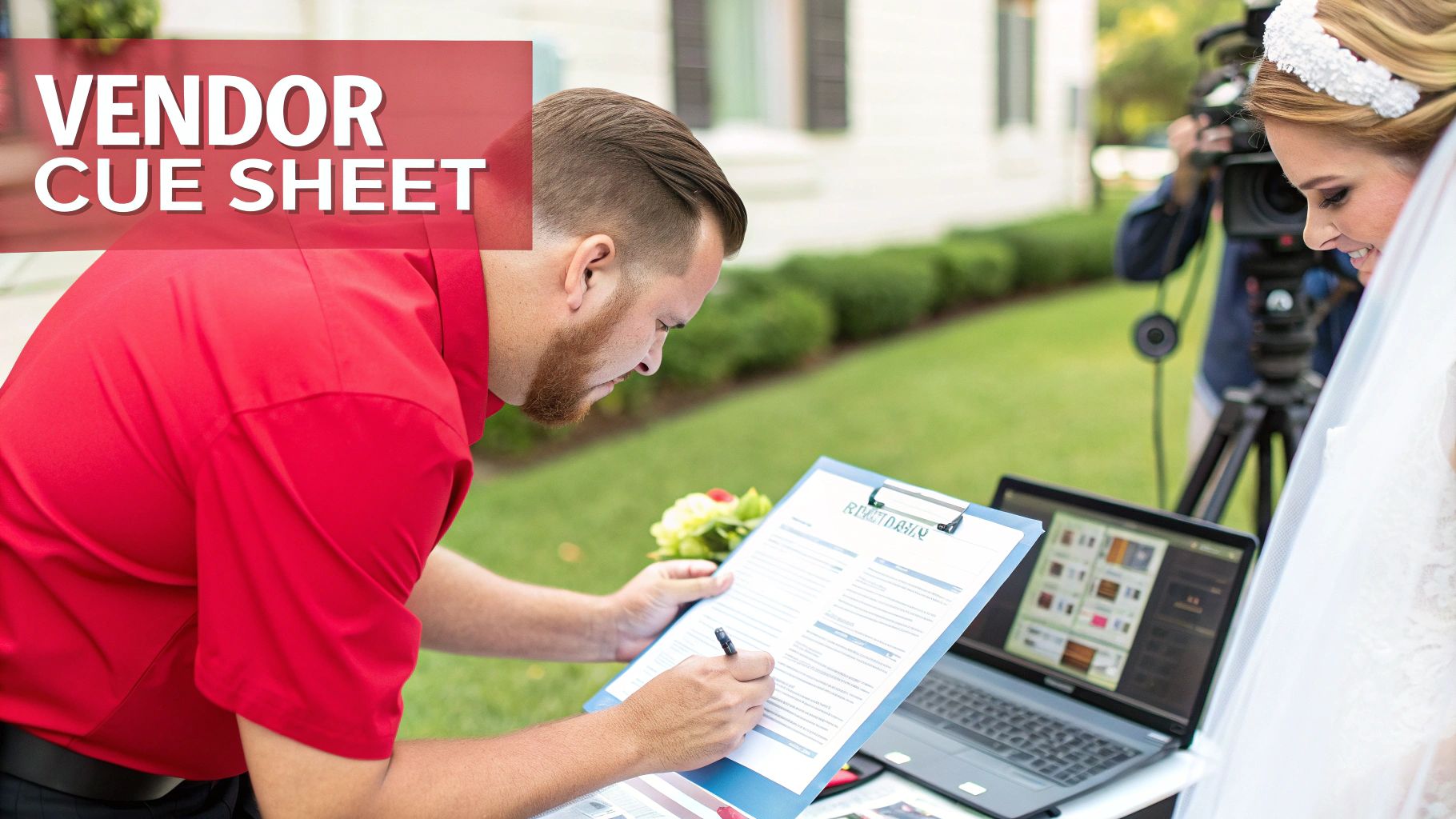
From my experience, the best way to get everyone aligned is with a Vendor Cue Sheet. This isn't just a copy of your main timeline; it's a simplified, action-focused version of it. It highlights the big moments and spells out exactly who does what, and when. It’s less about the overall schedule and more about those critical handoffs between vendors.
Your DJ, for instance, needs more than just "Grand Entrance at 6:15 PM." They need the specific song, the exact moment to hit 'play', and a phonetic guide to pronouncing every single name in your wedding party. Likewise, your photographer needs a heads-up that toasts are coming so they can have the right lens and lighting ready to go.
A vendor cue sheet is the secret weapon for a reception that feels effortless. It anticipates what your pro team needs, letting them focus on their craft instead of scrambling to figure out what’s next.
Key Vendor Coordination Checklist
Make sure to send your final timeline and cue sheet to all your key vendors at least one to two weeks before the wedding. This gives them plenty of time to review it, ask questions, and get prepared. A quick "just confirming!" email the week of the wedding is a great final touch.
To help you get started, here's a simple breakdown of those crucial moments and which vendors need to be perfectly in sync to nail them.
Vendor Coordination Checklist
This checklist highlights the key handoffs between your wedding pros. Getting these moments right is what separates a good reception from a great one.
| Timeline Event | Key Vendors to Sync | Critical Action/Cue |
|---|---|---|
| Grand Entrance | DJ, Photographer, Coordinator | DJ needs the exact song cue and correct name pronunciations. Photographer must be in position. |
| First Dance | DJ, Lighting Tech, Videographer | DJ transitions flawlessly from the entrance music. Lighting tech hits the spotlight. Videographer captures the moment. |
| Dinner Service | Caterer, DJ, Coordinator | DJ switches to softer dinner music. Caterer gets the nod from the coordinator before serving the head table. |
| Toasts/Speeches | Caterer, DJ, Photographer | Champagne should be poured and served 5-10 minutes before toasts start. DJ needs the mic ready. |
| Cake Cutting | Photographer, DJ, Caterer | DJ announces the event to draw guests' attention. Caterer has the knife and plates ready to go. |
| Sunset Photos | Photographer, Coordinator | Coordinator discreetly finds the couple at the pre-planned time to avoid disrupting the party's flow. |
Once you’ve locked these in, your reception will run like a well-oiled machine.
Communicating these cues is especially vital for your entertainment team. Your DJ is more than just a music player; they’re often the unofficial emcee for the evening, guiding the energy and flow of the entire party. To learn more about what makes that partnership work, check out our guide on how to choose a wedding DJ. It’s packed with insights to help you find the perfect pro to keep that dance floor packed all night long.
A Few Insider Tips For A Kansas City Wedding
Planning a wedding in Kansas City has its own unique rhythm. Honestly, understanding the local quirks can make all the difference in how your reception flows. The details that seem small—like traffic or where your venue is—can have a massive impact on your wedding reception timeline.
Let’s get real for a second. If your ceremony is at a beautiful church on the Plaza and your reception is down in the Crossroads Arts District, you absolutely have to account for that travel time. On a Friday evening, that short drive can easily stretch to 20-30 minutes with traffic. You have to build that buffer into your schedule, or you’ll be starting everything late.
You also have to think about what else is going on in the city. Is it a First Friday? Is there a big concert at the T-Mobile Center? Things like that can snarl traffic and mess with your guests' arrival times.
Mastering The Kansas City Atmosphere
As KC event experts, we at Showboss KC know that creating the perfect vibe is about more than just a good playlist; it’s a science. The energy of a reception should build and change throughout the night, and that’s where professional lighting and sound coordination really shine. Your timeline is the script that cues all those atmospheric shifts.
Think about the moment you transition from dinner to dancing. This is the pivotal moment that can make or break the party’s energy.
-
Dinner Lighting: While everyone is eating and listening to toasts, the lighting should feel warm, soft, and romantic. We’re talking elegant uplighting in your wedding colors and maybe some gentle spotlights on the head table. The goal is to create an intimate, sophisticated ambiance where people can actually talk and connect.
-
Dance Floor Lighting: But once the formal dances are over, it’s time to flip the switch. This is when your DJ and lighting tech sync up to completely transform the space. The music’s tempo jumps, and the lighting gets dynamic—moving heads, strobes, color changes—all designed to build excitement and pull everyone onto the dance floor.
The perfect reception doesn't just happen; it's produced. Coordinating the DJ's first high-energy dance set to kick in at the exact moment the lighting shifts from static elegance to a dynamic party mode is how you create an unforgettable "wow" moment for your guests.
This seamless coordination is what takes a standard reception and turns it into a full-on experience. When you're building your timeline, don’t just block out "dancing." Get specific. Add a note like “shift to party lighting” so you can talk it through with your production team.
This ensures every single element works together to tell your story and keep the energy electric until the very last song.
A Few Common Wedding Timeline Questions, Answered
Once you’ve got the big moments sketched out, you’ll probably start running into some of the finer-point questions. This is where a good plan becomes a great one. Getting these details right is what makes the whole evening feel effortless and smooth.
Let’s dig into some of the most common timeline hurdles we see couples face. Getting these sorted will help you feel way more confident that your schedule is locked and loaded.
How Much Time Should We Budget for Speeches?
This is a big one. Nothing can kill the energy in a room faster than toasts that drag on and on.
The sweet spot we’ve found is to plan for 3 to 5 minutes per speaker. So, if you have four people lined up to give a toast, you’ll want to block out a solid 20 minutes in your timeline.
The best time to slot them in? During dinner. Guests are already seated and have your full attention, plus it fills what could otherwise be a quiet lull in the evening. Just be sure to give your speakers a gentle heads-up on their time limit beforehand—it keeps the night moving and shows respect for everyone's time.
What Happens If We Start Running Late?
First off, don't panic. It's almost a given that you'll run a few minutes behind at some point during the day. It happens. The key is to build a little cushion into your plan from the get-go.
We always recommend adding an extra 10-15 minutes for any major transition, like moving from the ceremony to the reception or getting everyone seated for dinner.
If you find yourself falling significantly behind, this is where your coordinator or DJ becomes your best friend. They are absolute pros at making adjustments on the fly, whether that means shortening a dance set or combining the cake cutting with another announcement. The most important thing is to stay flexible and trust your vendor team to steer the ship.
Key Takeaway: Think of your timeline as a roadmap, not a rigid set of rules. A small delay won't sink the ship. Your professional team is there to make tiny adjustments so you can stay in the moment and enjoy your party.
When’s the Best Time to Cut the Cake?
The cake cutting often acts as a polite, unspoken signal to older guests that it's okay to start heading home if they're ready. To keep the party vibes going strong for everyone else, we find that a great time for this tradition is about an hour after dinner wraps up.
Positioning it right before the dance floor opens up for good creates one last formal moment before the real party kicks off. Your DJ can make a quick announcement to gather everyone's attention, your photographer gets the perfect shot, and you don’t have to stop the fun once it's in full swing.
Ready to build a timeline with a team that gets every single cue? Showboss KC is all about syncing expert DJ services with professional lighting to create a seamless, high-energy reception from the first dance to the grand exit. Let's build your perfect Kansas City wedding experience. Plan your event with us at https://showbosskc.com.