

Stage production is the art and science of bringing a live event to life. It’s the invisible engine powering every memorable concert, corporate gathering, or wedding by managing all the sensory elements—from audio and lighting to video and the physical stage itself.
The Central Nervous System of Live Events
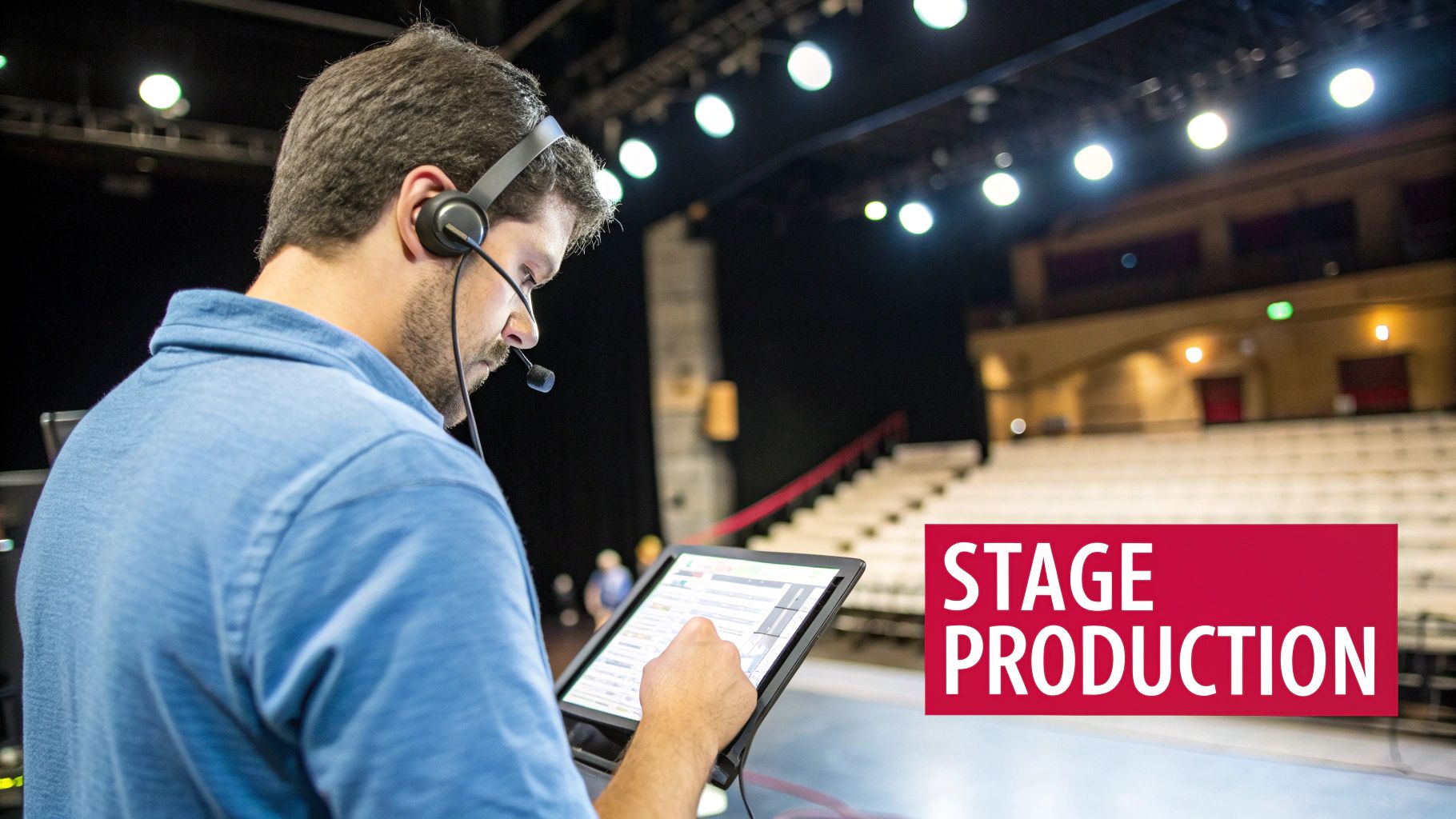
Think of a master chef in a bustling kitchen. They aren’t just cooking one dish; they’re coordinating every ingredient, every station, and every person to deliver a perfect, synchronized meal. That's exactly what stage production does for an event. It’s the all-encompassing process that ensures every technical piece works in perfect harmony.
This isn't just about plugging in speakers and hanging a few lights. It’s a discipline built on meticulous planning, intentional design, and expert management to create a seamless, engaging experience for every single person in the room. It’s what separates an amateur presentation from a professional spectacle that leaves a lasting impact.
And it’s a massive industry. The global market for concert halls and theatres is on track to hit USD 190.3 billion by 2025, underscoring just how much demand there is for live experiences powered by top-tier production.
More Than Just a Stage
At its core, stage production is all about turning a creative vision into a tangible, sensory reality. It's where technical skill meets creative problem-solving head-on. This work is closely related to the broader world of event management, and knowing the difference is key. You can dive deeper into that in our guide on what is event production.
The responsibilities are vast, covering everything from the first design sketches all the way to the final teardown after the last guest has gone home.
"Stage production is the invisible architecture that supports the visible magic. It dictates what the audience hears, sees, and feels, shaping their entire experience from the moment they arrive to the moment they leave."
Safety and Precision
One aspect of this work is completely non-negotiable: safety. With complex electrical systems, heavy equipment hanging overhead, and large crowds, every single detail has to be managed with absolute precision.
The safety of the crew and the audience is the number one priority, especially when dealing with temporary power setups. Understanding and adhering to critical electrical safety standards like NFPA 70E is fundamental for any professional team. This unwavering focus on safety and detail is what truly separates the pros from the amateurs.
The Four Pillars of Modern Stage Production
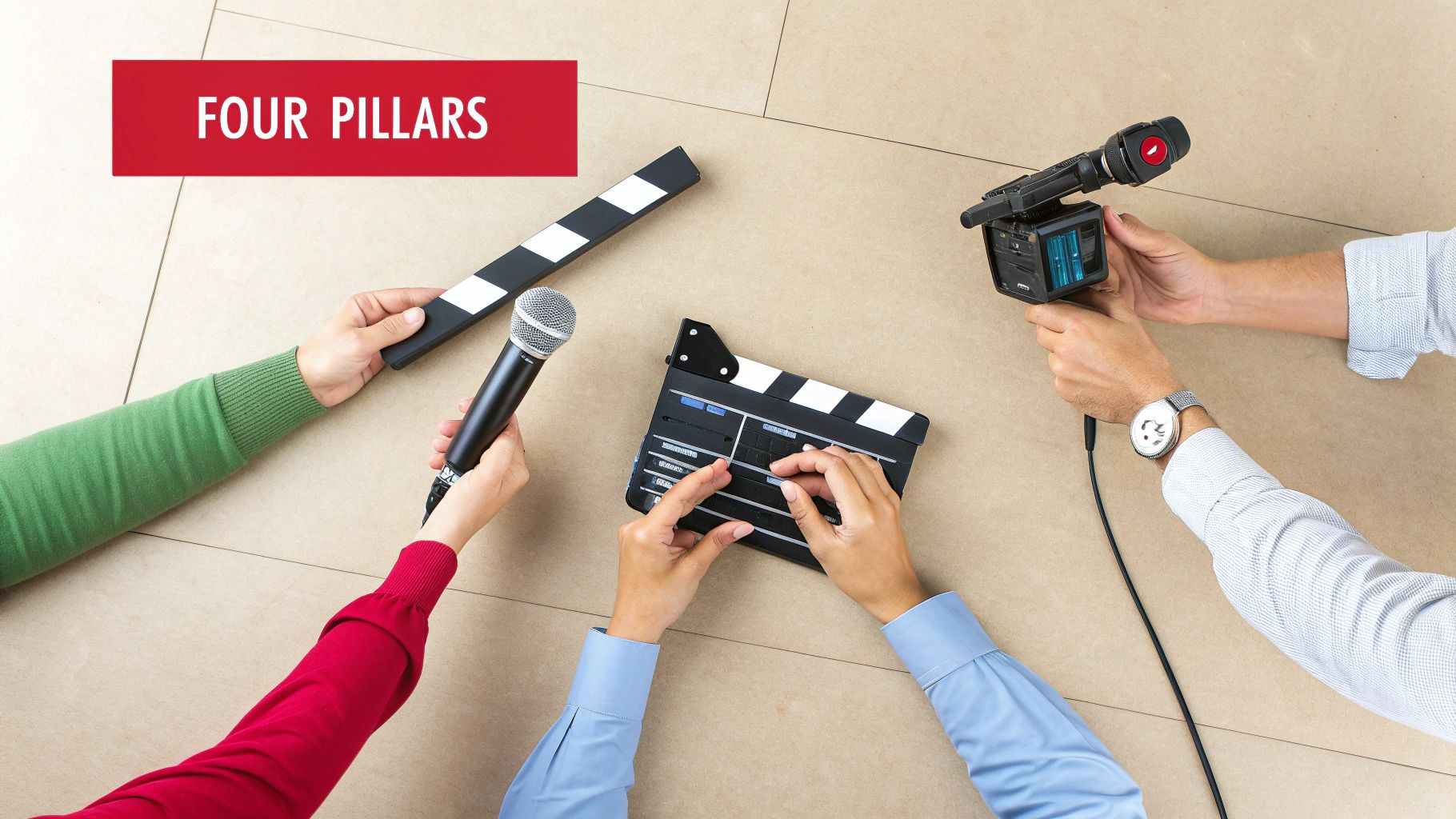
To really get a grip on what stage production is, it helps to break it down into four essential components. I like to think of them as the four pillars holding everything up. These are the core disciplines that have to work in lockstep to create every sight, sound, and feeling the audience walks away with.
Each one—Audio, Lighting, Video, and Staging—is its own specialized craft. But their real power is only unleashed when they’re perfectly synchronized.
Think of it like an orchestra. A violin can sound beautiful on its own, but you only get that unforgettable, stop-you-in-your-tracks symphony when every section plays together, guided by a skilled conductor. Let's dig into how each one contributes to the final masterpiece.
Audio: The Voice of the Event
Audio is, without a doubt, the most fundamental pillar of any live event. It doesn't matter how great everything looks; if the audience can't hear what's happening, the entire message is lost. This is true whether it’s a heartfelt wedding vow or a CEO's big keynote speech.
Professional audio isn't just about making things loud. It’s a delicate balance of clarity, coverage, and control. The audio needs for a corporate summit, for example, are a world away from what you’d need for a music festival.
- Corporate Events: Here, the number one goal is intelligibility. Microphones need to pick up crisp, clear speech without any of that dreaded feedback. The speaker system has to distribute the sound so evenly that the person in the back corner hears the exact same thing as the person in the front row.
- Concerts & Festivals: This is all about impact and immersion. The sound system has to deliver powerful, full-range audio that lets the crowd feel the music, not just hear it—from the gut-punch of the bass to the soaring high notes.
The industry backing these experiences is huge. In the U.S. alone, the live performance theater industry is on track to hit $8.6 billion in revenue by 2025. This isn't just a number; it's proof of how the 3,500+ stage production businesses across the country are constantly innovating.
Lighting: Painting with Light
Good lighting does so much more than just help people see. It sets the mood, directs the audience's focus, and can completely transform a boring room into an emotional landscape. A talented lighting designer literally paints with light, using color, intensity, and movement to build a scene and pull specific feelings from the crowd.
Just think about the difference between a wedding reception and a product launch. For the wedding, you might see soft, warm uplighting and gentle washes of color to create a romantic, intimate vibe. The product launch? Expect dynamic, fast-moving lights and bold, on-brand colors designed to crank up the energy and excitement.
Video: The Visual Storyteller
In the last decade, video has become an absolutely essential part of modern stage production. It opens up a nearly endless playbook for visual storytelling. This pillar can be as simple as a single projector screen showing a slideshow or as complex as a massive, custom-built LED wall that serves as a living, breathing digital backdrop.
At a trade show, video is perfect for eye-catching brand activations and product demos. At a concert, it can give everyone—even the folks in the nosebleeds—a close-up shot of the performers or display mind-bending visuals that sync perfectly with the music. Knowing the different types of audio-visual equipment for events is the first step in picking the right tools for your vision.
The ultimate goal is to create a cohesive sensory environment. The lighting should complement the audio, the video should enhance the staging, and everything should work in service of the event's core message.
Staging: The Foundation of the Experience
Last but certainly not least, staging is the physical foundation that everything else is built on. This covers the main stage, of course, but also any risers, podiums, truss structures holding up lights and sound gear, and backdrops. The way a stage is designed directly impacts sightlines, how the audience moves, and where everyone’s attention is focused.
A simple riser might be all you need for a panel discussion. On the other hand, a massive, multi-level custom stage is a must for a major concert tour. The right staging makes sure that everyone on stage is safe, secure, and positioned for maximum impact.
Meet the Crew Behind the Curtain
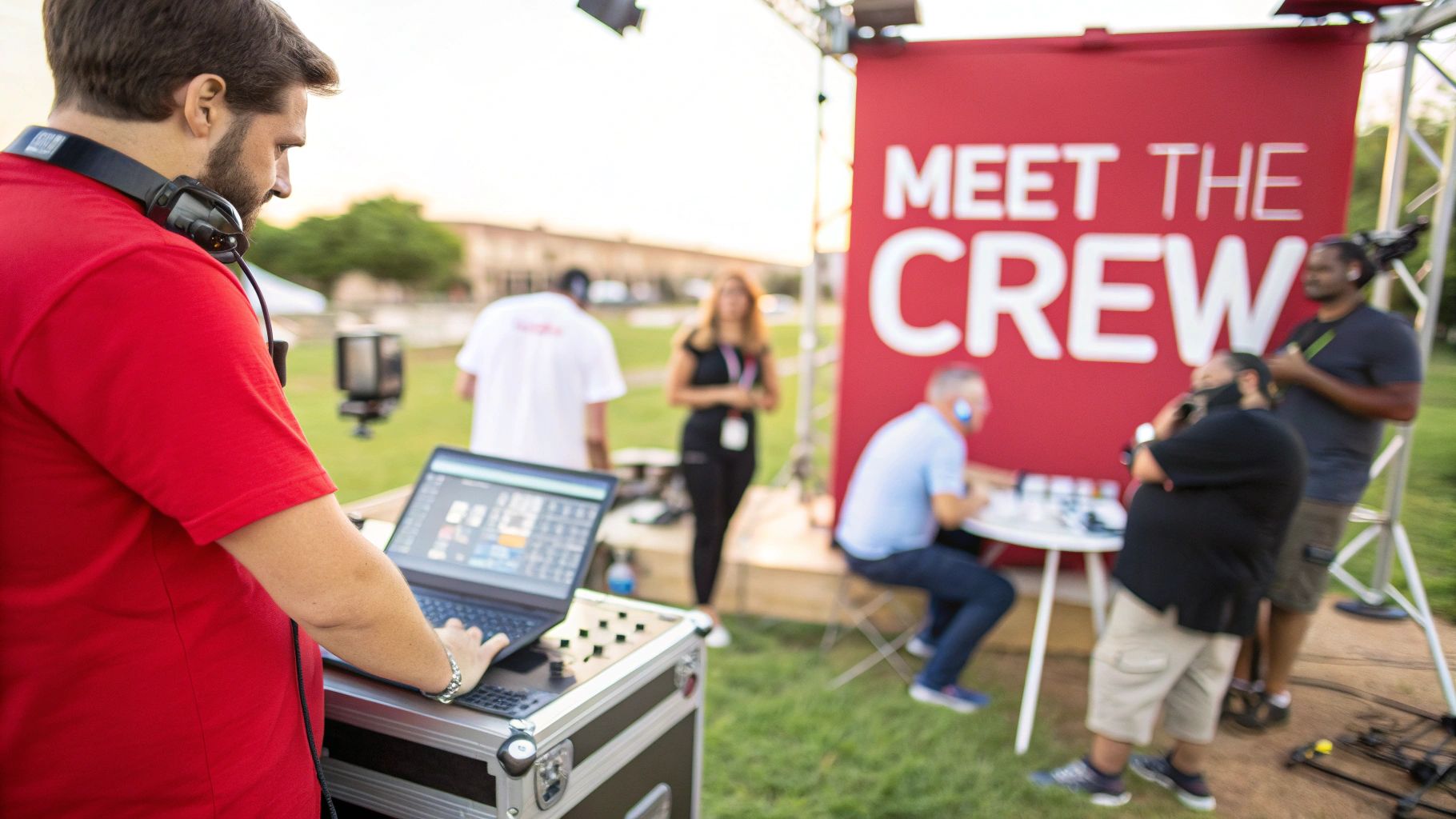
All the advanced technology in the world is only as good as the people running it. Behind every single flawless event is a team of specialized pros, each a master of their craft, all working together like a well-oiled machine. Getting to know these key roles helps pull back the curtain on what really goes into a professional stage production.
Think of it like a film crew. You can’t make a movie without a director, gaffer, or sound mixer—everyone has a critical job to do. It’s the exact same for live events, where a symphony of collaboration happens backstage to create the magic your audience sees and hears.
The Project Architect and Creative Specialists
Leading the charge is the Production Manager. They are the project architect, the person who oversees the entire production from the first budget draft and design concept all the way through to the final load-out. They're the central point of contact, making sure every department is in sync.
Working alongside the manager are the creative and technical experts who actually bring the vision to life. Each one is a specialist who owns a specific pillar of the production.
- Audio Engineer: The "sound sculptor." This pro makes sure every word, note, and sound effect is heard with absolute clarity and impact. They’re the ones managing all the microphones, speakers, and mixing consoles to balance the perfect sound for the room.
- Lighting Designer: The "mood painter." They use light to spark emotion, guide the audience's attention, and completely transform a physical space. Their work is what makes a room feel intimate, energetic, or intensely dramatic.
- Video Technician: The "visual storyteller." This role handles everything you see on a screen—from PowerPoint slides and pre-recorded videos to live camera feeds and mind-blowing LED wall content.
For the whole technical crew, a smooth and safe performance comes down to meticulous details. That includes things most people never notice, like effective cable management.
The Logistical Backbone of the Show
Of course, none of that technical wizardry would even be possible without the Stagehands. These are the people who form the logistical backbone of the entire operation. This hardworking crew is responsible for loading in, setting up, and tearing down every single piece of equipment, from heavy staging platforms and truss structures to the most delicate lighting fixtures.
Every person on the crew, from the manager calling the shots to the stagehand coiling cables, plays an indispensable part. It's their combined expertise and tireless coordination that turns an ordinary space into an unforgettable experience.
When you hire a professional production team, you're not just renting gear. You're investing in a dedicated crew of experts who have spent years honing their skills to deliver a seamless and impactful event, letting you focus on what really matters: your guests.
Production Isn't One-Size-Fits-All
Think of stage production like a chef's kitchen. You've got all the same core ingredients—lights, speakers, stages, screens—but what you create with them depends entirely on the menu. A romantic wedding dinner requires a completely different approach than a high-energy music festival feast.
The art of great production lies in understanding the event's why. What's the goal? Who's the audience? What feeling do we want people to walk away with? Every choice, from the color of a light to the placement of a speaker, is a deliberate step toward creating a specific atmosphere.
Let's look at how the recipe changes for a few common event types.
Weddings: Crafting Romance and Memories
For a wedding, the production team's job is to create pure magic. The goal is elegance, romance, and a seamless flow. It’s not about loud, flashy effects; it's about subtle details that amplify the day's emotion without ever stealing the spotlight.
Here's what that looks like in practice:
- Lighting That Breathes Romance: We use soft, warm uplighting to turn a plain venue into an intimate, breathtaking space. Tiny "pin spots" can highlight the cake or floral centerpieces, making them pop. A custom gobo light projecting the couple's monogram onto the dance floor adds that perfect personal touch.
- Audio for the "I Do's": Every guest, from the front row to the back table, needs to hear the vows and the heartfelt toasts. This means using discreet microphones and a sound system tuned for crystal-clear vocals, not booming bass.
- Setting the Party Vibe: Whether it’s a DJ or a live band, the audio and lighting have to evolve with the reception. The sound system needs to be top-notch, and the lights should be able to shift instantly from a slow, romantic dance to a high-energy party.
Great wedding production is invisible. The technology works its magic in the background, creating beautiful moments and lasting memories without ever getting in the way of what truly matters.
Corporate Events: Polished, Professional, and On-Brand
Shift gears to a corporate event, and the entire playbook changes. Here, the priorities are professionalism, message clarity, and reinforcing the company's brand. The goal is to make the organization look sharp, capable, and forward-thinking. There is zero room for error.
This means every technical element has to be flawless and purposeful:
- Flawless Audio-Visuals: Presentations are king. That requires big, bright, high-definition screens, reliable microphones for every speaker, and a system that switches between slides and videos without a single glitch.
- Branding with Light: Lighting becomes a powerful branding tool. We can wash the entire room in the company's colors, project the logo onto a main wall, or design stage lighting that looks crisp and clean for all the photos and video feeds.
- Tech That Engages: Modern corporate events are all about engagement. This can mean using massive LED walls for a dynamic stage backdrop, setting up interactive displays for guests, or providing professional live streaming to bring in a virtual audience.
Concerts & Festivals: All About Energy and Immersion
Now for the big one: concerts and festivals. The mission here is simple—create a massive, high-energy, sensory overload that blows the audience away. The production is a huge part of the show, designed to amplify the artist's performance and create an unforgettable experience for thousands of people.
Scale and impact are everything.
- Sound That Hits You: The audio has to be powerful enough to cover a huge space, from the front rail to the back lawn, with clean, impactful sound. This requires massive, complex line array speaker systems engineered for maximum punch and clarity.
- A Spectacle of Light: The lighting is a performance in itself, perfectly synchronized to the music. We're talking about hundreds of moving lights, strobes, lasers, and fog machines all working together to build energy and create visual drama.
- Stages Built for a Show: The stage itself needs to be a beast—big, strong, and ready to handle performers, tons of equipment, and elaborate set designs. Giant LED video walls are a must, giving everyone in the crowd a front-row view with live camera feeds and wild visual content.
To make it even clearer, let's break down how these priorities stack up side-by-side.
Event Production Needs Compared
| Event Type | Primary Goal | Key Production Elements |
|---|---|---|
| Wedding | Create a romantic and memorable atmosphere. | Soft, elegant lighting; crystal-clear audio for vows/toasts; seamless music support. |
| Corporate Event | Reinforce brand, deliver a clear message, and look professional. | High-definition screens; branded lighting; flawless A/V for presentations; live streaming. |
| Concert/Festival | Create a high-energy, immersive sensory experience. | Powerful line-array sound systems; dynamic, synchronized light shows; large-scale staging and video walls. |
As you can see, while the tools might be the same, the strategy and execution are worlds apart. The key is matching the production plan to the event's unique DNA.
The Production Journey from Concept to Reality
Ever wondered how a spark of an idea for an event turns into a full-blown, unforgettable experience? A stage production doesn’t just materialize out of thin air. It’s a carefully planned journey, a methodical process that ensures every creative vision is built on a rock-solid logistical foundation.
Think of it as a roadmap with four distinct phases. Each stage builds on the one before it, taking the event from an abstract concept to a flawlessly executed reality. Understanding this flow demystifies the whole thing and shows just how much coordination goes into pulling off a spectacular event.
Phase 1: Discovery and Design
It all starts with discovery. This is where we sit down and really get to the heart of your vision, goals, and audience. What's the point of the event? What feeling do you want people to leave with? This is the creative deep-dive, the brainstorming sessions where big ideas are born and the core concept starts to take shape.
Once we're all on the same page, the design phase kicks in. Our designers start creating initial sketches, 3D renderings, and mood boards to give you a real, tangible preview of the look and feel. This is where we nail down the overall aesthetic—from lighting colors and stage layouts to the themes for any video content.
Phase 2: Pre-Production and Planning
With a design locked in, we move into the logistical engine room: pre-production. This is easily the most intensive planning phase, where every single detail gets mapped out. We draft technical schematics, finalize massive equipment lists, and make sure every piece of gear is sourced and scheduled.
This is also when we coordinate the crew, build out hyper-detailed schedules for load-in and setup, and handle any necessary permits. It’s all the behind-the-scenes heavy lifting that makes show day feel effortless.
This timeline gives you a great visual of how it all flows together.
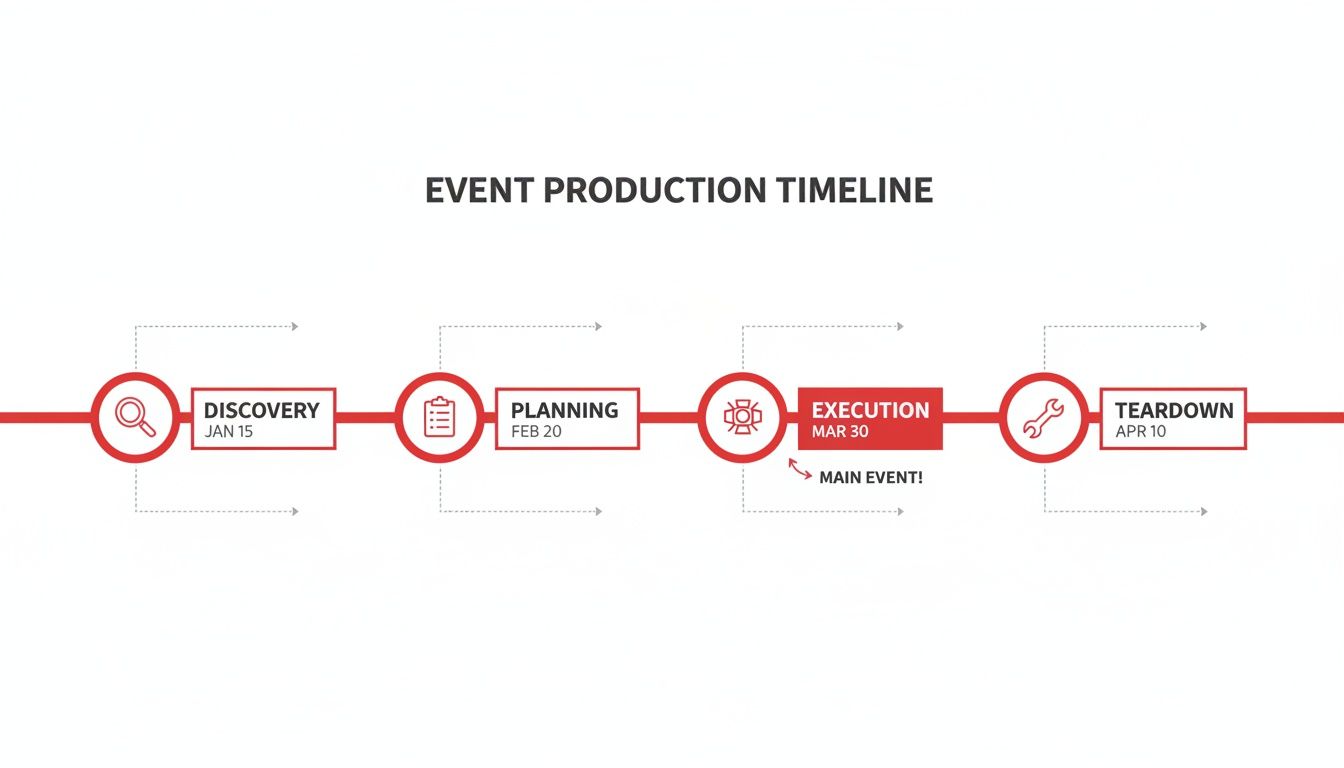
You can see how each phase progresses logically, with planning acting as that critical bridge between a great idea and actually making it happen.
Phase 3: On-Site Execution
And now for the main event—showtime. This is the moment where all that meticulous planning bursts into life. It starts with load-in, when the trucks roll up and the crew and equipment arrive on-site. From there, the team meticulously builds the stage, hangs the lights, sets up the sound system, and tests every single component until it's perfect.
During the event, the crew is in the driver's seat, operating everything in real-time. They’re running sound checks, executing complex lighting cues, and rolling video content on cue. They’re also expert problem-solvers, ready to tackle any unexpected technical hiccup instantly and discreetly.
Phase 4: Post-Event Teardown
The job isn't over when the last guest heads home. The teardown (or load-out) phase kicks in almost immediately. The crew works safely and efficiently to dismantle every piece of equipment, pack it all away securely, and leave the venue exactly as we found it.
This final step is just as critical as the setup. It’s the professional and responsible wrap-up that closes out the entire production journey.
How to Choose the Right Production Partner
Picking a production company is easily the most important decision you'll make for your event. The right partner feels like an extension of your own team, flawlessly bringing your vision to life. The wrong one? They can turn a brilliant concept into a logistical nightmare.
This choice is about so much more than just comparing price quotes. You're looking for a team with the right gear, the right experience, and a collaborative spirit that clicks with yours.
Making a confident choice really comes down to asking the right questions. Before you even get to the numbers, you need to get a feel for their expertise and how they work. A great production partner will be excited to show you their past projects and walk you through their process, giving you a clear picture of what you can expect.
Key Questions to Ask Potential Partners
When you start talking with a potential company, have a little checklist ready. Their answers will tell you a lot about their skills, their reliability, and whether they’re genuinely a good fit for what you're trying to do. Don't be shy about digging in—it's your event on the line, after all.
Here’s a practical list to get you started:
- Experience with Your Event Type: Just ask them straight up: "Have you produced events similar to ours in size and scope?" A team that specializes in massive concerts might not be the best choice for an intimate wedding, and the other way around.
- Portfolio and References: Ask to see a portfolio of their recent work. Even better, ask if you can talk to a few past clients whose events were like yours. A quick phone call can give you more honest insight than any sales pitch.
- Equipment Ownership vs. Rentals: Find out about their gear. Do they own their main audio, lighting, and video equipment, or do they rent most of it? Owning their own inventory often means they have a deeper technical understanding and more control over quality.
- Venue Familiarity: Have they worked at your venue before? A team that already knows the building's layout, power quirks, and loading dock rules can save you from huge headaches on show day.
Evaluating Their Problem-Solving and Communication Skills
Beyond the technical checklist, you need a partner who can think on their feet. Something always goes wrong at a live event; it's practically a law of nature. You want the team that can handle it.
Try giving them a hypothetical problem during one of your first meetings. What if a keynote speaker is running 30 minutes late? What if a critical piece of video won't play? A good partner will immediately start brainstorming solutions, not just point out the problem. Their response tells you everything about how they’ll perform under pressure.
Finally, pay attention to their communication style. Are they quick to respond? Are their answers clear? Do they seem proactive? The best production teams are fantastic communicators who keep you in the loop every step of the way. When you're looking for event production companies near me, put the ones who really listen at the top of your list. You want a team that's as invested in your success as you are.
Ready to partner with a team that combines creative vision with flawless execution? The specialists at Showboss KC are here to bring your event to life with expert audio, lighting, video, and staging solutions. Let's start planning your unforgettable event today.